
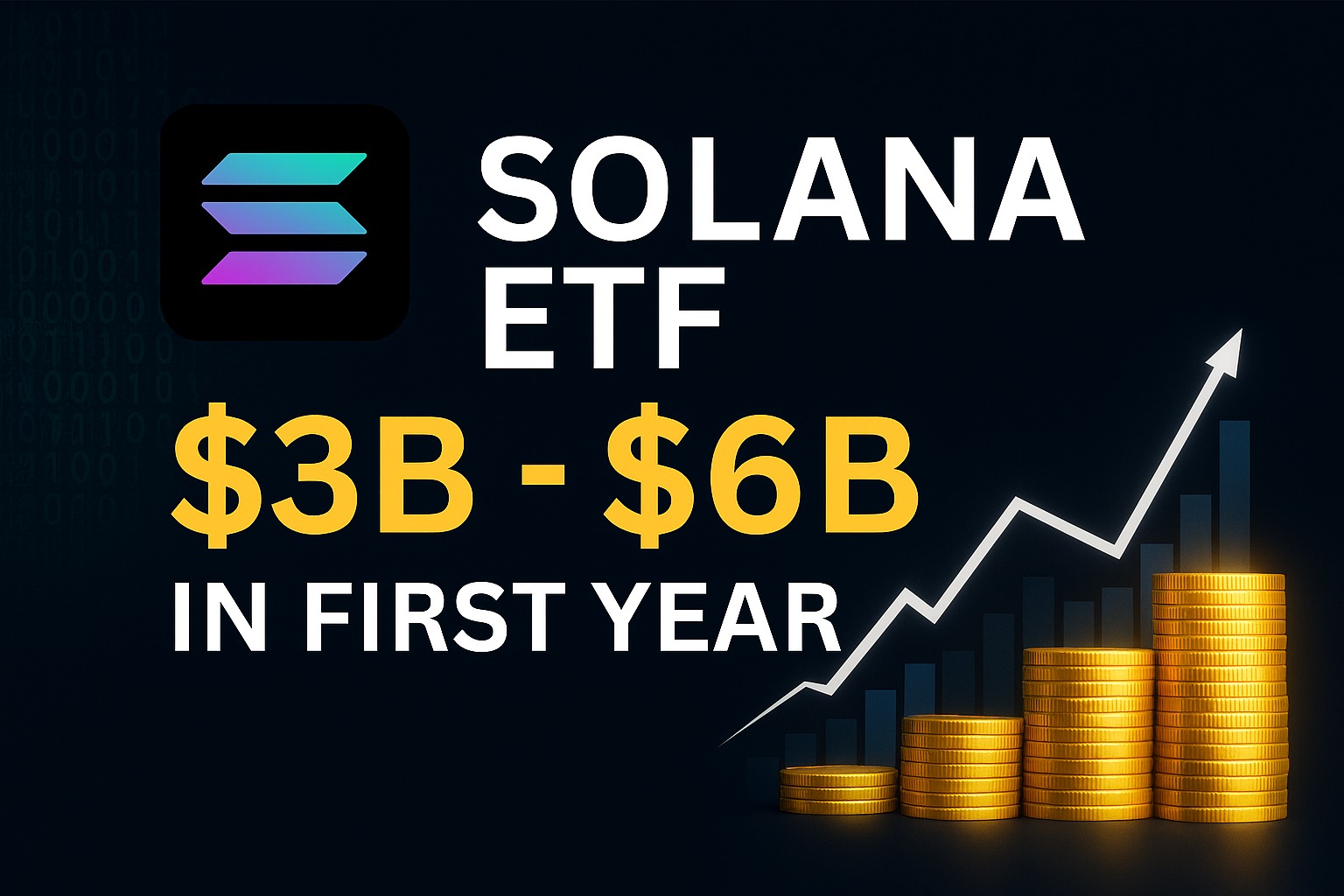
Solana ETF Set to Attract Billions in First Year
Solana ETF approval marks a major turning point for the digital asset market. The first staking-enabled ETF linked to the Solana blockchain represents a huge step toward mainstream adoption of alternative crypto assets. Analysts expect that the Solana ETF could attract between three billion and six billion dollars in new institutional capital within its first year of trading. Such an inflow would position Solana among the most successful crypto-based ETFs in history, following the strong performances of Bitcoin and Ethereum spot ETFs in previous years.
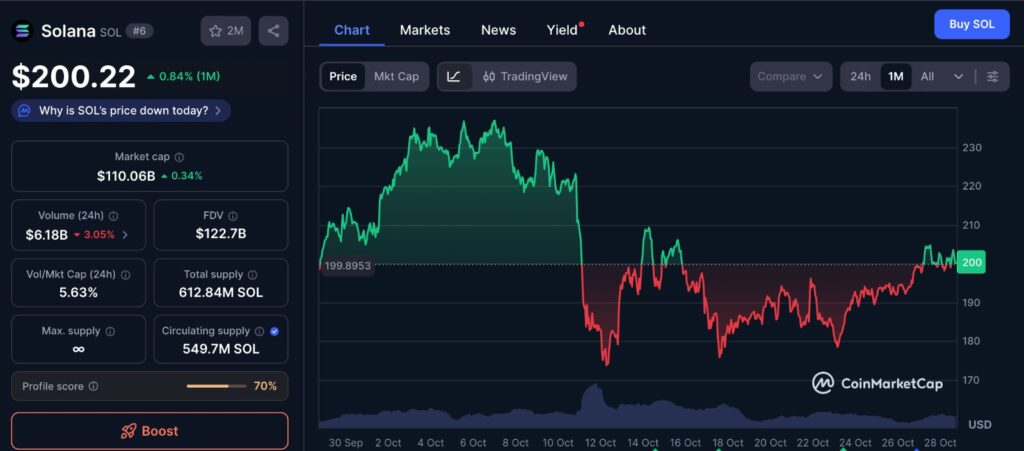
Over the past month, the Solana (SOL) price has shown steady momentum alongside growing investor interest in the newly approved Solana ETF. According to data from CoinMarketCap, SOL has reflected increased trading volumes and resilience despite broader market fluctuations. The chart above highlights Solana’s 30-day performance, providing insight into how market participants are positioning ahead of potential institutional inflows from the ETF launch.
Industry experts note that the Solana ETF arrives at a time when the appetite for yield-generating crypto assets is increasing. The ETF’s unique structure allows it to include staking rewards, a mechanism that could potentially deliver an additional yield of about five percent annually to investors. This feature has been highlighted as one of the biggest draws for institutional buyers who seek returns within a regulated framework. By combining staking rewards with the safety of an exchange-traded product, the Solana ETF could become a blueprint for future crypto funds.
Analysts also emphasize the symbolic importance of the Solana ETF’s approval. It signals that regulators and major institutions are ready to treat altcoins as serious components of diversified portfolios, not just speculative assets. When Bitcoin and Ethereum ETFs launched, they collectively attracted tens of billions in inflows within their first twelve months. Bitcoin ETFs amassed around thirty-six billion dollars, while Ethereum ETFs reached about eight and a half billion. Using those figures as a benchmark, the Solana ETF’s projection of three to six billion appears reasonable and achievable.
The Solana ETF stands out for several reasons. First, its proof-of-stake foundation enables a direct connection between investors and the network’s performance through staking yields. Second, it reflects a broader acceptance of blockchain networks beyond Bitcoin and Ethereum. The introduction of such a product demonstrates that the financial industry is exploring regulated exposure to multiple blockchains, marking a new phase of institutional crypto adoption.
Another major point is that the Solana ETF aligns with the current expansion of altcoin-based products. Several other altcoin ETFs, including those connected to chains like Avalanche and Polygon, are under regulatory review. However, Solana’s strong developer ecosystem, fast transaction speeds, and established user base give it a competitive edge. If it captures investor attention as expected, the Solana ETF could easily become the leading non-Bitcoin, non-Ethereum product in the market.
Market analysts caution, however, that success depends on more than approval alone. Factors such as distribution among brokerage platforms, the clarity of staking reward mechanisms, and continued regulatory cooperation will influence results. For example, the advertised five percent staking yield depends on Solana network conditions and whether the ETF issuer chooses to pass those rewards directly to investors. Any inefficiency or delay in that process could affect the ETF’s attractiveness.
Even with these uncertainties, the overall sentiment around the Solana ETF is strongly positive. It may drive significant benefits not just for investors but also for the Solana ecosystem itself. Increased institutional exposure tends to raise on-chain activity, deepen liquidity, and strengthen long-term network stability. Moreover, the ETF’s success could encourage more asset managers to pursue similar products, expanding the category of regulated yield-bearing crypto funds.
The introduction of the Solana ETF also holds implications for decentralized finance and real-world asset tokenization. By bridging traditional finance with blockchain yields, it could accelerate capital migration into crypto-based yield products. Institutional investors who were previously limited to Bitcoin or Ethereum exposure can now diversify into Solana, capturing both potential appreciation and network-generated returns.
There are still challenges to monitor. Regulation continues to evolve, and the long-term tax treatment of staking rewards within ETFs remains uncertain. Additionally, competition from other upcoming altcoin ETFs could divide inflows. Despite these factors, experts believe Solana’s established credibility, strong developer activity, and performance history will keep it in a leadership position among alternative networks.
If projections hold true and billions of dollars flow into the Solana ETF, it could set an important precedent. Future ETFs may replicate its staking-enabled model across other proof-of-stake networks, such as Cardano or Polkadot. This evolution would further legitimize staking as an accepted yield mechanism in traditional markets. For now, Solana’s pioneering position grants it a strong first-mover advantage.
For investors, the Solana ETF represents an accessible and compliant way to participate in the network’s growth. Instead of dealing with wallets or exchanges directly, they can gain exposure through a familiar stock market vehicle. This bridge between traditional finance and blockchain technology could open the door for pension funds, endowments, and large asset managers to enter the crypto space more comfortably.
The bigger picture is clear: the Solana ETF marks a shift in perception. Altcoins are no longer viewed purely as speculative assets but as viable, yield-generating investments capable of standing beside traditional instruments. The combination of regulatory acceptance, institutional demand, and innovative structure positions Solana as the leader of the next wave of blockchain finance.
In conclusion, the Solana ETF has the potential to reshape how institutional investors engage with crypto. With expected inflows of three to six billion dollars and a design that integrates staking rewards, it introduces a new model for asset-backed digital products. Whether it achieves its full potential will depend on market response and execution, but one thing is certain: the Solana ETF has already elevated both Solana and the broader crypto industry to a new level of legitimacy and recognition.
Keep yourself updated with the latest crypto analysis with FYI Gazette
 Bitcoin
  Ethereum
  Tether
  BNB
BNB  XRP
XRP  Solana
  TRON
TRON  Dogecoin
  Litecoin
  Pepe
Pepe