

Long Term Ethereum Holders Reactivate Old ICO Wallets
Long Term Ethereum Holders Reactivate Dormant Wallets
Long Term Ethereum Holders are becoming active again as several old wallets from Ethereum’s 2014 ICO period have suddenly started moving funds. These wallets, untouched for years, are now transferring large sums of ETH across the blockchain. Analysts see this renewed activity as a sign of possible shifts in sentiment, liquidity, and long-term strategy within the Ethereum ecosystem.
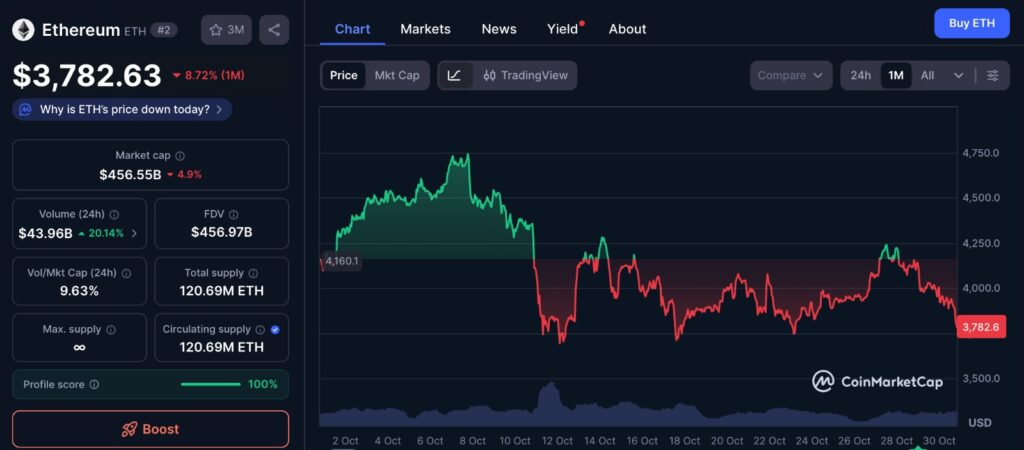
According to recent data from CoinMarketCap, Ethereum’s price has shown moderate volatility over the past month, reflecting both market uncertainty and renewed on-chain activity from Long Term Ethereum Holders. The one-month chart highlights periods of short-term consolidation followed by sharp reactions to wallet movements and broader crypto sentiment. This pattern suggests that while long-term confidence in Ethereum remains solid, traders are closely watching historical wallets and staking flows as potential indicators of near-term momentum and market direction.
Rising Activity Among Long Term Ethereum Holders
Recent on-chain data shows that a growing number of early Ethereum wallets have begun transferring their coins. Analytics firm Santiment reported a spike in the “age consumed” metric, which measures the total volume of ETH moved multiplied by the time it was held. The value of this metric reached around 500 million in early September and climbed to more than 600 million by the end of the month.
Such large spikes suggest that long-dormant coins—some inactive for nearly eight years—are now being moved. This behavior is rare and usually means that long-term investors are reassessing their positions.
What the Wallet Movements Reveal
Blockchain trackers identified several major transfers:
- One wallet that received 20,000 ETH during Ethereum’s initial coin offering recently moved 1,500 ETH to the Kraken exchange. That wallet had been inactive since 2015. Its original investment, worth about $6,000 then, would now be valued at over $78 million.
- Another address, which held 1 million ETH since the ICO, transferred 150,000 ETH to a new wallet for staking purposes. This represents hundreds of millions of dollars in value.
These transfers show two main patterns. Some funds are moving to exchanges, which may suggest plans to sell or rebalance. Others are being staked or transferred to new addresses, implying continued confidence in Ethereum’s future.
Why These Transfers Matter:
Short-Term Market Impact
When large amounts of old ETH enter exchanges, they can increase selling pressure, at least temporarily. Traders often view such activity as a potential bearish signal, since long-term holders selling their coins can increase market supply.
Long-Term Supply Dynamics
However, not all movement means selling. Many transfers are going into staking contracts, where coins are locked up to secure the network and earn rewards. This reduces the amount of ETH circulating freely on exchanges and can support prices over time.
Background: Who Are the Long Term Ethereum Holders?
Ethereum’s ICO took place in 2014, when participants could buy ETH for less than $0.30 per coin. The network officially launched in 2015. Some early investors bought thousands of ETH for just a few thousand dollars. Today, those holdings are worth tens or even hundreds of millions.
Because these early participants control large amounts of ETH, their actions attract attention. When an address inactive for years suddenly moves coins, it raises questions about whether the holder plans to sell, reinvest, or simply secure their assets more safely.
On-Chain Metrics and Whale Behavior
Analysts use blockchain tools such as Santiment and Nansen to track wallet behavior. Metrics like “age consumed” highlight when old coins start to move. A large spike means a significant number of older tokens have become active again.
The recent rise in this metric for Ethereum suggests a trend where early investors are making changes—either moving to staking, consolidating funds, or preparing for market opportunities.
What It Could Mean for the Ethereum Market:
Possible Profit-Taking
Some of the Long Term Ethereum Holders may be taking profits after nearly a decade. With ETH prices still far above ICO levels, even small sales represent life-changing returns.
Renewed Confidence in Staking
Others appear to be committing their holdings to staking contracts. By doing so, they can earn steady yields while continuing to support network security. This type of move is often seen as a bullish sign for the long-term health of the ecosystem.
Institutional and Ecosystem Growth
Ethereum continues to attract institutional investors, developers, and major companies building on its blockchain. The renewed activity among early holders may align with this phase of network maturity and renewed optimism about long-term value.
Key Indicators to Watch
- Exchange Inflows: Increases in ETH sent to exchanges could signal potential sell pressure.
- Staking Deposits: Higher staking activity indicates holders are locking in for the long run.
- Age Consumed Metric: Sustained spikes would confirm ongoing movement from dormant wallets.
- Price Reactions: Watch how ETH’s market price responds to each large transfer.
- Wallet Labeling: Identifying whether these wallets belong to individuals, institutions, or foundations can provide more context.
Market Interpretation and Caution
While the revival of old wallets attracts speculation, not every movement means an imminent sell-off. Holders may simply be reorganizing their funds, upgrading security, or experimenting with new DeFi and staking platforms. Analysts caution against overinterpreting single transactions without broader patterns.
The key is to monitor consistent behavior. If multiple dormant wallets start selling ETH on exchanges, it could create downward pressure. Conversely, if most transfers head into staking or cold storage, it could reduce supply and support prices.
What This Says About Ethereum’s Evolution
Ethereum has grown from a startup idea in 2014 into the world’s leading smart contract platform. The fact that early investors are still engaged shows how deeply the network has matured. Whether they sell, stake, or simply move coins, their actions demonstrate ongoing belief in Ethereum’s role in the crypto economy.
The return of these Long Term Ethereum Holders also reflects the broader shift from short-term speculation toward sustainable participation—staking, governance, and long-term building. Their renewed activity highlights how much Ethereum’s ecosystem has evolved in ten years and how these early adopters still play a vital role.
In conclusion, Long Term Ethereum Holders have begun reawakening old wallets from the ICO era, moving millions in ETH after years of silence. These movements may indicate profit-taking, staking, or strategic realignment. Whatever the motive, this renewed on-chain activity underlines Ethereum’s maturity and its holders’ continued influence over the network’s future.
Keep yourself updated with the latest crypto news with FYI Gazette
 Bitcoin
  Ethereum
  Tether
  BNB
BNB  XRP
XRP  Solana
  TRON
TRON  Dogecoin
  Litecoin
  Pepe
Pepe