
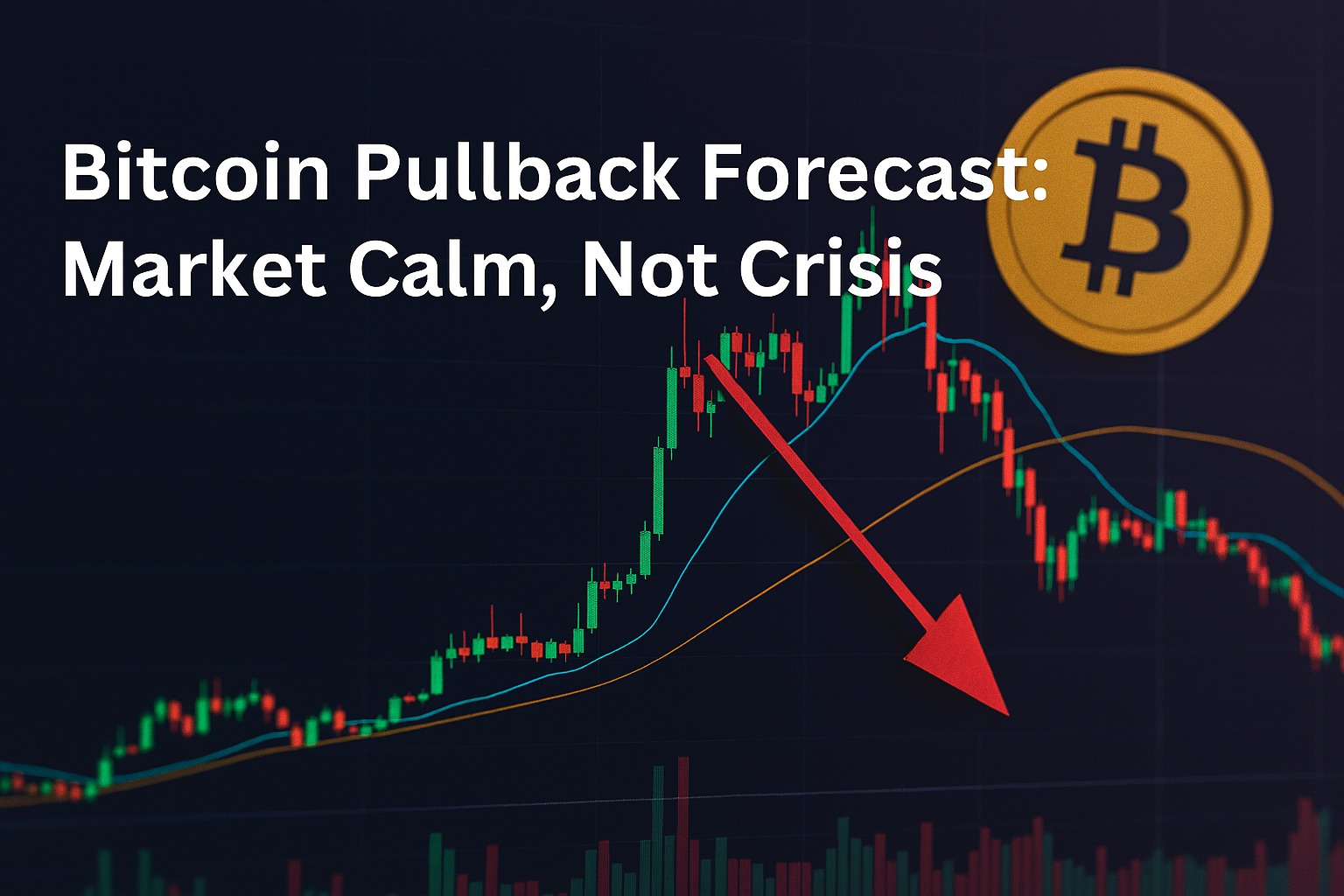
Bitcoin pullback forecast: Market calm, not crisis
Bitcoin pullback is the main topic of discussion as the world’s largest cryptocurrency experiences a temporary decline after months of upward momentum. Despite a notable price drop below the psychological $100,000 mark, data from on-chain analytics firm Glassnode shows little evidence of panic among investors. Instead, the decline appears to be part of a natural market correction within a larger bullish cycle. Analysts and traders agree that while short-term pain remains possible, fundamental network data continues to signal underlying strength.

The one-month Bitcoin price chart from CoinMarketCap illustrates how the current Bitcoin pullback has unfolded. After reaching highs above the $100,000 mark, Bitcoin has gradually trended lower in a controlled correction pattern. The chart shows short bursts of volatility but no sharp capitulation, aligning with Glassnode’s on-chain findings that investors are not panicking. Instead, trading activity reflects consolidation as the market digests prior gains. This visual data reinforces the view that the recent decline is a healthy pause within a broader upward cycle rather than the start of a long-term downtrend.
The nature of the Bitcoin pullback
The recent Bitcoin pullback reflects a consolidation phase rather than a market collapse. According to Glassnode, various market health indicators suggest that the downturn is mild compared to past corrections. The firm’s Relative Unrealized Loss metric, which tracks the percentage of the market holding coins at a loss, currently stands around 3.1%. This figure is far below the 10% or higher levels observed during deep bear markets such as 2022 or early 2023.
Glassnode’s analysts interpret this as a sign that most investors remain in profit and are holding their positions with confidence. This relatively low level of unrealized loss implies a healthy market structure where participants are not rushing to exit positions. As a result, the ongoing dip seems more like a short-term reset than the start of a larger downtrend.
Technical indicators and forecasts
Market strategist Mike McGlone recently suggested that Bitcoin could, in a worst-case scenario, revisit the $56,000 region, an area that aligns with the 48-month moving average. However, this is considered an extreme outcome and not the base case. For now, price movements remain above long-term support zones, and the overall sentiment among long-term holders is stable.
Bitcoin’s cost basis for short-term holders, estimated at around $112,000, serves as a key benchmark. The price briefly fell below this level and even touched the sub-$100,000 region, leading to some nervousness in the market. However, such tests of cost basis levels are typical during mid-cycle corrections and often mark areas where new demand can form.
On-chain signals of market health
Relative unrealized losses remain low
Glassnode data indicates that relative unrealized losses are at historically moderate levels. This metric helps identify moments of market stress or capitulation. In previous cycles, when this measure rose beyond 10%, it often coincided with steep sell-offs or forced liquidations. The current reading of roughly 3% suggests no such distress, reinforcing the idea that the Bitcoin pullback is a contained correction.
Profitability among holders
Despite price volatility, roughly 71% of the Bitcoin supply remains in profit. This figure points to broad market resilience and indicates that long-term holders have accumulated at much lower prices. High profitability levels typically reduce the likelihood of mass panic selling because investors have comfortable margins even after corrections.
Demand and supply shifts
The decline in short-term demand is evident from lower transaction volumes and reduced speculative activity. Yet, long-term holders continue to accumulate coins, signaling faith in Bitcoin’s macro trajectory. As demand re-emerges around key support zones, analysts expect volatility to subside.
Key levels and potential scenarios
The $100,000 mark remains both a technical and psychological level. A sustained recovery above this threshold would encourage renewed optimism. Conversely, failure to hold above it for an extended period could open the door to deeper retracement levels, possibly toward $85,000 or $75,000 before stabilizing.
Analysts caution that Bitcoin often experiences 20%–30% drawdowns even during strong bull markets. Historically, such pullbacks have served as healthy resets that flush out over-leveraged traders and prepare the market for the next leg higher. As of now, no structural signs of a long-term bearish reversal have appeared in the data.
Comparing the current pullback to past corrections
The current Bitcoin pullback resembles the mid-cycle consolidations observed in 2020 and 2024. In those instances, similar corrections occurred before significant upside continuations. On-chain data shows comparable investor behavior, moderate selling, strong holding activity, and minimal realized losses. This pattern indicates a disciplined market environment rather than one driven by fear.
By contrast, true bear markets are characterized by elevated realized losses, panic selling, and steep declines in network activity. None of these elements are visible today. Trading volumes remain steady, wallet growth continues, and long-term investors show conviction in holding their coins.
Why analysts see no panic
Market sentiment metrics, including the Fear and Greed Index, have moved from extreme greed toward neutral levels, suggesting that excessive euphoria is cooling but not collapsing. Glassnode interprets this as a constructive development because it reduces the risk of an overheated market. A more balanced sentiment typically sets the stage for sustainable growth.
Moreover, derivatives data reveal that leveraged positions have decreased, meaning fewer traders are at risk of liquidation. This gradual reduction of leverage helps stabilize price action and can form the foundation for the next upward phase.
Key takeaways for investors
- The Bitcoin pullback remains orderly with limited panic signals.
- On-chain data supports the view that this is a corrective phase, not a crash.
- Watch the $100,000 and $112,000 levels as critical short-term indicators.
- Long-term fundamentals, including adoption and profitability, remain solid.
- Patience and risk management are essential during high-volatility periods.
Outlook for the months ahead
Most analysts foresee consolidation continuing for several weeks or months before Bitcoin attempts a new rally. The combination of cooling sentiment, stable network metrics, and consistent long-term accumulation points to a healthy correction phase. The next major catalyst could come from renewed institutional interest or macroeconomic shifts such as lower interest rates.
In summary, the Bitcoin pullback appears to be a normal, data-supported retracement within an overall bullish structure. While short-term volatility may persist, Glassnode’s findings and other on-chain signals show no evidence of widespread panic or structural breakdown. The market remains resilient, positioning Bitcoin for potential recovery once selling pressure fades and demand strengthens again.
Keep yourself updated with the latest crypto news with FYI Gazette
 Bitcoin
  Ethereum
  Tether
  BNB
BNB  XRP
XRP  Solana
  TRON
TRON  Dogecoin
  Litecoin
  Pepe
Pepe