
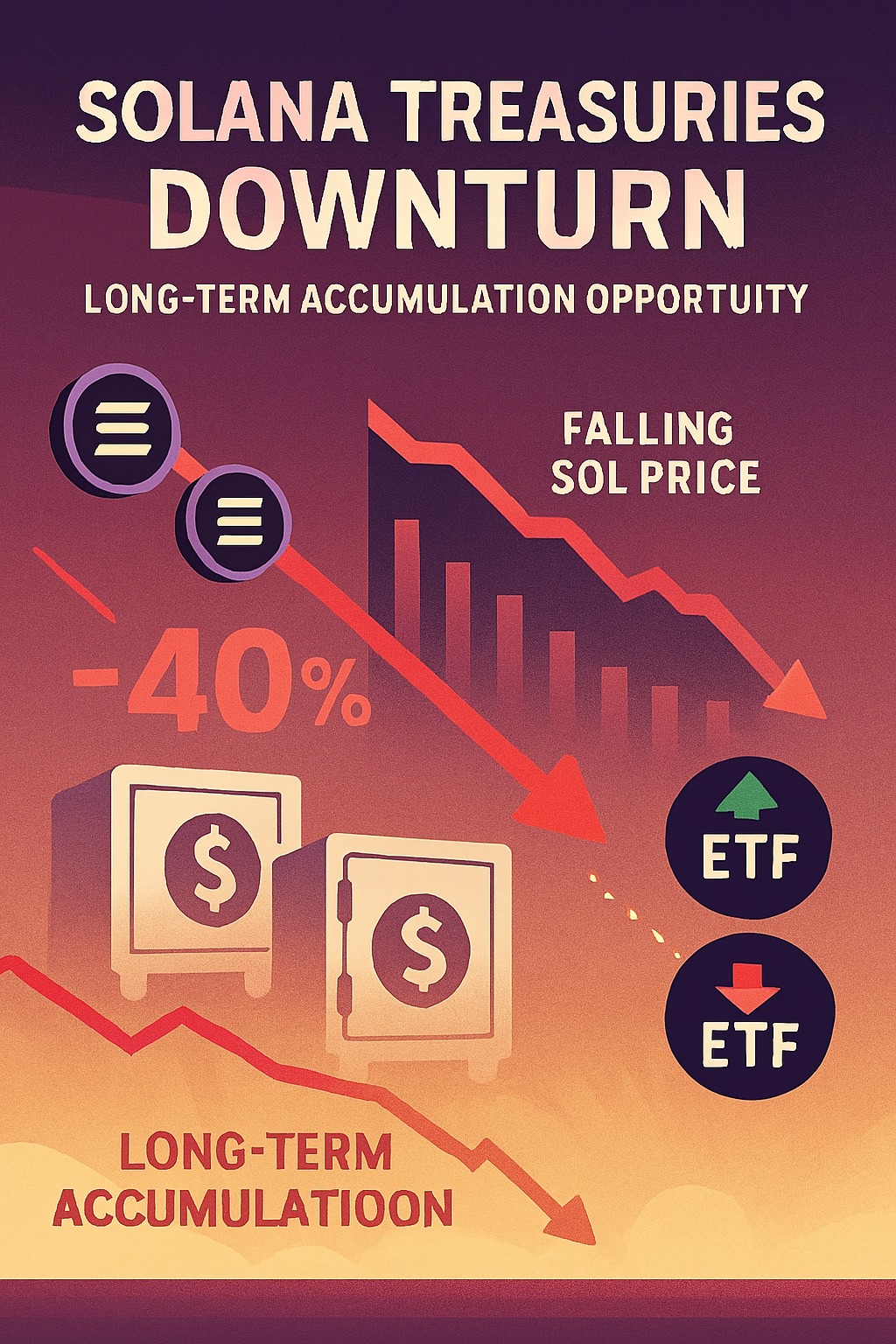
Solana Treasuries Drop Sparks Long Term Setup
Solana Treasuries have taken a major hit in recent weeks, but some industry leaders argue that the decline may not be a warning sign at all. Instead, they believe this moment could represent one of the most important long term accumulation windows in years. As treasury values slide and market volatility rises, a few analysts are calling the downturn a decade defining setup rather than a setback. This article breaks down the recent numbers, the reasoning behind the bullish perspective, and what this shift means for the future of the Solana ecosystem.
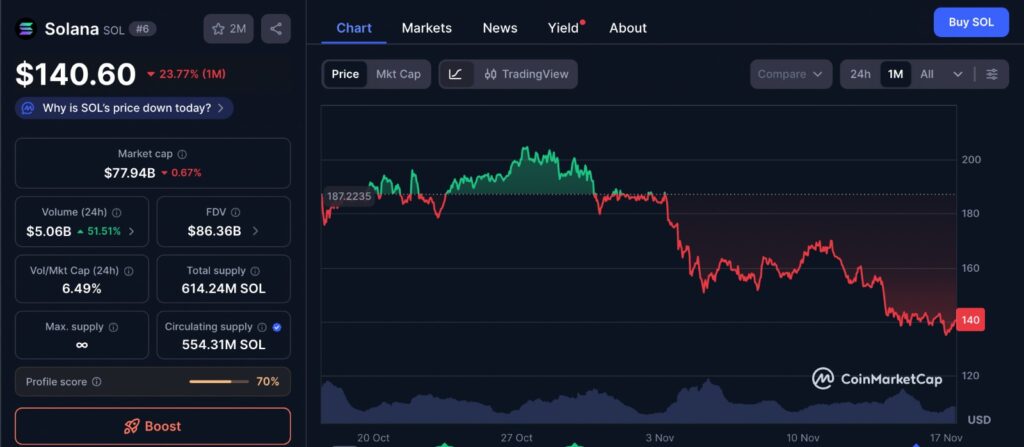
The accompanying one month Solana price chart from CoinMarketCap highlights the recent volatility that has defined the current market phase. After reaching its local highs, SOL entered a steady downward trajectory, reflecting the broader correction across major crypto assets. The chart shows several brief recovery attempts, but each rally was met with renewed selling pressure, ultimately pushing the price into a lower trading range. This visual decline aligns with the broader drop in Solana treasury valuations discussed earlier, reinforcing how market sentiment, reduced inflows, and heightened uncertainty have all contributed to the pullback.
The recent decline in Solana Treasuries
Multiple treasury firms holding Solana based assets have experienced sharp value drops. Reports show that total net asset value for Solana linked treasuries has fallen by around 40 percent. This means treasury values that once stood near 3.5 billion dollars have fallen closer to 2.1 billion dollars. Much of this decline stems directly from the downturn in the price of SOL, Solanas native token.
The price of SOL previously traded near 253 dollars but slid to about 135 dollars during the correction. As treasuries generally hold large amounts of SOL, their asset values dropped in line with the token price. Individual firms saw similar damage. One major treasury holder recorded a fall from roughly 507 million dollars down to about 310 million dollars.
Another challenge during the same period was the lack of new treasury inflows. In one recent week, inflows into treasury based Solana products dropped entirely to zero. This lack of new capital has added stress to already declining asset values, creating a sharp downward cycle.
Why the downturn may be an opportunity
A long range outlook for Solana Treasuries
Not everyone sees the decline as a negative. Some leaders argue that the downturn creates a rare setup for long term investors. One chief investment officer emphasized that the sell off may be helping the market reset after months of rapid growth. He described the decline as a position setting moment, not a collapse.
This perspective comes from a belief that Solana could play a major role in global digital value transfer in the future. If that scenario plays out, today’s low valuations may look unusually attractive years from now. This is the foundation of the long term bullish argument: volatility today may translate into growth tomorrow.
Volatility as an advantage
Supporting this idea is the view that volatility can be useful for treasury managers. When token prices fall sharply, managers can accumulate more SOL per share at cheaper levels. Over time, this increases the total amount of SOL underlying each treasury unit, potentially boosting long term returns.
This strategy depends on a multi year horizon. In the short term, volatility looks painful. Over several years, however, it can help build a stronger underlying asset position, especially for firms focused on maximizing SOL holdings rather than short term dollar denominated balance sheets.
Market flows and short term imbalance
One detail worth noting is the unusual flow pattern surrounding SOL. While spot based exchange traded funds holding SOL have seen weeks with tens of millions in inflows, the broader market still experienced heavy outflows. This imbalance means that even though institutional demand exists, it has not been enough to counteract selling pressure elsewhere.
The impact is clear: SOL prices fell despite positive ETF inflows. For treasury holders, this reinforced the downward trend in net asset values, but it also created what some consider an attractive long term discount.
Challenges that Solana Treasuries still face
Market to NAV pressure
Some Solana Treasuries currently trade at or below their net asset value. When this happens, firms may choose to sell SOL positions to buy back their own stock and push prices back toward value alignment. If multiple firms follow this strategy at the same time, it can create even more downward pressure on the market.
Slowed inflows
The recent halt in treasury inflows is also a concern. Without fresh capital, treasury growth depends solely on asset appreciation, something that is not happening during a price correction. If inflows do not return soon, accumulation strategies may slow and recovery could take longer.
Macro and ecosystem risks
Solana’s challenges do not exist in isolation. Broader crypto markets have dealt with liquidity tightening, regulatory uncertainty, and shifting investor sentiment. These factors influence the pace of recovery. Even if Solana’s technology and ecosystem remain strong, external conditions may delay a rebound.
Why the decline still matters for investors
A strategic entry point
Investors who believe in Solana’s long term potential may see this decline as a strategic entry window. Historically, steep corrections in major crypto networks have often been followed by strong multi year growth cycles, though this is never guaranteed.
Evolving treasury strategy
Treasury managers may also use this period to rebalance, accumulate, and improve asset efficiency. Observing their behavior can help investors understand how large holders view future prospects.
Optionality in volatility
The current environment offers optionality for long horizon investors. Those who view short term volatility as an obstacle may sit out. Those who see it as leverage may treat this downturn as a foundation building moment.
The potential path forward for Solana Treasuries
In the near term, continued pressure from low inflows and market stress may keep SOL prices volatile. Over the next several years, however, if Solana continues expanding in areas such as payments, gaming, and decentralized finance, treasury values could rebound strongly.
In the long term, the bullish thesis suggests that this downturn may eventually be seen as the start of a larger growth cycle rather than the end of one.
Keep yourself updated with the latest crypto news with FYI Gazette
 Bitcoin
  Ethereum
  Tether
  BNB
BNB  XRP
XRP  Solana
  TRON
TRON  Dogecoin
  Litecoin
  Pepe
Pepe