
Pump Fun Cashout sparks alarm as $436M moves
Pump Fun Cashout has become a major topic of discussion across the crypto community after more than $436 million in stablecoins moved out of the platform during a period of fading memecoin enthusiasm. What first appeared as routine transfers quickly turned into a signal that the once-explosive memecoin launch sector may be entering a much more cautious phase. The large-scale movement of funds, combined with slipping revenue and weakening retail demand, has prompted investors to reassess the state of the memecoin market and the strength of Pump.fun’s position within it.
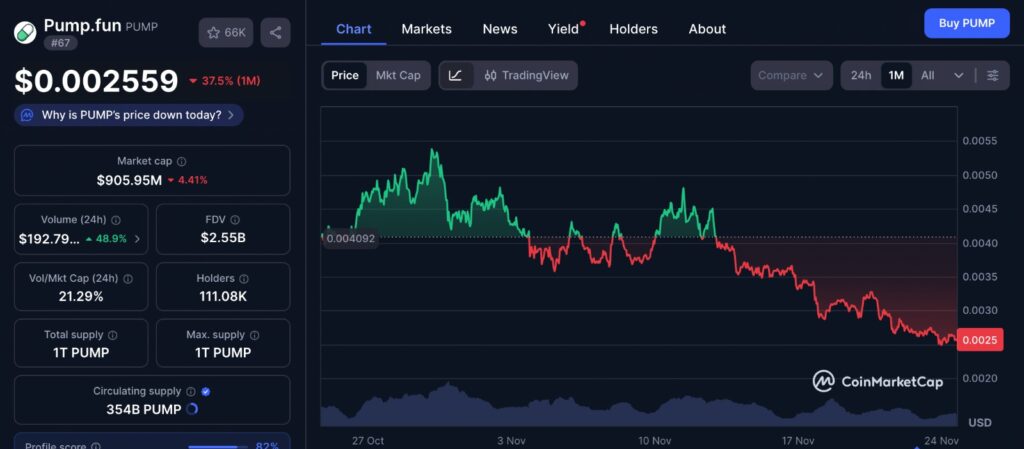
The latest one-month price chart for PUMP on CoinMarketCap reflects the broader cooling trend surrounding memecoins. After the October market shock and the subsequent $436M Pump Fun Cashout, the token’s momentum has struggled to regain its earlier strength. The chart highlights a period of uneven trading activity, with brief spikes in interest followed by renewed pullbacks, suggesting that traders remain cautious and liquidity has become more fragile. This pattern aligns with the wider slowdown in speculative participation, reinforcing how shifting sentiment and major treasury movements are shaping PUMP’s short-term price behavior.
Pump Fun Cashout gains attention as market slows
Pump.fun rose quickly as a Solana-based launchpad where users could create, trade and speculate on new memecoins within minutes. But since the sharp crypto market crash in mid-October, trading activity and speculative appetite have both declined. This shift set the stage for the Pump Fun Cashout event, where the platform transferred around $436 million in USDC to the crypto exchange Kraken. These transfers began roughly a week after the $19 billion crash in October, which had already cooled interest in highly speculative assets.
According to blockchain tracking platforms, the timing made many observers believe that the operators were reducing exposure or preparing for more defensive positioning. As memecoin momentum faded, so did the once-strong inflow of new traders eager to buy, launch or flip tokens. This created a more fragile environment where large transfers looked more like strategic retreats than operational movements.
Revenue drop intensifies concern
The Pump Fun Cashout event also coincided with a meaningful drop in the platform’s monthly revenue. For the first time since July, monthly income fell under $40 million, landing at approximately $27.3 million in November. This represented a steep 53 percent decline from the September peak of around $58.9 million.
This reduction in earnings reflected a clear slowdown in trading volume, token launches and general activity on the platform. As fewer users engaged in rapid speculation, the transactional fees and launch revenues that had powered Pump.fun’s growth began to shrink. Combined with the $436 million transfer, it created a picture of a platform tightening its financial posture in response to market cooling.
Silence adds to uncertainty
Following the cashout, Cointelegraph reached out to Pump.fun for comment on why such a large transfer occurred and whether additional liquidations were planned. The response offered little clarity. A spokesperson simply stated that the relevant team would provide comment when they “have the time.” This lack of immediate transparency made investors even more uneasy, particularly given Pump.fun’s importance in driving memecoin activity on Solana during earlier market peaks.
Without clear communication, speculation grew that the big cashout could be linked to internal strategy shifts, treasury restructuring or preparation for further market turbulence.
Pump Fun Cashout criticized by investors
The Pump Fun Cashout sparked debate across the crypto community. Critics argued that such major transfers from a leading memecoin launchpad could introduce selling pressure or cause fears of additional liquidation. Some investors worried that operators might continue to offload tokens or stablecoins, further weakening the memecoin sector at a time when confidence was already low.
Analysis from market researchers suggested that slowdown trends were already in motion. Retail traders, who typically fuel memecoin frenzies, had been withdrawing for months due to consecutive losses, scams and failed token launches. Analysts noted that the October crash did not start the decline but accelerated an already active downturn in memecoin participation.
Historical patterns repeat
Some in the community were not surprised by the Pump Fun Cashout. This was not the first instance of large-scale transfers associated with the platform, and past sell-offs had raised similar concerns. Since memecoins thrive on momentum, reputation and community sentiment, any pattern of significant withdrawals can threaten confidence, even if the moves are legitimate internal transactions.
The slowdown in the memecoin market mirrored broader trends across speculative crypto assets. As liquidity tightened and investor caution increased, platforms like Pump.fun faced greater pressure to maintain earnings while navigating lower trading activity.
Large holdings remain despite transfers
Despite the $436 million Pump Fun Cashout, on-chain data showed that the platform still held substantial reserves. A wallet linked to Pump.fun retained roughly $855 million in stablecoins and over $200 million in Solana tokens. These figures indicated that the cashout did not deplete the platform’s treasury but represented only a portion of its available holdings.
Some analysts believed the transferred funds originated from private placements of the PUMP token, issued months earlier at a price significantly below market value. If true, the movement may represent internal accounting steps or preparation for long-term treasury management rather than panic selling.
Community reaction highlights memecoin fatigue
Reactions from traders ranged from frustration to resignation. Some joked that Pump.fun was acting like a “full-time liquidation machine,” while others observed that buying dips in the memecoin market had repeatedly led to further losses. The humor carried an underlying truth: sentiment across the memecoin market had grown noticeably weaker, and large transfers only deepened that skepticism.
Pump Fun Cashout marks a turning point
The Pump Fun Cashout is emblematic of a broader shift. Memecoins, once the hottest corner of the market, are now struggling under the weight of oversupply, reduced demand and shrinking liquidity. Platforms built on the boom cycle must now adjust to a slower, more demanding environment where transparency and sustainable utility matter more than hype.
While Pump.fun still holds large reserves and remains operational, the combination of declining revenue, weakened market activity and major fund transfers signals that the age of effortless memecoin mania may be fading. Traders and creators alike may need to reset expectations as the space matures beyond its most explosive phase.
Keep yourself updated with the latest crypto news with FYI Gazette
Read more about Memecoins with FYI Gazette
Keep yourself updated with the latest Altcoin News with FYI Gazette
 Bitcoin
  Ethereum
  Tether
  BNB
BNB  XRP
XRP  Solana
  TRON
TRON  Dogecoin
  Litecoin
  Pepe
Pepe