

Bitcoin Price Dip: Why Bitcoin Fell to Two Month Lows
Bitcoin Price Dip shocked the crypto market after Bitcoin fell to two month lows near $83,000, triggering widespread concern among traders and investors. The sudden decline did not happen in isolation, as global financial markets also experienced heavy selling pressure. Stocks, gold, and other risk sensitive assets moved lower at the same time, creating a perfect storm that dragged Bitcoin down with them.
The Bitcoin price dip marked one of the sharpest pullbacks in recent weeks, with BTC dropping nearly six percent in a short period. This move erased weeks of gradual gains and forced the market to reassess short term expectations. The decline highlighted how closely Bitcoin remains tied to broader macroeconomic conditions, especially during periods of elevated volatility.
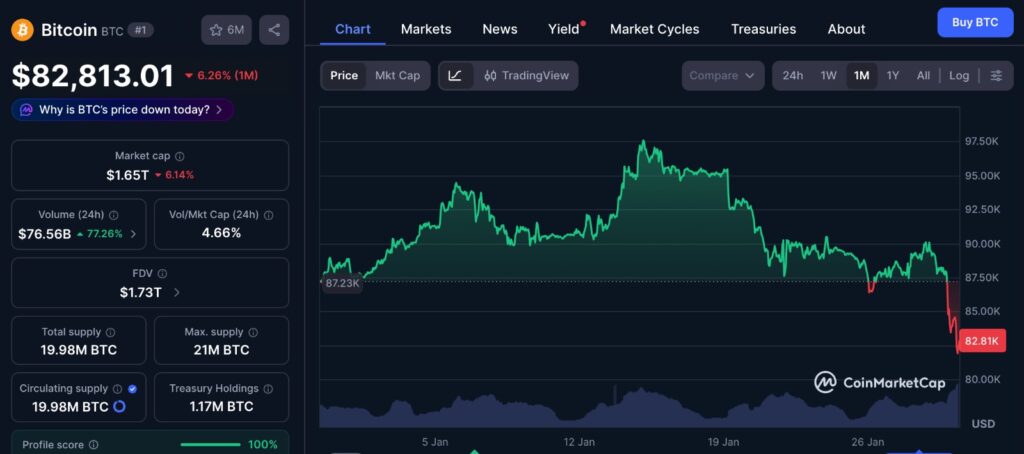
Viewed alongside the one-month price chart, the Bitcoin price dip stands out less as a single event and more as the end of a gradual loss of momentum. The chart shows how repeated attempts to push higher were met with diminishing follow-through, leaving price increasingly vulnerable once broader market pressure emerged. Rather than collapsing immediately, Bitcoin drifted into weaker structure, which made the eventual drop sharper when support finally gave way. This context helps explain why the move felt sudden, even though the warning signs had been building over several weeks.
Understanding the Bitcoin Price Dip
At the core of the Bitcoin price dip was a strong risk off move across global markets. Investors rapidly reduced exposure to volatile assets as uncertainty increased. When fear spreads in traditional markets, cryptocurrencies often experience amplified reactions due to their speculative nature and high leverage.
Bitcoin briefly traded around $83,000 after breaking below key support levels. Once those levels failed, selling pressure accelerated as stop losses were triggered and leveraged positions were liquidated. This chain reaction intensified the downside momentum and pushed prices lower in a short time frame.
Why Macro Markets Hit Bitcoin Hard
One major factor behind the Bitcoin price dip was unusual volatility in precious metals. Gold and silver had recently reached record highs before sharply reversing. This sudden move was unexpected and caused confusion across financial markets.
When traditional safe haven assets become unstable, investors often rush to raise cash. In these situations, Bitcoin is sometimes treated as a risk asset rather than a hedge. As a result, Bitcoin sold off alongside metals and equities, reinforcing the broader market decline.
The rapid pullback in gold erased enormous market value, sending shockwaves through global trading desks. This caused investors to exit multiple asset classes simultaneously, and Bitcoin was not spared from the wave of selling.
Liquidity and Forced Selling Pressure
Liquidity played a major role in accelerating the Bitcoin price dip. As prices fell, large clusters of leveraged long positions were liquidated. These forced liquidations added additional sell orders to the market, pushing prices even lower.
Within hours, hundreds of millions of dollars worth of Bitcoin positions were wiped out. This kind of rapid liquidation environment often leads to exaggerated price moves, especially when liquidity thins out near key technical levels.
Large traders and market makers may also have contributed to the speed of the decline. When liquidity pools are tested, even moderate selling can cause outsized price drops. This makes Bitcoin particularly sensitive during periods of macro driven volatility.
Technical Breakdown Adds to the Bitcoin Price Dip
Technical analysis played an important role in shaping trader behavior during the Bitcoin price dip. One of the most closely watched levels was the yearly open price, which had previously acted as strong support. Once Bitcoin fell below this level, bearish momentum increased.
Moving averages that previously provided support failed to hold, reinforcing the downside trend. As Bitcoin continued lower, traders began watching the monthly candle close for signs of either recovery or further weakness.
If Bitcoin fails to reclaim lost support levels, the market may interpret this as confirmation of a deeper corrective phase. On the other hand, a strong recovery above key levels could help restore bullish confidence.
Market Sentiment Turns Cautious
Sentiment shifted quickly as the Bitcoin price dip unfolded. Fear increased across the crypto market, with traders becoming more defensive and cautious. In times like these, emotional reactions often amplify price swings as panic selling competes with opportunistic buying.
Long term holders tend to remain calmer during pullbacks, but short term traders are more likely to exit positions when volatility spikes. This difference in behavior can create short term instability even when long term fundamentals remain unchanged.
As fear rises, trading volumes often spike, reflecting uncertainty rather than conviction. This environment can persist until a clear catalyst restores confidence or reduces macroeconomic stress.
Whale Activity and Order Book Dynamics
Another element influencing the Bitcoin price dip was activity from large market participants. Large orders placed on exchanges can influence short term price action, especially when liquidity is thin. Whether intentional or not, these actions can create additional pressure during already fragile conditions.
When price approaches important liquidity zones, sharp moves often follow. If sell orders dominate these zones, prices can drop rapidly before stabilizing. This dynamic was evident as Bitcoin tested lower levels near $83,000.
Editor’s View: Why This Bitcoin Price Dip Felt Different
This Bitcoin price dip appeared to unsettle traders not just because of the price level, but because of how quickly confidence faded once support broke. In calm markets, pullbacks are often treated as routine opportunities, but this move coincided with visible stress across multiple asset classes, which changed how participants interpreted risk. When investors see gold, equities, and crypto all selling off together, it weakens the instinct to step in early. That hesitation, more than the charts themselves, can quietly deepen short-term declines before stability returns.
What Comes Next for Bitcoin
Looking ahead, the Bitcoin price dip has placed the market at a crossroads. Traders are watching closely to see whether Bitcoin can reclaim broken support levels or whether further downside develops. The monthly close will be especially important in shaping short term expectations.
Macro conditions will remain a key driver. If global markets stabilize and risk appetite returns, Bitcoin could rebound and recover lost ground. However, continued instability in equities, commodities, or currencies could extend pressure on crypto markets.
In summary, the Bitcoin price dip near $83,000 was driven by a combination of global market stress, unusual precious metal volatility, liquidity driven liquidations, and technical breakdowns. While the move was sharp, it reflects broader financial uncertainty rather than a single crypto specific event. How Bitcoin responds next will depend heavily on macro trends, market sentiment, and its ability to reclaim critical price levels.
Disclaimer: This content is for informational purposes only and does not constitute financial advice.
Keep yourself updated with the latest crypto news with FYI Gazette
Read more about Memecoins with FYI Gazette
Keep yourself updated with the latest Altcoin News with FYI Gazette
 Bitcoin
  Ethereum
  Tether
  BNB
BNB  XRP
XRP  Solana
  TRON
TRON  Dogecoin
  Litecoin
  Pepe
Pepe