
Bitcoin Dip Sparks Massive Liquidations
Bitcoin Dip dominated the weekend as the leading cryptocurrency experienced a sudden and steep decline that erased billions in market value within hours. The unexpected move caught many traders off guard, especially those holding leveraged long positions that were quickly wiped out as the price collapsed. The dramatic shift marked one of the most turbulent weekend sessions in recent months, highlighting the ongoing volatility that continues to shape the broader digital asset market.
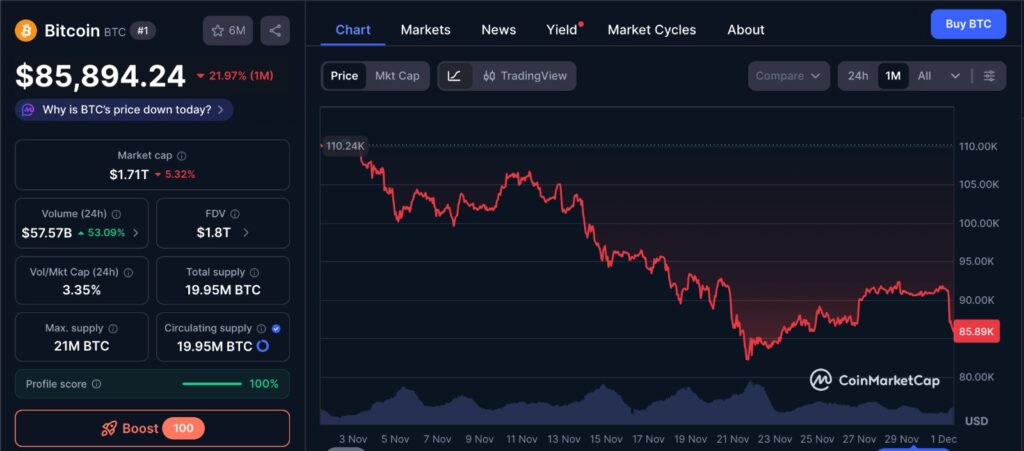
The one-month Bitcoin price chart above provides visual context to the recent market volatility. The trend illustrates how BTC has moved through alternating periods of recovery and decline, ultimately leading into the latest downturn highlighted in this report. By reviewing the chart, readers can see where momentum began weakening, how the market reacted to shifting sentiment, and how the recent dip fits within the broader monthly pattern. This visual snapshot helps clarify whether the recent price action represents part of a wider correction, a temporary pullback, or a continuation of an existing trend.
Bitcoin Dip and the Weekend Downturn
The Bitcoin dip began late Sunday when the price, which had hovered around the familiar range near recent highs, abruptly turned downward. Throughout most of the weekend, Bitcoin traded around the 91,500 dollar level, maintaining a relatively stable range that gave traders some confidence that the month would end on firmer ground. However, the calm did not last long. As selling pressure appeared suddenly, the price plunged almost 5 percent in roughly three hours, dropping to around 86,950 dollars on major exchanges.
This sharp decline followed what had been the first green weekly candle after four consecutive red weeks. Many traders saw that weekly close as a potential sign of renewed strength in the market. Instead, the swift reversal reminded participants how quickly sentiment can shift, especially during low-liquidity weekend hours when even moderate selling can trigger exaggerated price moves.
Market watchers pointed out that weekend volatility has long been a characteristic of the cryptocurrency space. Some analysts had warned earlier that both Friday and Sunday nights frequently delivered large, unexpected market swings. The Sunday crash fit that pattern perfectly, reinforcing the idea that crypto markets remain especially vulnerable outside traditional trading sessions.
Bitcoin Dip Leads to Wave of Liquidations
The Bitcoin dip did more than simply push prices lower. It triggered a massive liquidation event across the cryptocurrency market. Within a 24-hour stretch surrounding the drop, over 180,000 traders saw their leveraged positions liquidated. The total value of those liquidations reached approximately 539 million dollars.
What made the liquidation event particularly notable was that nearly 90 percent of the liquidated positions were longs. This meant that most traders had been betting on Bitcoin and other major cryptocurrencies to continue climbing. When the price fell unexpectedly, those positions were forced to close, rapidly removing billions in leveraged exposure from the market.
The liquidations accelerated the price decline. As long positions were automatically closed, they added extra sell pressure, pushing the price even lower and triggering additional liquidations in a cascading effect. Analysts described this as a classic liquidity flush: once early selling generated momentum, each liquidation added to the chain reaction.
Worst November Performance in Years
The Bitcoin dip also put an exclamation point on an already difficult month. November turned out to be Bitcoin’s weakest month of the year and the worst November the asset had experienced since 2018. During that month in 2018, Bitcoin had suffered a dramatic crash of roughly 36 percent amid a prolonged bear market. Although this November’s decline was less severe in percentage terms, it still represented a sizable 17.49 percent drop.
This context gives additional weight to the weekend decline. Many traders had hoped for a more stable finish to the month, especially with earlier signs of recovery. Instead, the slump added to already mounting losses and reaffirmed that Bitcoin remained stuck in a corrective phase with uncertain momentum heading into the next month.
Analyst Reactions to the Bitcoin Dip
Despite the severity of the move, not all analysts saw the Bitcoin dip in a purely negative light. Some argued that the rapid liquidation event might actually set the stage for stabilization. One analyst, known as Sykodelic, suggested the downturn may represent what he called a clean start to the new month, noting that a large portion of leveraged long positions had been cleared out.
According to this view, the removal of excess leverage helps reset market conditions. With fewer overextended positions, the market faces reduced risk of additional cascading liquidations. This could allow price action to develop more organically, with less artificial volatility generated by sudden forced liquidations.
In addition, some pointed out that the weekend drop filled a pricing gap left open in the CME Bitcoin futures chart. These gaps are often revisited by price action, and their closure can sometimes serve as a technical reset that allows for a healthier market structure moving forward.
Understanding the Dangers of Leverage During a Bitcoin Dip
The weekend events highlight an important reality for traders: leverage can amplify both gains and losses, but it introduces significant danger in unpredictable markets like cryptocurrency. A Bitcoin dip of just a few percentage points can induce massive liquidations when leverage is stacked too high.
Traders who rely heavily on leverage without anticipating sudden volatility risk losing entire positions in moments. The market’s reaction to the Bitcoin dip demonstrated how quickly sentiment shifts, especially when weekend liquidity is thin. Even seasoned traders can be caught in rapid downswings caused not by news or fundamental shifts, but by sudden imbalances between buyers and sellers.
Outlook After the Bitcoin Dip
Looking forward, it remains unclear whether the weekend’s Bitcoin dip represents a turning point or just another steep drop in an ongoing corrective trend. Much depends on whether selling pressure eases and whether traders re-enter the market cautiously or continue to unwind risk.
If the liquidation wave successfully cleared out overextended positions, Bitcoin may find firmer support levels. On the other hand, if leverage builds up again too quickly or if broader economic conditions shift negatively, volatility could return in full force.
For now, the Bitcoin dip serves as a reminder of the crypto market’s inherent unpredictability. Whether this event becomes a brief setback or a precursor to deeper declines will become clearer in the coming days as the market recalibrates from the weekend shock.
Keep yourself updated with the latest crypto news with FYI Gazette
Read more about Memecoins with FYI Gazette
Keep yourself updated with the latest Altcoin News with FYI Gazette
 Bitcoin
  Ethereum
  Tether
  XRP
XRP  BNB
BNB  Solana
  TRON
TRON  Dogecoin
  Litecoin
  Pepe
Pepe