Bitcoin soft fork debate over legal threats and network principles
Bitcoin soft fork proposal ignites major community debate
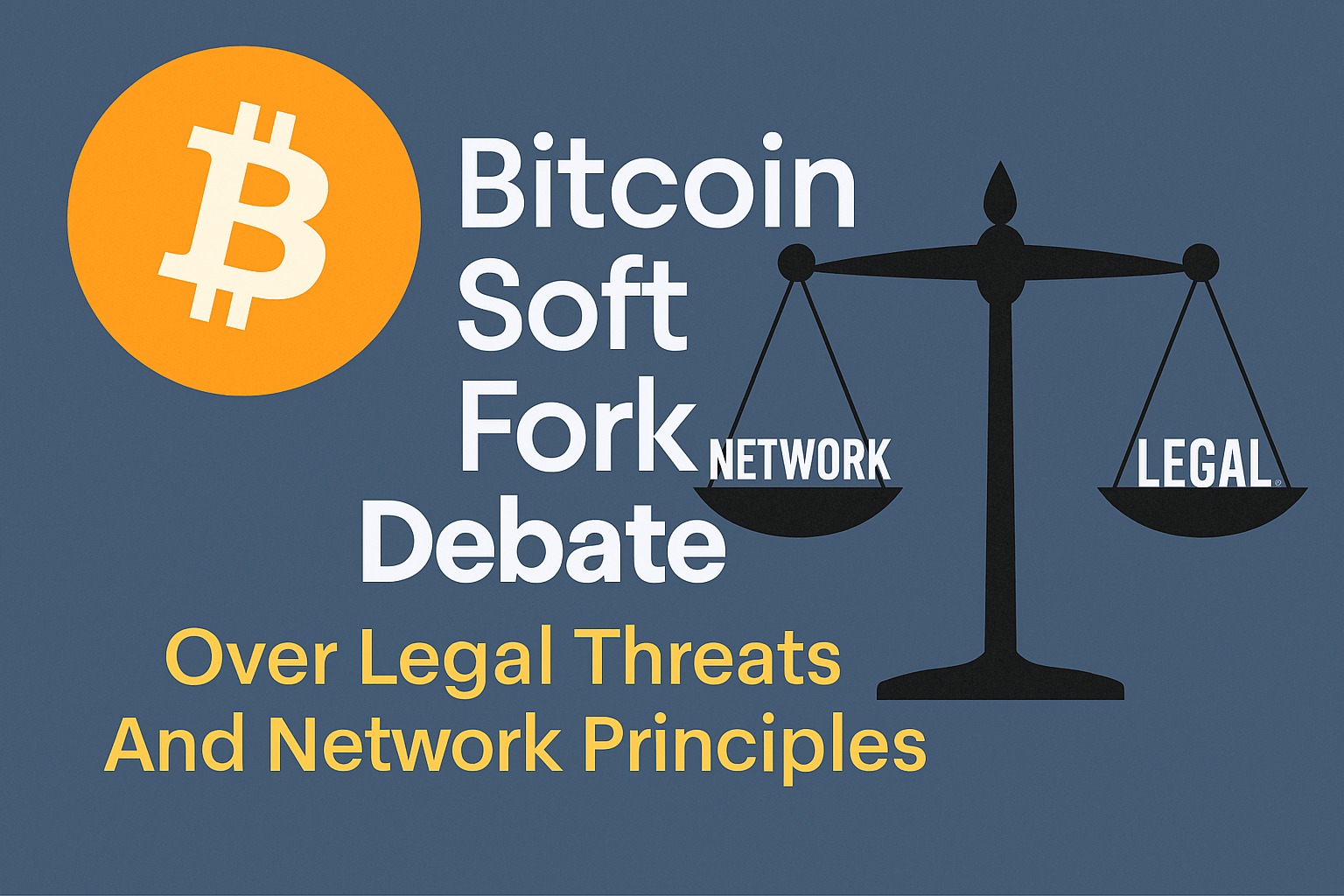
Bitcoin soft fork discussions have intensified following the proposal of BIP-444, which aims to temporarily restrict arbitrary data stored in Bitcoin transactions. The proposal, linked to developer Luke Dashjr, has drawn widespread attention, not just for its technical details but for its wording that mentions possible “legal or moral consequences” if rejected. Supporters believe this measure protects the network, while critics say it threatens Bitcoin’s foundational principle of decentralization.
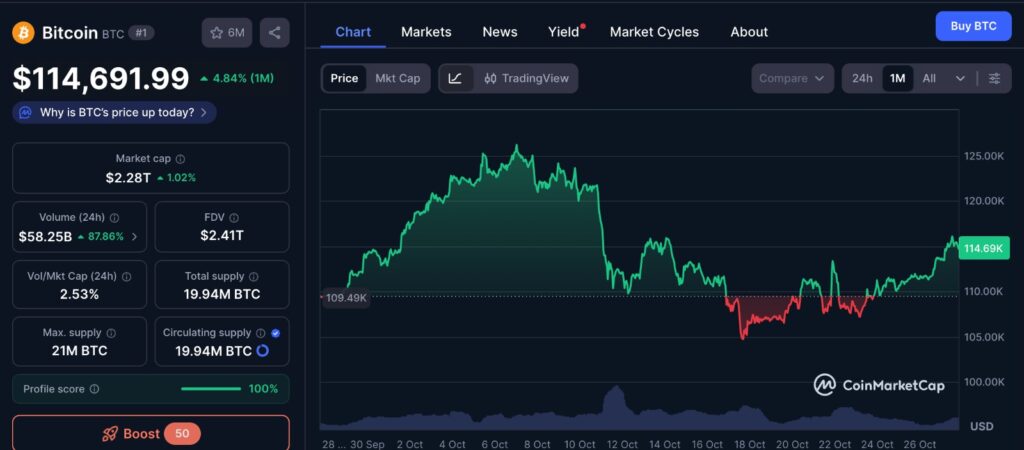
As shown in the chart from CoinMarketCap, Bitcoin’s price over the past month has reflected the market’s cautious sentiment amid the ongoing soft fork debate. While BTC experienced brief upward movements in response to broader market optimism and institutional accumulation, it also faced periods of consolidation and minor pullbacks, suggesting uncertainty among traders. The price action highlights how discussions around proposals like BIP-444, regulatory developments, and on-chain activity continue to influence investor confidence. Despite fluctuations, Bitcoin has maintained a relatively stable trading range, signaling resilience while the community debates the future direction of the network.
What the Bitcoin soft fork would change
BIP-444 proposes limiting non-financial or arbitrary data embedded into the blockchain. This includes tightening OP_RETURN outputs to around 83 bytes and restricting larger data storage in Tapscripts, which are often used for Ordinals and other digital inscriptions. These changes are described as temporary, with a suggested duration of about one year, intended to provide time to create a longer-term solution.
The proposal follows changes in Bitcoin Core v30, which removed some earlier data filtering limits. Supporters argue this increased the possibility of illegal or inappropriate content being permanently stored on-chain. They believe reducing this risk now is necessary to protect node operators, who maintain copies of the blockchain.
Why the legal wording sparked controversy
The most disputed part of the Bitcoin soft fork proposal is a statement suggesting that rejecting it could expose node operators to “legal or moral consequences” or lead them to “split to an altcoin.” Critics, including well-known developers like Peter Todd, called this wording aggressive and unnecessary. Some described it as a form of pressure rather than an open technical discussion.
Luke Dashjr later clarified on X (Twitter) that the proposal does not threaten legal action and that the wording was meant to highlight potential existing legal risks related to hosting illicit content not to force anyone into adopting the change. However, many in the community felt the language could discourage open debate.
Arguments supporting the Bitcoin soft fork
Supporters of BIP-444 present several key points:
- Legal and ethical concerns: They argue that storing potentially illegal content on the blockchain could create legal risks for those operating nodes in certain jurisdictions.
- Network efficiency: Increased use of Bitcoin for storing images, NFTs, and large data files has raised transaction fees and block space usage. Supporters say this affects the network’s primary function as a payment system.
- Temporary safeguard: Developers in favor insist the soft fork is not a permanent change but a temporary measure to reduce risk while a more complete solution is explored.
Critics’ concerns about censorship and control
Critics say the Bitcoin soft fork could undermine Bitcoin’s permissionless nature. Bitcoin has historically allowed users to embed limited arbitrary data in transactions, and opponents argue that restricting it sets a precedent for censorship. Members of the Ordinals community warn that limiting images and NFT-like inscriptions could lead to future restrictions on financial transactions.
Another major concern is centralization. Some critics fear that giving miners or developers increased control over which data is acceptable could concentrate power and weaken decentralization. Others question whether node operators realistically face legal risk, as legal responsibility for blockchain data remains debated.
How this compares to past Bitcoin soft forks
Soft forks like SegWit in 2017 and Taproot in 2021 were adopted to improve transaction efficiency, privacy, and scalability. These upgrades came after long public discussions and broad community support. In contrast, BIP-444 is seen as more restrictive because it limits functionality rather than expanding it, and its early framing included moral and legal arguments rather than purely technical ones.
Possible outcomes for the Bitcoin soft fork
Several different scenarios are possible:
- Adoption through consensus: If enough miners and node operators support it, the soft fork could be activated.
- Revision of wording or scope: Developers may adjust the proposal, especially the controversial legal language, while keeping the core data-limiting features.
- Rejection by the community: If rejected, the network remains unchanged and data-heavy transactions continue as they do now.
- Chain split (less likely but possible): If support is divided, parts of the network could follow different rules, resulting in a separate chain.
Impact on miners and node operators
Adopting the Bitcoin soft fork would require node operators to enforce new validation rules. Those who do not update might follow a different version of the blockchain. Some operators worry about being forced to choose between shutting down their nodes or possibly hosting illegal material.
Miners have mixed incentives. Some profit from higher transaction fees during periods of activity from Ordinals and inscriptions, while others support keeping Bitcoin blocks primarily for financial transactions.
Why this debate matters for Bitcoin’s future
The Bitcoin soft fork debate goes beyond technical changes. It raises key questions about what Bitcoin should be purely neutral technology or software that actively prevents certain content. It also highlights how difficult it is for a decentralized system to make decisions when values like free use, legality, and security collide.
The outcome of this debate could set a precedent for how future upgrades are proposed, how much influence developers have, and how Bitcoin responds to legal and ethical pressures.
Conclusion
The Bitcoin soft fork proposal BIP-444 has become one of the most debated topics in the community. Supporters view it as a responsible step to protect Bitcoin from legal risks and misuse, while critics argue it encourages censorship and centralizes power. Whatever the final decision, the discussion shows that as Bitcoin grows, its community must constantly balance openness, security, and long-term resilience.
Keep yourself updated with the latest crypto news with FYI Gazette
 Bitcoin
  Ethereum
  Tether
  XRP
XRP  BNB
BNB  Solana
  TRON
TRON  Dogecoin
  Litecoin
  Pepe
Pepe