
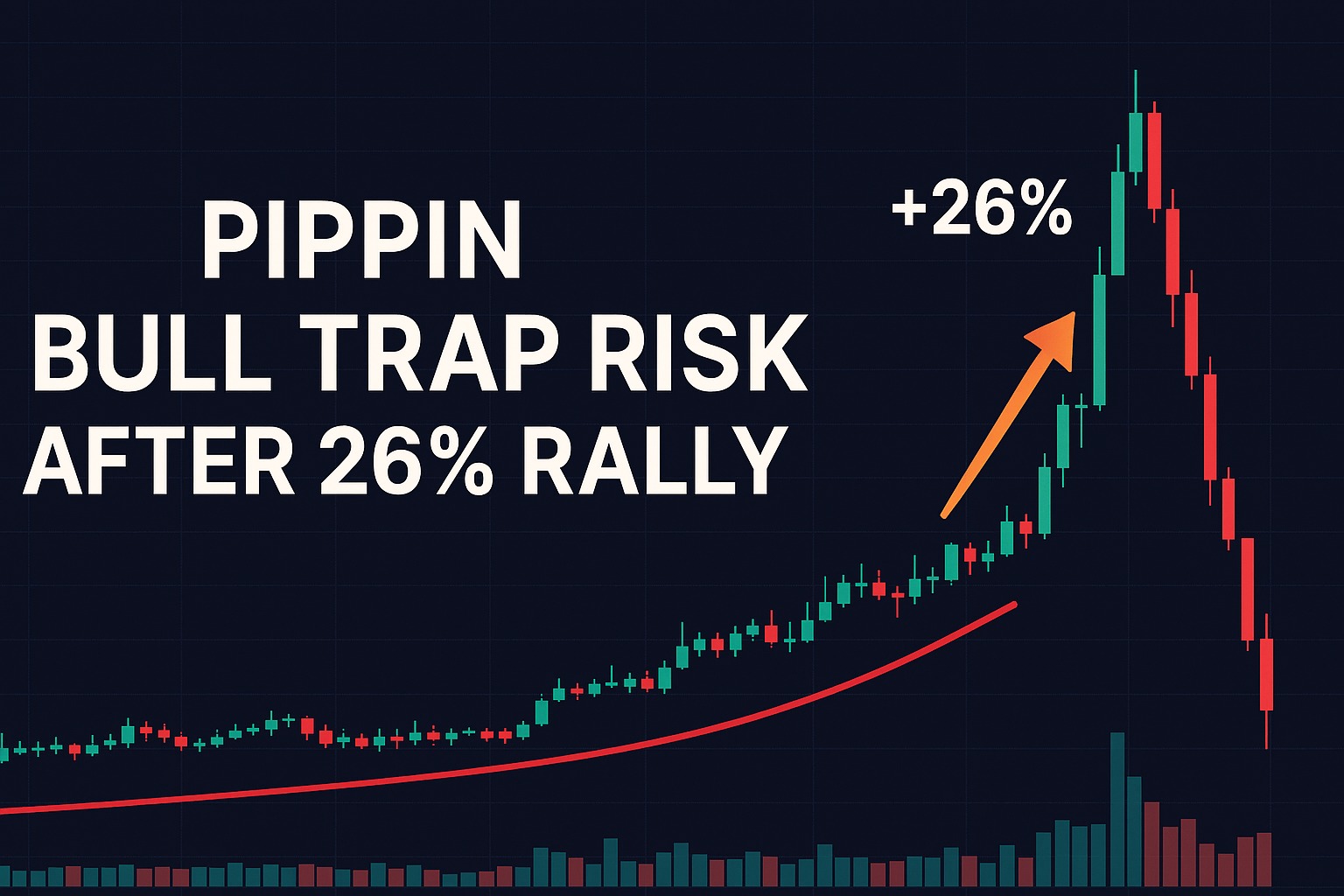
PIPPIN Bull Trap Risk After 26% Rally
PIPPIN Bull Trap fears are rising after the token recorded a sharp 26 percent price increase in a short period. While the rally attracted strong attention from traders and sparked fresh optimism, several important indicators suggest that the move may not be as solid as it looks. Beneath the surface, warning signs are beginning to appear.
The sudden jump in price created excitement across the market. Many traders rushed in, hoping to capture quick profits from continued upside. However, rapid price increases without strong support often lead to temporary breakouts. When momentum fades, late buyers can find themselves trapped at higher levels.
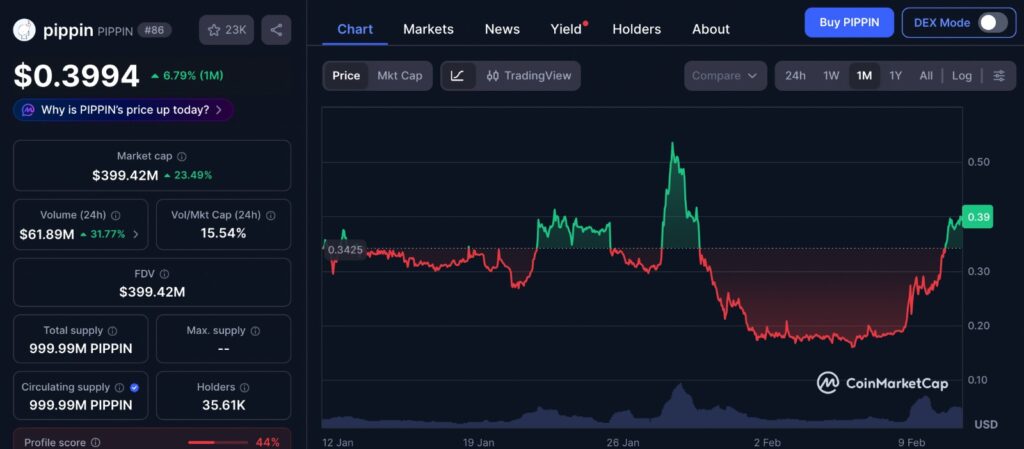
The one month price chart from CMC provides additional context to the recent 26 percent surge. While the latest move stands out clearly on the chart, it also highlights how quickly momentum has shifted within a relatively short timeframe. The broader monthly structure shows that volatility has remained elevated, with sharp advances and pullbacks shaping sentiment. Viewing the rally within this wider timeframe helps assess whether the breakout represents sustained strength or simply another short term spike within an unstable range.
PIPPIN Bull Trap and the 26 Percent Surge
PIPPIN’s recent rally was fast and aggressive. The token climbed quickly, delivering gains that stood out compared to previous sessions. Trading volume increased during the move, which at first seemed like a positive sign. Rising volume typically supports bullish strength.
However, the structure of the rally raised concerns. The move appeared driven by short term speculative buying rather than steady accumulation. When price rises too quickly without forming strong support zones, the risk of a pullback increases.
Sharp upward moves can attract momentum traders. But if there is not enough real demand behind the surge, the price can fall just as quickly. This type of setup is often seen in bull traps, where price breaks out, draws in buyers, and then reverses.
Derivatives Data Highlights PIPPIN Bull Trap Risk
One of the main warning signs came from the derivatives market. Open interest increased as PIPPIN’s price climbed. This means more traders were opening new positions. While this can support a trend, it also depends on how those positions are structured.
Funding rates became elevated during the rally. High funding rates show that many traders are opening long positions and are willing to pay to keep them open. When too many traders crowd into long positions, the market becomes unbalanced.
An overcrowded long trade increases the chance of a reversal. If the price stops rising or begins to fall, leveraged long positions may be forced to close. This can create a wave of selling pressure and push the price down even faster.
Growing Liquidation Pressure
As leveraged long positions build up, liquidation levels form below the current price. These levels act like pressure points. If the market drops slightly, it can trigger forced selling as traders are liquidated.
Once liquidations begin, they can accelerate the decline. This chain reaction is common in volatile markets. In such situations, even a small correction can turn into a sharp drop.
This risk makes the current setup fragile. With many traders positioned for continued upside, the market becomes vulnerable to sudden swings.
On-Chain Data Supports the PIPPIN Bull Trap View
On-chain metrics also show signs of weakness. Strong and sustainable rallies are usually supported by higher network activity, increased participation, and steady growth in transactions.
In PIPPIN’s case, the growth in on-chain activity did not match the size of the price increase. The rally happened without a clear surge in broader ecosystem engagement. This mismatch suggests that the move may have been driven mainly by speculative trading rather than long term confidence.
When price rises faster than underlying activity, it creates a gap between valuation and usage. Such gaps can close quickly if sentiment shifts.
There is also the possibility that larger holders used the rally to sell into strength. Distribution during price increases can limit further upside and add pressure if buying momentum slows.
Volume Quality Matters
Although trading volume increased, the pattern of that volume is important. Short bursts of heavy activity can reflect rapid speculation rather than stable demand.
Healthy breakouts usually show continued buying and consolidation above key resistance levels. If volume fades and price struggles to hold above previous resistance, the breakout may fail.
Without strong follow through, the rally risks turning into a temporary spike instead of the start of a longer trend.
Key Technical Levels in the PIPPIN Bull Trap Scenario
From a technical perspective, PIPPIN approached important resistance areas during its rally. These levels have previously acted as zones where sellers step back into the market.
If the token cannot maintain support above these resistance levels, the breakout could lose strength. A rejection near resistance combined with declining momentum indicators would strengthen the bull trap argument.
On the other hand, if PIPPIN consolidates and forms higher lows above former resistance, the bullish structure would improve. Stability and gradual growth would reduce the risk of a sharp reversal.
Traders are closely watching whether the token can defend its newly gained levels. Sustained price action above breakout zones would signal strength. Failure to do so would increase downside risks.
Editor’s View: Market Psychology Behind the Move
Sharp rallies like this often reveal more about trader behavior than about the asset itself. After a sudden 26 percent jump, many participants focus less on valuation and more on momentum, assuming that strength will naturally attract further buying. In smaller or more reactive tokens, that mindset can amplify price swings because liquidity is thinner and reactions are faster. What charts do not fully show is how quickly confidence can shift once early buyers begin securing profits, leaving late entrants exposed.
Sentiment Versus Sustainability
The 26 percent surge boosted market sentiment. Social discussions and short term enthusiasm increased as traders focused on quick gains. However, strong sentiment alone is not enough to support long lasting growth.
When price moves ahead of supporting data, caution becomes necessary. Balanced derivatives positioning, steady on-chain growth, and healthy consolidation are essential for sustainable rallies.
Bull traps often begin with convincing breakouts. They attract buyers who fear missing out. But once buying pressure weakens, the market can reverse sharply.
Conclusion
PIPPIN Bull Trap concerns remain valid despite the impressive 26 percent rally. Rising open interest, elevated funding rates, uneven on-chain activity, and key resistance levels all point to a fragile setup.
While short term volatility may continue, traders should approach with careful risk management. A strong and sustainable uptrend requires stable support, balanced positioning, and genuine growth in network activity.
Until those conditions improve, the recent surge may represent a high risk environment rather than the start of a lasting bullish phase.
Disclaimer: This content is for informational purposes only and does not constitute financial advice.
Keep yourself updated with the latest crypto news with FYI Gazette
Read more about Memecoins with FYI Gazette
Keep yourself updated with the latest Altcoin News with FYI Gazette
 Bitcoin
  Ethereum
  Tether
  XRP
XRP  BNB
BNB  Solana
  TRON
TRON  Dogecoin
  Litecoin
  Pepe
Pepe