Stablecoin Demand Could Lower US Interest Rates
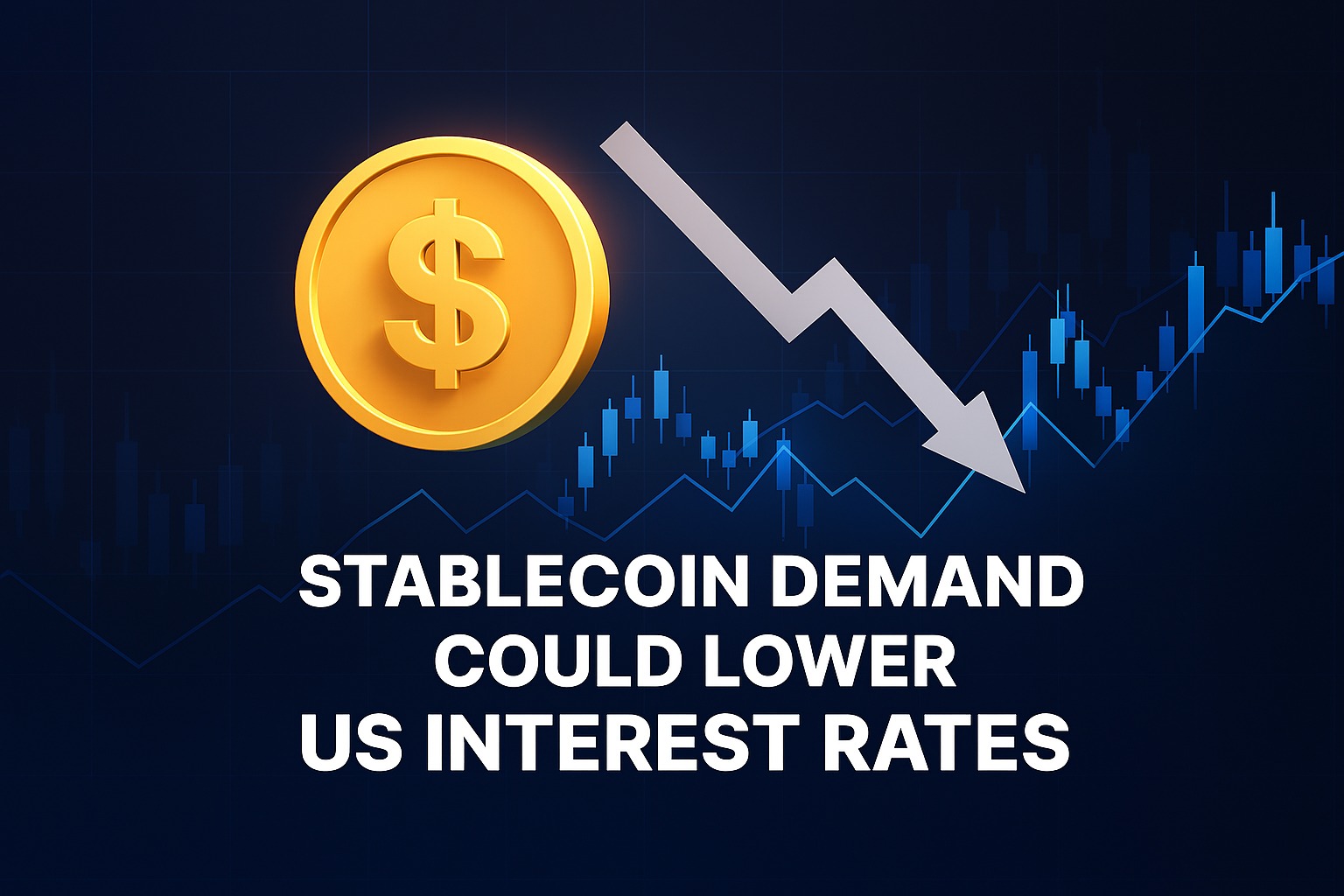
Stablecoin Demand is becoming a growing force in global finance, and according to Federal Reserve Governor Stephen Miran, its rise could have a direct impact on the United States’ interest rates. Speaking at the BCVC Summit in New York on Friday, Miran explained that the increasing appetite for US dollar–tied crypto stablecoins might be placing “downward pressure” on the neutral rate, known as the r-star, that influences the Federal Reserve’s benchmark interest rate decisions.
How Stablecoin Demand Could Influence Interest Rates
Miran suggested that as stablecoin demand expands, it could push the neutral rate lower. The neutral rate represents the equilibrium level of interest that neither stimulates nor slows the economy. When this rate declines, the central bank often adjusts by reducing interest rates accordingly.
“Stablecoins are already increasing demand for US Treasury bills and other dollar-denominated liquid assets by purchasers outside the United States,” Miran stated. “This demand will likely continue growing.” He noted that this effect could create a “multitrillion-dollar elephant in the room” for policymakers trying to maintain balance in the US monetary system.
According to CoinGecko data, the total market capitalization of all stablecoins currently stands at around $310.7 billion. However, Miran cited Federal Reserve research suggesting that the sector’s market value could surge to as much as $3 trillion within the next five years. Such rapid expansion could reshape liquidity flows, bond yields, and the mechanisms through which the Fed conducts monetary policy.
The Expanding Role of Stablecoins in Global Finance
Stablecoins, cryptocurrencies pegged to stable assets like the US dollar, have become crucial for trading, cross-border payments, and decentralized finance (DeFi) applications. As they grow in adoption, investors worldwide are increasingly holding digital tokens backed by US assets. This creates a new channel for global demand for Treasury securities and other liquid instruments that underpin these tokens.
Miran’s remarks highlight how stablecoin demand could influence broader economic trends. If non-US investors purchase more US assets to back stablecoins, the resulting inflow of capital could depress yields and, by extension, lower interest rates. Such a dynamic would mirror traditional patterns of foreign demand for safe US assets but amplified through the efficiency and scale of blockchain-based finance.
Stablecoin Demand and the Risks to Traditional Banking
Organizations like the International Monetary Fund (IMF) and major US banking groups have raised concerns that the growth of stablecoins could pose threats to traditional financial systems. As stablecoins compete with bank deposits and payment services, they could divert liquidity away from conventional institutions.
The IMF has warned that unregulated expansion of stablecoins could create parallel financial structures that operate beyond central bank control. Meanwhile, US banking associations have called on Congress to tighten oversight of stablecoins, particularly those offering yields or interest-bearing products. They argue such products could attract customers away from banks, undermining the stability of the financial system.
Regulation as a Catalyst for Stablecoin Growth
Despite regulatory apprehension, Miran emphasized that well-designed legislation could foster stability and growth in the stablecoin market. He praised the recently proposed GENIUS Act for offering clear guidelines and strong consumer protections.
“While I tend to view new regulations skeptically, I’m greatly encouraged by the GENIUS Act,” he said. “This regulatory apparatus for stablecoins establishes a level of legitimacy and accountability congruent with holding traditional dollar assets.”
According to Miran, regulation is essential not only for protecting investors but also for integrating stablecoins into the broader financial system. The GENIUS Act requires that US-based stablecoin issuers hold reserves backed one-to-one by safe, liquid, dollar-denominated assets such as Treasury bills. This ensures that stablecoins maintain full backing and transparency, reducing risks of runs or collapses that have plagued some crypto projects.
The Future of Monetary Policy in a Stablecoin Era
If stablecoin demand continues its exponential growth, central banks worldwide will need to account for this new source of liquidity in their policy models. Miran suggested that stablecoins could become a structural factor influencing the neutral rate and overall monetary stability.
Because stablecoins are often backed by short-term US assets, their expansion effectively channels capital into government securities. This persistent demand can flatten yield curves and reduce the effective cost of borrowing for the US government. In turn, this could prompt the Federal Reserve to reassess how it manages policy rates to maintain economic balance.
Moreover, the global nature of stablecoins means that monetary policy might face new transmission challenges. International holders of dollar-pegged stablecoins could influence domestic interest rate dynamics, blurring the line between US and global liquidity flows.
A Transforming Relationship Between Crypto and Central Banking
The dialogue between the crypto sector and central banks is evolving rapidly. While early stablecoins were seen as fringe financial tools, their increasing integration into payments, remittances, and institutional finance has changed perceptions. For central banks, understanding the implications of stablecoin demand is becoming as important as monitoring bond markets or exchange rates.
Miran’s comments suggest a shift within the Federal Reserve toward recognizing crypto’s macroeconomic influence. Rather than viewing stablecoins merely as speculative instruments, policymakers are starting to consider them as a legitimate component of global liquidity.
Challenges Ahead for Regulators and Policymakers
Despite optimism about regulatory progress, significant challenges remain. The rapid innovation in stablecoin models, including algorithmic and tokenized deposit systems, complicates oversight. Ensuring transparency, interoperability, and investor protection will require coordination between the Fed, the Treasury, and global regulators.
Furthermore, the potential for stablecoins to alter the neutral rate could have unintended consequences for economic management. A lower neutral rate might constrain the Fed’s ability to use traditional interest rate adjustments to stimulate growth or curb inflation.
As Miran put it, stablecoins could soon become a “multitrillion-dollar elephant in the room” for central bankers, one that cannot be ignored.
Conclusion: Stablecoin Demand Reshaping the Financial Landscape
Stablecoin Demand is no longer a niche phenomenon. Its rise reflects a fundamental shift in how money and assets are held, transferred, and utilized across borders. For the Federal Reserve, this emerging trend presents both opportunities and challenges. With clear regulations like the GENIUS Act, stablecoins could integrate more safely into the financial system. But as their market influence expands, they may also redefine how interest rates are determined in the digital age.
Keep yourself updated with the latest crypto news with FYI Gazette
 Bitcoin
  Ethereum
  Tether
  XRP
XRP  BNB
BNB  Solana
  TRON
TRON  Dogecoin
  Litecoin
  Pepe
Pepe