
XRP ETF Launch Shows Strong Volume But Price Stalls
XRP ETF launched with high expectations as investors watched the first spot fund tied to XRP begin trading. The ETF, listed under the ticker XRPC, saw strong activity during its initial trading hours. Reports indicate that trading volume exceeded forty million dollars shortly after opening, showing that institutional and retail investors were eager to gain regulated exposure to XRP through an exchange-traded product. Within the first half hour alone, the ETF attracted heavy inflows, putting it among the stronger crypto-ETF debuts of the year.
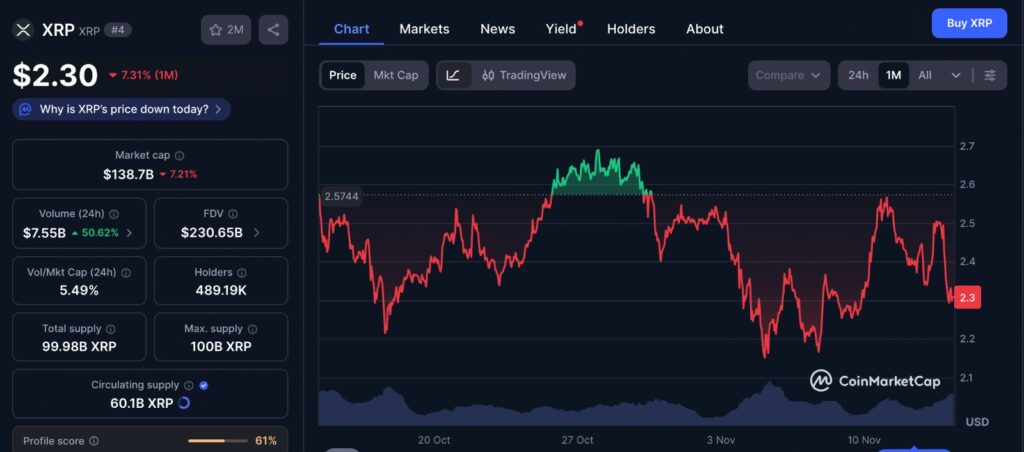
The one-month XRP price chart displayed above provides helpful context for understanding the market reaction surrounding the ETF launch. The chart shows how XRP has moved through periods of steady accumulation, brief volatility, and short-term pullbacks leading up to the debut of the new ETF. By comparing the latest price point to its performance over the past month, readers can see whether sentiment has strengthened, weakened, or remained neutral despite the strong ETF trading volume. This visual snapshot also highlights how XRP has responded to broader market conditions and sets a clearer baseline for evaluating future price movements following the ETF’s introduction.
Despite the impressive early volume, the price of XRP itself did not move in the same direction. Instead of a price rally, XRP slipped slightly on the day of the ETF launch. The token traded near the mid-two-dollar range before dropping a few percentage points. While the ETF saw significant activity, this did not immediately translate into upward pressure on the underlying asset. The ETF price also experienced a pullback after an early spike, reflecting quick profit-taking and cautious short-term trading behavior.
Several factors help explain why strong ETF volume did not result in a price surge. First, the broader crypto market has been moving cautiously, and participants may be hesitant to buy aggressively during uncertain market conditions. Second, expectations for the XRP ETF had already been building for weeks, meaning much of the optimism may have been priced in ahead of the launch. Third, early ETF trading often includes short-term repositioning, hedging, and speculation, which do not always produce net positive flows into the underlying asset.
Even so, the launch of the XRP ETF represents a milestone for XRP’s presence in traditional financial markets. The availability of a regulated investment vehicle increases accessibility for large investors who prefer ETFs over direct crypto purchases. This development may help support long-term adoption, even if the immediate price impact was muted. Analysts have noted that the success of the ETF will depend on whether it continues to attract steady daily inflows rather than just a strong opening day.
Looking forward, several indicators will shape how the market interprets the ETF’s long-term impact. Investors will watch to see whether the fund maintains positive net flows, which would signal growing confidence. XRP’s ability to hold key price levels and avoid deeper corrections may also influence sentiment. Broader market conditions, regulatory updates, and the performance of other crypto-related ETFs will also play roles in determining whether XRP benefits from this new investment channel.
In summary, the XRP ETF debut showcased strong investor interest through high trading volume, but the underlying token’s price remained relatively unchanged. While the launch is considered a meaningful step for institutional access to XRP, it also demonstrates that an ETF listing alone does not guarantee immediate price growth. The coming weeks will reveal whether the ETF becomes a sustained driver of demand or simply a short-term event in XRP’s broader market cycle.
Keep yourself updated with the latest crypto news with FYI Gazette
 Bitcoin
  Ethereum
  Tether
  XRP
XRP  BNB
BNB  Solana
  TRON
TRON  Dogecoin
  Litecoin
  Pepe
Pepe