
XRP Supply Concerns Rise As More Holders Sit At A Loss
XRP Supply concerns are growing across the crypto market as new data shows that roughly 41 percent of all circulating XRP is currently held at a loss. This unusually high percentage of unprofitable tokens has sparked renewed discussions about market fragility, price resilience, and the potential for increased selling pressure if negative conditions continue. With analysts warning that this level of underwater supply could amplify volatility, investors are watching the situation closely for signs of stability or further weakness.
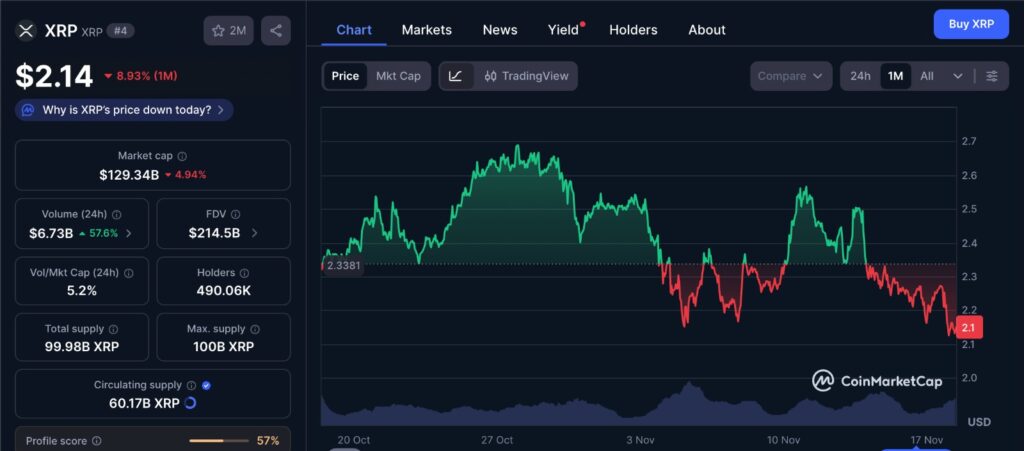
The latest one-month XRP price chart from CoinMarketCap highlights the market pressure reflected in current on-chain data. Over the past 30 days, XRP has struggled to maintain momentum, with price movements showing a series of lower highs and limited recovery attempts. This visual trend reinforces the broader narrative of weakened confidence, as a large share of the XRP supply remains underwater. The chart also reflects how reactive the asset has been to broader market sentiment, suggesting that any shift in macro conditions or liquidity could play a significant role in determining short-term direction.
Understanding the Current XRP Supply Condition
Recent on-chain analysis indicates that a large portion of XRP’s supply is sitting below the acquisition cost of its holders. When 41 percent of tokens fall into loss territory, it signals a weakened support structure. Holders who purchased at higher price levels may feel less confident, especially in a market already influenced by regulatory tension, shifting liquidity, and broader macroeconomic uncertainty.
The elevated percentage of loss-held supply also raises the risk of capitulation. These underwater holders are more likely to sell during sharp price drops, contributing to downward spirals. The concern is not only that many holders are in the red, but also that these conditions historically correlate with heightened fragility across crypto markets.
Why the XRP Supply Metric Matters
A Barometer of Market Strength
The XRP Supply metric showing such a high loss percentage is important because it reflects how comfortable or stressed investors feel. When the majority of holders are in profit, sentiment tends to be strong. When a large portion is underwater, the market becomes far more sensitive to negative news or volatility.
Increased Liquidation Pressure
A fragile supply structure can create feedback loops. If XRP’s price weakens, more tokens dip further into loss, causing additional selling. This domino effect can intensify declines. Analysts warn that the current state of the XRP supply makes the market more susceptible to such cycles.
Reduced Momentum for Recovery
When many holders are underwater, fewer are inclined to buy aggressively. Instead, investors may wait for a clear reversal or stronger catalysts. This hesitation slows recovery and keeps XRP in a vulnerable position until more supply returns to profitability.
Key Factors Behind the XRP Supply Stress
Recent Price Declines
The current percentage of loss-held tokens increased primarily because XRP has retreated from stronger price levels seen earlier. As price declines, more holders slip into loss positions, pushing up the supply-at-a-loss metric. This can happen rapidly when price corrections are sharp or extended.
Concentration of Large Holders
XRP has historically had a more concentrated distribution compared to some other cryptocurrencies. Large holders or institutional wallets still control significant segments of the supply. When the supply is concentrated, shifts in sentiment within this group have stronger market impacts. If large holders reduce positions or react to market stress, supply fragility intensifies.
Broader Market Conditions
While XRP has benefited from certain regulatory clarifications in recent years, the overall crypto environment remains uncertain. Higher interest rates, shifting liquidity in global markets, and investor caution all play roles in price performance. These broader factors influence supply dynamics indirectly by affecting sentiment and risk tolerance.
Implications for Market Participants
Potential for Capitulation Events
With so many tokens currently held at a loss, traders worry that a major downturn could result in a wave of capitulation. If price breaks key support levels, underwater holders may rush to sell, increasing volatility and pushing prices lower.
Weak Support on the Chart
Technical analysts also note that support levels tend to be weaker when many holders are not in profit. Without strong conviction from the majority of investors, support zones break more easily, creating faster price swings.
Hesitation Among New Buyers
The large number of underwater holders may discourage new buyers from entering the market aggressively. Until the XRP supply regains a healthier distribution of profit-held tokens, upward momentum could be limited.
Possible Scenarios for the XRP Supply Moving Forward
Bearish Scenario: Deeper Losses
If XRP suffers further price declines, the percentage of supply held at a loss could rise even higher. This increases selling pressure and risk of rapid downward moves, especially during broader market sell-offs.
Neutral Scenario: Extended Consolidation
XRP may enter a prolonged sideways phase where price neither breaks down significantly nor rallies strongly. In this scenario, the supply-at-a-loss percentage may gradually stabilize. Consolidation could create a base for future recovery.
Bullish Scenario: Recovery Triggered by Catalysts
A meaningful rally sparked by positive developments could push many underwater tokens back into profit. If regulatory clarity improves further, if new partnerships strengthen utility, or if market sentiment turns optimistic, the supply structure could flip from fragile to supportive.
What Investors Should Watch Next
Several data points matter as XRP’s supply dynamics continue to fluctuate:
- Changes in the percentage of supply at a loss
- Whale activity or major wallet movements
- Exchange inflow and outflow trends
- Shifts in trading volume during market stress
- Price reactions near long-term support zones
These indicators help gauge whether the market is stabilizing or moving toward another wave of selling pressure.
Final Thoughts on the XRP Supply Landscape
The XRP Supply distribution is currently signaling caution. With 41 percent of tokens held at a loss, investor conviction remains fragile. While this does not guarantee a downturn, it does increase vulnerability to market shocks. XRP’s ability to regain strength will depend on improved sentiment, reduced selling pressure, and potential fundamental catalysts that rebuild confidence. For now, market participants are advised to watch the supply metrics closely as they remain a critical indicator of the asset’s short-term resilience.
Keep yourself updated with the latest crypto news with FYI Gazette
Read more about Memecoins with FYI Gazette
Keep yourself updated with the latest Altcoin News with FYI Gazette
 Bitcoin
  Ethereum
  Tether
  XRP
XRP  BNB
BNB  Solana
  TRON
TRON  Dogecoin
  Litecoin
  Pepe
Pepe