CZ Pardon Defended by White House Amid Crypto Controversy
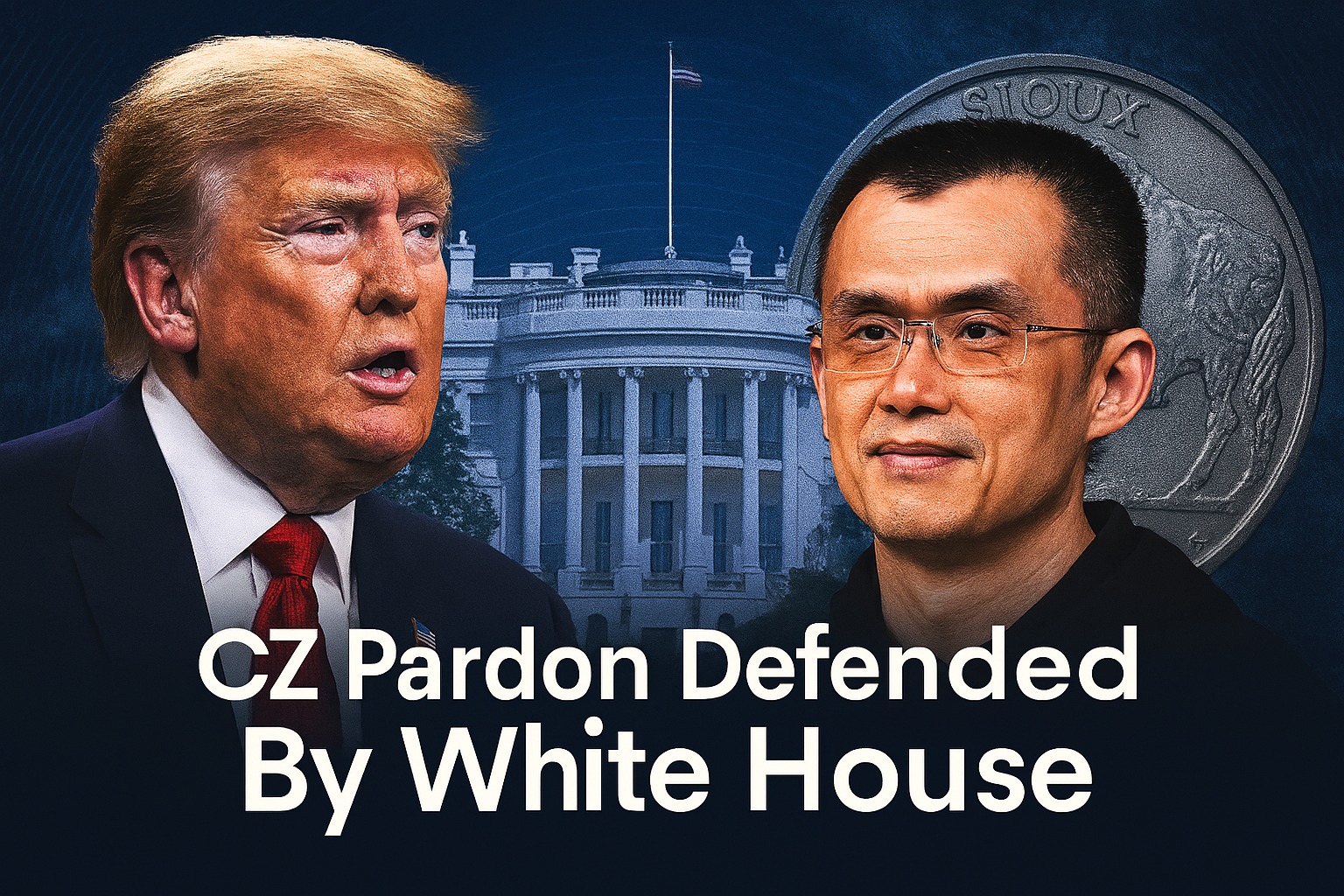
CZ Pardon has become a focal point of political and crypto discussion after the White House confirmed that the decision to pardon Binance founder Changpeng Zhao was handled with “utmost seriousness.” According to White House press secretary Karoline Leavitt, the process involved both the Department of Justice and the White House Counsel’s Office before President Donald Trump signed the approval.
Leavitt emphasized that Trump’s comments in his recent 60 Minutes interview were not meant to show indifference but to clarify that he had no personal relationship with Zhao. She stressed that the pardon went through standard review procedures. “There’s a whole team of qualified lawyers who look at every single pardon request before it reaches the president of the United States,” Leavitt said. “He is the final decision maker.”
The White House’s statement aimed to assure the public that this case was treated with the same care as any other high-profile pardon, dismissing claims of favoritism or political interference.
Trump Defends CZ Pardon in 60 Minutes Interview
During a CBS News 60 Minutes interview, Trump defended the CZ Pardon and dismissed accusations of corruption. He said he had “no idea” who Zhao was and described the criticism as politically motivated. Trump maintained that his decision was based on fairness rather than politics.
In a portion of the interview that was later cut, CBS journalist Norah O’Donnell asked Trump whether he was concerned about “the appearance of corruption” linked to Zhao’s pardon. According to a transcript, Trump avoided the question, saying, “I’d rather not have you ask that question.” He then shifted focus to the global crypto market, claiming that the United States is “number one in crypto in the world” and that he intends to keep it that way.
Trump added that he didn’t want “China or anybody else to take it away,” emphasizing the growing significance of digital assets in the U.S. economy.
White House Rejects Claims of Political Influence
During the briefing, Karoline Leavitt addressed questions about the Changpeng Zhao pardon and provided insight into how the decision reached the president. The following video shows her full remarks at the press conference, offering additional context on the legal review process and the administration’s stance on cryptocurrency policy.
CZ Pardon has also drawn attention to reports suggesting that Binance and Zhao may have ties to the Trump family’s crypto venture, World Liberty Financial. The reports alleged that Binance played a role in helping the Trump-affiliated project develop its stablecoin and join a $2 billion investment deal. However, Binance CEO Richard Teng denied any connection.
Leavitt firmly rejected suggestions that the pardon had anything to do with business interests or political allies. “The president does not know this individual personally,” she said. “The decision was legal, justified, and reviewed thoroughly.”
She went on to claim that Zhao had been “over-prosecuted by a weaponized DOJ” during the previous administration. The White House now argues that the pardon was intended to correct what they believe was an excessive punishment under the Biden administration’s regulatory approach.
CZ’s Legal Case and Sentencing
The CZ Pardon followed Zhao’s guilty plea in November 2023 for failing to maintain an effective Anti-Money Laundering program at Binance, violating the U.S. Bank Secrecy Act. Prosecutors initially requested a three-year prison sentence, but the judge ruled it “too harsh” and imposed a four-month sentence instead. Zhao began serving time in April 2024.
Leavitt said that Trump viewed the pardon as a correction of injustice. “The president is correcting that wrong and ending the previous administration’s war on the cryptocurrency industry,” she said.
Zhao’s lawyer, Teresa Goody Guillén, had previously argued that Zhao’s punishment was excessive, given it was a single compliance failure, not a violent or repeat offense. Supporters echoed that sentiment, portraying Zhao as a target of an overly aggressive financial enforcement system.
Trump’s Sons and Crypto Ties
In the same 60 Minutes interview, Trump admitted that his sons are more involved in crypto than he is. “They’re more into it than I am,” he said. “I know very little about it, other than one thing, it’s a huge industry.”
CBS later confirmed that the aired version of the interview was edited “for clarity,” cutting the crypto-related exchange. The omission sparked curiosity online about the administration’s stance on digital assets and the president’s family’s growing role in the crypto sector.
CZ Pardon Signals Shift in Crypto Policy
Many analysts see the CZ Pardon as a turning point for U.S. crypto policy. Under the previous administration, regulators such as the SEC and CFTC had intensified enforcement actions against major exchanges, arguing for stricter compliance and investor protection.
Leavitt suggested that the Trump administration would take a more balanced approach. “The president believes innovation in cryptocurrency should be encouraged, not punished,” she said. The remark has been widely interpreted as a sign that Washington’s tone toward digital assets may soften under new leadership.
Crypto industry supporters celebrated the move as evidence of a pro-innovation environment, while critics argued that the pardon undermines accountability and could embolden risky corporate behavior.
Reaction from the Public and Experts
Public reaction to the CZ Pardon was divided. On social media, some hailed it as a victory for technological freedom and fair justice, using hashtags like #CZPardon and #CryptoJustice. Others accused the White House of setting a dangerous precedent that could weaken financial oversight.
Legal experts expressed mixed opinions. Some said presidential pardons have always been tools for correcting legal excesses, while others warned that granting clemency in regulatory cases could erode confidence in compliance systems. A senior Justice Department official, speaking anonymously, said the decision “may erode trust in how financial crime is handled, even if legally valid.”
Despite the controversy, many in the crypto community see the pardon as a moment of validation after years of regulatory pressure. Zhao’s case, they argue, showed that the crypto industry can work within legal frameworks while still receiving fair treatment.
The Future After the CZ Pardon
As Zhao returns to public life, attention turns to Binance’s next moves. The exchange continues to face international scrutiny, but the pardon could help restore its reputation among U.S. investors.
For the White House, Leavitt reiterated that the decision was independent and lawful. “This was about fairness and balance,” she said. “No one is above the law, but no one should be targeted unfairly either.”
The CZ Pardon may ultimately be remembered as more than a legal decision, it could mark the beginning of a broader shift in how the U.S. government engages with cryptocurrency. Whether viewed as justice served or political maneuvering, it has already left a lasting mark on the debate over crypto regulation and presidential authority.
Keep yourself updated with the latest crypto news with FYI Gazette
 Bitcoin
  Ethereum
  Tether
  BNB
BNB  XRP
XRP  Solana
  TRON
TRON  Dogecoin
  Litecoin
  Pepe
Pepe