
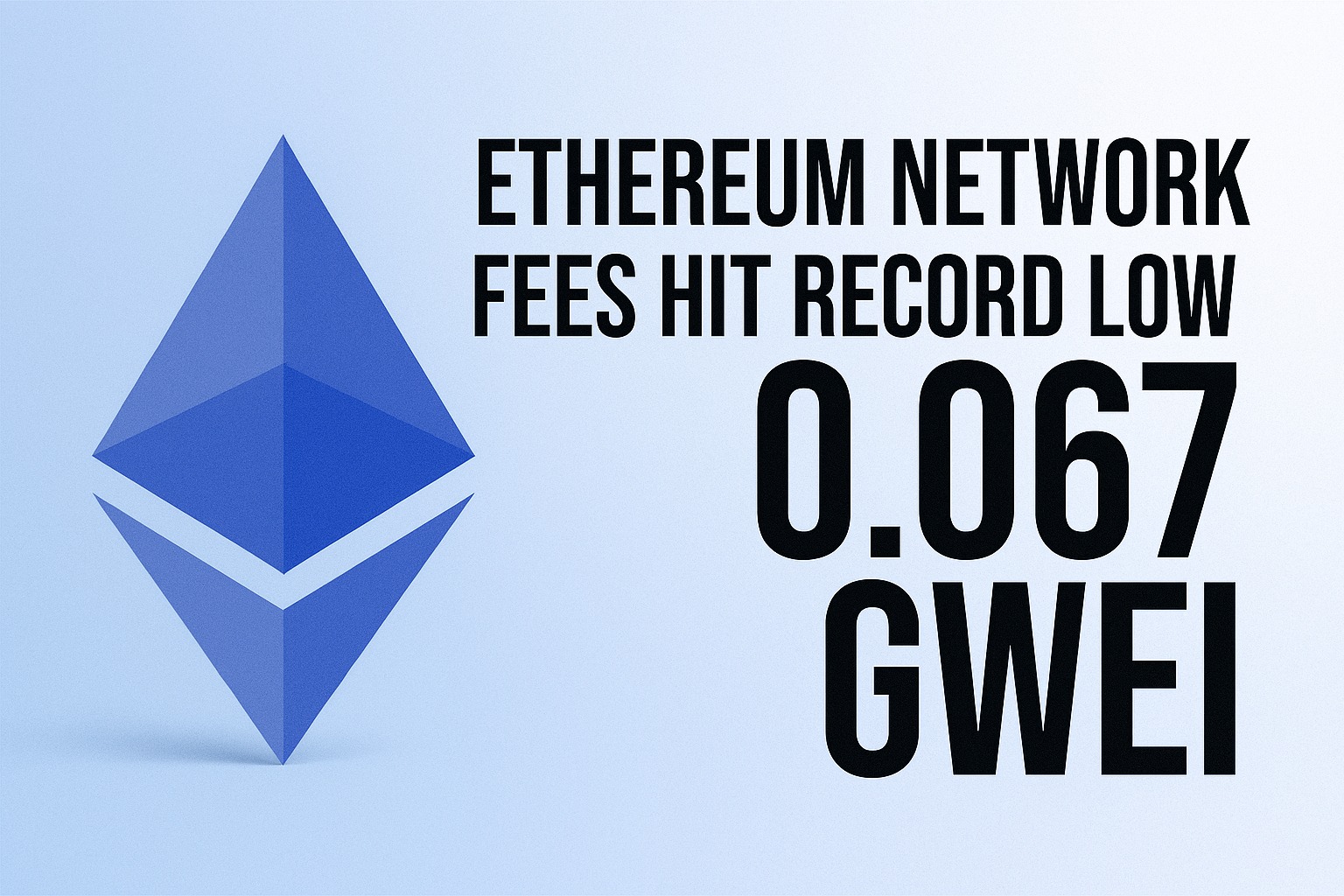
Ethereum network fees hit record low at 0.067 Gwei
Ethereum network fees have dropped to historic lows, signaling both relief for users and concern among analysts. On Sunday, gas fees on the Ethereum layer-1 blockchain fell to just 0.067 Gwei, a level not seen in years. The decline coincided with a market slowdown following October’s historic crypto crash, which saw altcoins lose significant value within a single day.
According to blockchain explorer Etherscan, the cost to execute common onchain activities is now cheaper than ever. A simple token swap on Ethereum averages just $0.11, minting or selling a non-fungible token costs around $0.19, bridging assets to another blockchain costs about $0.04, and borrowing onchain costs only $0.09. These record-low transaction prices illustrate the extent of the lull in activity across the network.
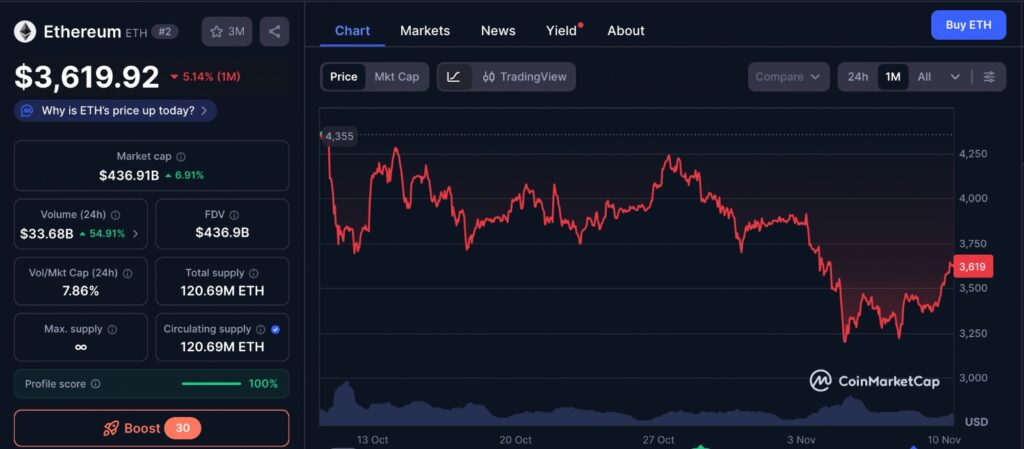
Ethereum price trends mirror the broader slowdown in network activity. According to data from CoinMarketCap, the ETH price has shown muted movement over the past month, reflecting cautious market sentiment following October’s volatility. The one-month price chart illustrates how Ethereum has largely traded sideways, with modest recovery attempts failing to generate strong momentum. This period of consolidation aligns with the current decline in network fees, suggesting reduced onchain demand as traders and developers adopt a wait-and-see approach amid broader market uncertainty.
Ethereum network fees collapse after October’s crash
The decline in Ethereum network fees followed a sharp spike in early October. On October 10, gas prices soared to 15.9 Gwei during a flash crash that caused several altcoins to lose over 90% of their market value. However, as the panic subsided, fees dropped dramatically. By October 12, average gas prices fell to 0.5 Gwei and remained below 1 Gwei for most of October and November. The steep decline reflects how Ethereum’s fee market responds directly to user demand, as activity slows, costs fall accordingly.
This reduction in gas prices has opened the door for investors and traders to take advantage of cheap onchain activity. Many see it as an opportunity to execute transactions on the base layer without the high costs typical of more active market periods. Yet, not everyone views these low fees as positive.
Analysts warn of risks behind ultra-low Ethereum network fees
While low Ethereum network fees benefit users in the short term, some analysts warn they could indicate deeper problems. Blockchain networks rely on transaction fees as a source of revenue to pay validators and maintain network security. When these fees fall too low, the incentives for securing the network may weaken.
During the 2021 bull market, executing a transaction on Ethereum could cost over $150 during times of heavy congestion. At that time, the network’s high revenue stream incentivized validators to maintain security and process transactions efficiently. Today, the situation is starkly different. Ethereum’s base layer revenue has plunged, prompting concerns about sustainability.
The Dencun upgrade and its unintended effects
Much of the decline in Ethereum network fees can be traced back to the Dencun upgrade in March 2024. This major protocol update aimed to improve scalability by lowering transaction fees on Ethereum’s layer-2 scaling networks such as Arbitrum, Optimism, and Base. While successful in reducing costs and improving user experience, the upgrade had a significant side effect: Ethereum’s own layer-1 revenue dropped by roughly 99%.
This dramatic reduction highlights a central trade-off in Ethereum’s scaling strategy. While users now enjoy cheaper and faster transactions through layer-2 solutions, the main Ethereum chain, known as layer-1, is earning less revenue from transaction fees. As a result, the network’s financial ecosystem faces new challenges in maintaining long-term security and validator incentives.
Ethereum network fees and the security dilemma
Critics argue that the current state of Ethereum network fees is unsustainable for any major blockchain. Low fees reduce the economic rewards available to validators who stake Ether to help secure the chain. Without sufficient revenue, the risk arises that validator participation could decline over time, potentially weakening the network’s resilience against attacks.
Fees also serve as a measure of network demand. When fees remain consistently low, it can indicate a drop in onchain activity or a migration of users to alternative platforms. This shift is particularly relevant given the rapid growth of competing blockchain ecosystems that offer high throughput and low transaction costs.
Ethereum’s layer-2 expansion: a double-edged sword
Ethereum’s leadership has embraced a scaling strategy centered on layer-2 solutions, independent networks that settle transactions back to the main Ethereum chain. This approach enables the blockchain to handle higher transaction volumes while maintaining decentralization and security. However, it also introduces a competitive dynamic within Ethereum’s own ecosystem.
Research from Binance points out that layer-2 networks, while beneficial for scalability, are effectively diverting transaction volume, and therefore fee revenue, away from the base layer. The more users interact on layer-2 platforms, the less they pay in fees to the main Ethereum chain. This self-cannibalization effect may pose long-term sustainability risks, particularly if layer-1 usage continues to decline.
Market activity and user sentiment amid falling fees
The current market lull has further amplified the drop in Ethereum network fees. Following the October flash crash, investor sentiment across the broader crypto market turned cautious. Onchain activity slowed, NFT trading volumes declined, and decentralized finance (DeFi) protocols experienced reduced borrowing and liquidity movements. These factors combined to lower overall demand for Ethereum’s block space, driving down gas prices even further.
At the same time, traders and developers are taking advantage of the cheap fees to conduct onchain experiments, deploy smart contracts, and rebalance portfolios. For some, this environment offers a rare window to transact at near-zero costs, something that was unthinkable during previous bull markets.
The broader implications for Ethereum’s future
The extended period of low Ethereum network fees could signal several things for the blockchain’s trajectory. On one hand, it reflects the success of Ethereum’s scaling initiatives, which have made the ecosystem more accessible and efficient. On the other hand, it raises concerns about the economic sustainability of the base layer, a cornerstone of Ethereum’s security model.
If network activity and fee revenues remain suppressed, Ethereum’s developers and community may need to consider further adjustments to ensure long-term viability. This might include exploring new incentive models for validators or introducing mechanisms to balance revenue between layer-1 and layer-2 networks.
Conclusion: A temporary dip or a new normal?
The drop of Ethereum network fees to 0.067 Gwei marks an important milestone in the blockchain’s evolution. It underscores the effectiveness of its scalability efforts while simultaneously highlighting the tension between accessibility and sustainability. As the crypto market continues to mature, Ethereum’s challenge will be to maintain affordability for users without compromising the economic incentives that keep its network secure.
For now, users can enjoy some of the lowest transaction costs in Ethereum’s history, but the long-term implications of these record-low fees remain a key issue for the network’s future stability.
Keep yourself updated with the latest crypto news with FYI Gazette
 Bitcoin
  Ethereum
  Tether
  BNB
BNB  XRP
XRP  Solana
  TRON
TRON  Dogecoin
  Litecoin
  Pepe
Pepe