
Aave Stress Engine Explained From Bitcoin Shock to Yield
Aave Stress Engine became a defining force during the latest wave of crypto market volatility, showing how extreme Bitcoin liquidations can be absorbed and transformed into protocol-level yield instead of systemic damage.
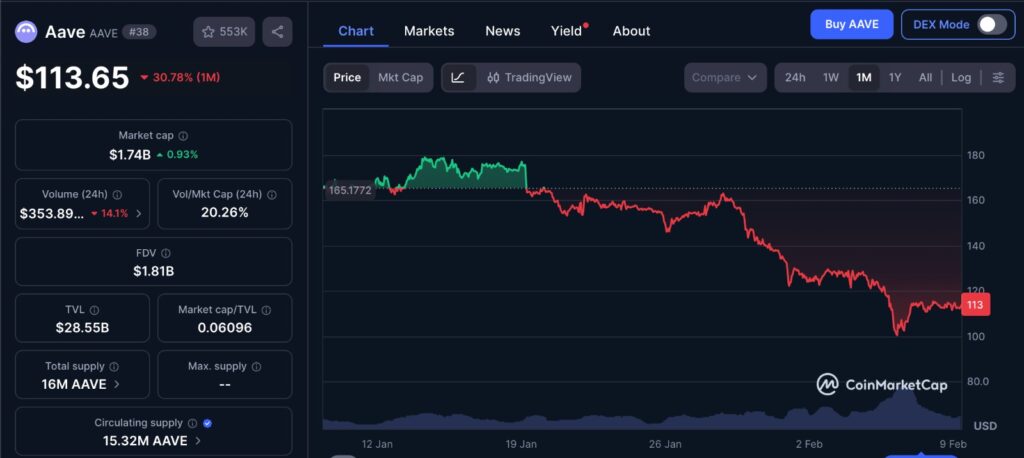
Viewed over the past month, AAVE’s price action reflects caution more than conviction. The chart shows reactions to broader market stress without aggressive follow-through in either direction, suggesting that participants are digesting risk rather than chasing momentum. This kind of movement often appears when traders are watching protocol fundamentals closely but remain sensitive to macro volatility. Rather than signaling enthusiasm or fear outright, the price behavior aligns with a market still processing recent liquidation-driven events.
What Is the Aave Stress Engine and Why It Matters
The Aave Stress Engine refers to the protocol’s ability to manage large-scale liquidations during sharp market moves while maintaining stability and extracting value from stress events. When Bitcoin prices fell sharply, leveraged positions across crypto markets were forced to unwind. This placed enormous pressure on lending platforms, especially those holding high-value collateral.
Instead of failing under this pressure, Aave processed billions of dollars in liquidations while keeping markets functional. The system automatically closed risky positions once collateral thresholds were breached, protecting lenders and preventing bad debt from spreading through the protocol. This ability to operate smoothly under pressure highlights why Aave’s stress handling framework is critical to decentralized finance.
Bitcoin Volatility Triggered Massive Liquidations
The stress event began after Bitcoin reached a local high before entering a steep decline. As prices dropped, long positions were liquidated rapidly across centralized and decentralized platforms. Initial sell-offs triggered hundreds of millions of dollars in liquidations, which later escalated into multi-billion-dollar forced closures as prices continued falling.
Within days, Bitcoin experienced a rapid decline of more than 30 percent from its peak. This move triggered widespread margin calls and liquidations across the crypto ecosystem. Lending protocols like Aave were directly affected as borrowers’ collateral values fell below safe limits, activating liquidation mechanisms at scale.
Aave Stress Engine Across Multiple Blockchains
The Aave Stress Engine was tested not just on one network but across multiple blockchains. Ethereum handled the largest share of liquidation activity, reflecting its dominance in decentralized lending. Billions of dollars in collateral were processed through tens of thousands of liquidation events, making Ethereum the primary stress point for the protocol.
However, other networks also played a significant role. Polygon saw a very high number of liquidation transactions, driven by retail users and smaller position sizes. Avalanche, Arbitrum, and Base recorded substantial activity as well, showing how interconnected the Aave ecosystem has become. Stress in one market quickly spread across chains, but the protocol remained operational throughout.
Turning Liquidation Stress Into Yield
What makes this stress event different from earlier cycles is how Aave converted liquidation pressure into protocol revenue. This was made possible through its Security Venture Revenue system, commonly referred to as SVR.
SVR captures value that would normally be lost during transaction execution. In traditional setups, liquidation bots and validators extract most of the profit from liquidation-related transactions. With SVR in place, a portion of that value is redirected back to the Aave protocol itself.
During this stress period, hundreds of millions of dollars passed through the SVR system. From that activity, the protocol generated millions in yield that would otherwise have been lost. This revenue was split between Aave and infrastructure partners, reinforcing the economic sustainability of the system.
Key Components of the Aave Stress Engine
Liquidation Incentives
Liquidators are rewarded for stepping in quickly when positions become unsafe. These incentives ensure liquidations happen efficiently, protecting the protocol while creating small spreads that can be captured as revenue.
MEV Value Capture
Market volatility increases execution-level profit opportunities. The Aave Stress Engine, through SVR, captures part of this execution value instead of allowing it to leak to external actors.
Treasury Reinforcement
Yield generated from stress events flows into the protocol treasury. These funds can be used to strengthen liquidity, support incentives, or improve long-term resilience, turning short-term volatility into lasting value.
Market Behavior Is Changing
Despite the severity of the Bitcoin crash, liquidation data suggests that traders may be adjusting their behavior. Compared to previous cycles, long liquidations were relatively lower during comparable price drops. This points to reduced leverage or improved risk management among market participants.
Even when Bitcoin rebounded and triggered short liquidations, the scale was more controlled than in past cycles. This suggests that while volatility remains high, the overall system may be becoming more resilient as both users and protocols adapt.
For Aave, this shift means fewer catastrophic cascades and more manageable stress events. Combined with a robust Aave Stress Engine, the protocol is better positioned to survive and even benefit from future volatility.
Why the Aave Stress Engine Matters for DeFi
Historically, extreme market downturns were seen as purely destructive for decentralized finance. They wiped out users, drained liquidity, and exposed protocol weaknesses. This recent event shows a different path.
Aave processed more than 4.65 billion dollars in liquidations while generating over 13 million dollars in protocol yield. Instead of being overwhelmed, the system demonstrated that stress can be monetized responsibly without compromising user funds or protocol stability.
This model represents a shift in how DeFi protocols may approach risk going forward. Stress is no longer just something to survive; it can be structured into a value-generating process.
Editor’s View: Stress Reveals Intent, Not Just Numbers
Periods of forced liquidation often reveal how participants actually behave under pressure, not how they claim to manage risk. What stood out in this episode was not panic selling, but the speed at which leverage was unwound once volatility crossed a threshold. Many positions were closed early rather than defended aggressively, suggesting a more defensive mindset shaped by prior market cycles. This kind of behavior does not show up clearly in charts, but it quietly reshapes how stress propagates through lending systems like Aave.
Final Thoughts
The latest market turmoil proved that the Aave Stress Engine is more than a defensive mechanism. It is a strategic framework that allows the protocol to remain solvent, capture lost value, and reinforce its economic foundations during extreme volatility.
As crypto markets continue to experience sharp cycles, systems that can absorb pressure and convert it into yield will likely define the next generation of decentralized finance. Aave’s performance during this stress event sets a strong precedent for how DeFi protocols can evolve in a high-volatility environment.
Disclaimer: This content is for informational purposes only and does not constitute financial advice.
Keep yourself updated with the latest crypto news with FYI Gazette
Read more about Memecoins with FYI Gazette
Keep yourself updated with the latest Altcoin News with FYI Gazette
 Bitcoin
  Ethereum
  Tether
  XRP
XRP  BNB
BNB  Solana
  TRON
TRON  Dogecoin
  Litecoin
  Pepe
Pepe