
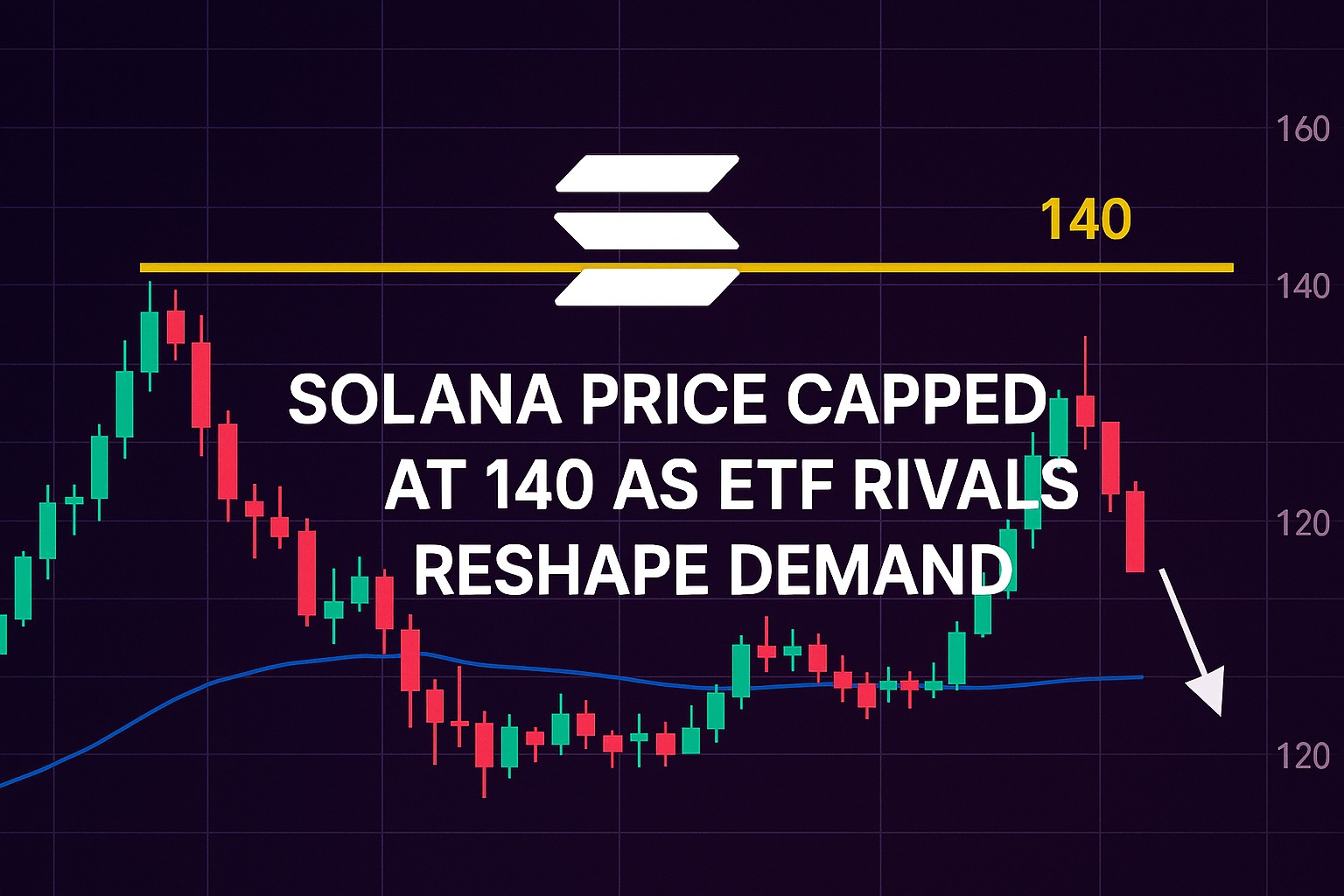
Solana Price capped at 140 as ETF rivals reshape demand
Solana Price has become a central focus for traders as the token struggles to break past the stubborn 140 resistance level. After a sharp rejection at 147, Solana’s native asset fell by 6 percent, reflecting growing hesitation among investors who are increasingly cautious in the face of weakening economic data and softening consumer sentiment. Many traders now expect that a return to the 200 price level may take longer than anticipated, especially as leverage traders recently suffered major losses and activity across the Solana network continues to decline. These conditions have created a challenging backdrop for sustained momentum in SOL.

The latest one-month SOL price chart reveals how market sentiment has shifted following its rejection at the 147 level. The chart highlights a series of sharp intraday swings, showing periods of brief recovery followed by renewed selling pressure as traders react to weakening macro conditions and declining onchain activity. Although SOL has attempted several rebounds, the chart makes it clear that buyers have struggled to maintain momentum, keeping the token capped near the 140 range. This visual trend reinforces broader concerns about reduced demand, softer futures market positioning and increased competition from altcoin ETFs, all of which continue to influence SOL’s short-term trajectory.
Network Pressures Weighing on Solana Price
One of the most important indicators affecting Solana Price is the sharp decline in the network’s total value locked. Solana’s TVL has fallen from 13.3 billion to roughly 10.8 billion over the past two months. Several major protocols, including Kamino, Jupiter, Jito and Drift, have recorded deposit reductions exceeding 20 percent. These declines highlight a retreat in onchain participation and liquidity, both of which are essential for maintaining a strong ecosystem and supporting long-term price appreciation.
Despite these setbacks, Solana has managed to maintain its position as the second-largest blockchain by TVL. Ethereum, however, remains far ahead with more than 73 billion in deposits, and its expanding layer-2 ecosystem continues to attract large amounts of capital. Upgrades aimed at improving scalability and wallet management have strengthened Ethereum’s competitive advantage, reducing incentives for users to shift assets to rival networks, including Solana.
Another important data point influencing Solana Price is the sharp reduction in decentralized exchange volumes. Over the seven days ending November 30, Solana DEX activity totaled 19.2 billion, down significantly from 32 billion just four weeks prior. This represents a 40 percent drop and has led to concerns that weakening participation could create a feedback loop. As volumes fall and opportunities diminish, traders may exit the ecosystem in search of stronger returns, further reducing demand for SOL and undermining market confidence.
Competition from newer blockchains is also contributing to this shift. The recently launched layer-1 network Monad, for example, generated 1.2 billion in DEX volumes during its first week, capturing both attention and liquidity. While Solana still holds a dominant position among high-performance chains, the emergence of new competitors underscores the challenges it faces in maintaining user engagement and capital inflows.
Economic Headwinds Amplifying Downside Pressure
Broader macroeconomic trends are also shaping the trajectory of Solana Price. According to recent corporate layoff reports, more than 71,000 jobs were cut in November, marking one of the highest monthly totals since the 2008 financial crisis. This environment of job insecurity and economic softness often leads investors to reduce exposure to risk-heavy assets such as cryptocurrencies.
Adding to these concerns are developments within consumer credit markets. Several United States attorneys general have requested detailed information from Buy Now, Pay Later providers, citing worries about borrowers’ ability to repay their obligations. This scrutiny reinforces fears that credit conditions are tightening. A recent survey found that half of holiday shoppers intend to take personal loans during the season, suggesting increased financial strain among consumers. Such conditions contribute to a broader reduction in risk appetite, dampening enthusiasm for positions in altcoins like Solana.
Futures Market Behavior and ETF Competition Affecting Solana Price
Market sentiment in Solana futures also reflects weakened bullish conviction. The annualized funding rate for SOL perpetual futures is currently around 4 percent, below the neutral reference level of 6 percent. This signals limited demand for leveraged long positions and suggests that traders are unwilling to pay premiums for upside exposure.
At the same time, inflows into Solana-based exchange-traded products have remained muted. Over a recent period, Bitcoin, Ethereum and XRP ETPs collectively attracted more than 1 billion in inflows, while Solana products saw little comparable activity. Weak ETP demand translates into softer institutional participation, which has historically been important for supporting price recoveries.
Competition from newly approved altcoin ETFs has intensified this challenge. Spot ETFs for XRP, Litecoin and Dogecoin have gained regulatory approval in the United States, creating strong new channels for institutional investment. As capital flows toward these alternative products, Solana effectively faces a battle for investor attention and allocation. Several other competing networks are expected to receive ETF approvals in the coming months, further increasing the pressure.
This environment also makes it difficult for companies holding large Solana reserves to justify issuing new shares to expand their positions. One example is Forward Industries, which owns more than 6.9 million SOL. With the token currently trading below the company’s initial acquisition cost, issuing shares at lower implied valuations would dilute existing shareholders and reduce their claim on the firm’s asset base.
Conditions Needed for a Break Above 140 and a Return Toward 200
Solana Price remains heavily influenced by macro and onchain factors, and a sustained recovery will likely depend on improvement across several fronts. A reduction in economic uncertainty would be one of the strongest catalysts, as a more stable environment typically encourages greater risk-taking among investors. Rising consumer confidence, stronger employment numbers or access to more flexible credit could help restore appetite for growth assets.
A revival in Solana network activity is equally important. Higher deposits, stronger DEX volumes and renewed engagement across major protocols would signal an improving ecosystem and help rebuild demand for SOL. Increased ETP inflows and renewed institutional interest would also strengthen market sentiment.
Traders are watching for potential government stimulus measures, which could provide an unexpected upside catalyst. Historically, liquidity injections and supportive fiscal actions have boosted interest in alternative assets, including cryptocurrencies. If similar conditions emerge, they may help SOL regain momentum and challenge previous highs, surprising bearish traders who expect prolonged stagnation.
Keep yourself updated with the latest crypto news with FYI Gazette
Read more about Memecoins with FYI Gazette
Keep yourself updated with the latest Altcoin News with FYI Gazette
 Bitcoin
  Ethereum
  Tether
  BNB
BNB  XRP
XRP  Solana
  TRON
TRON  Dogecoin
  Litecoin
  Pepe
Pepe