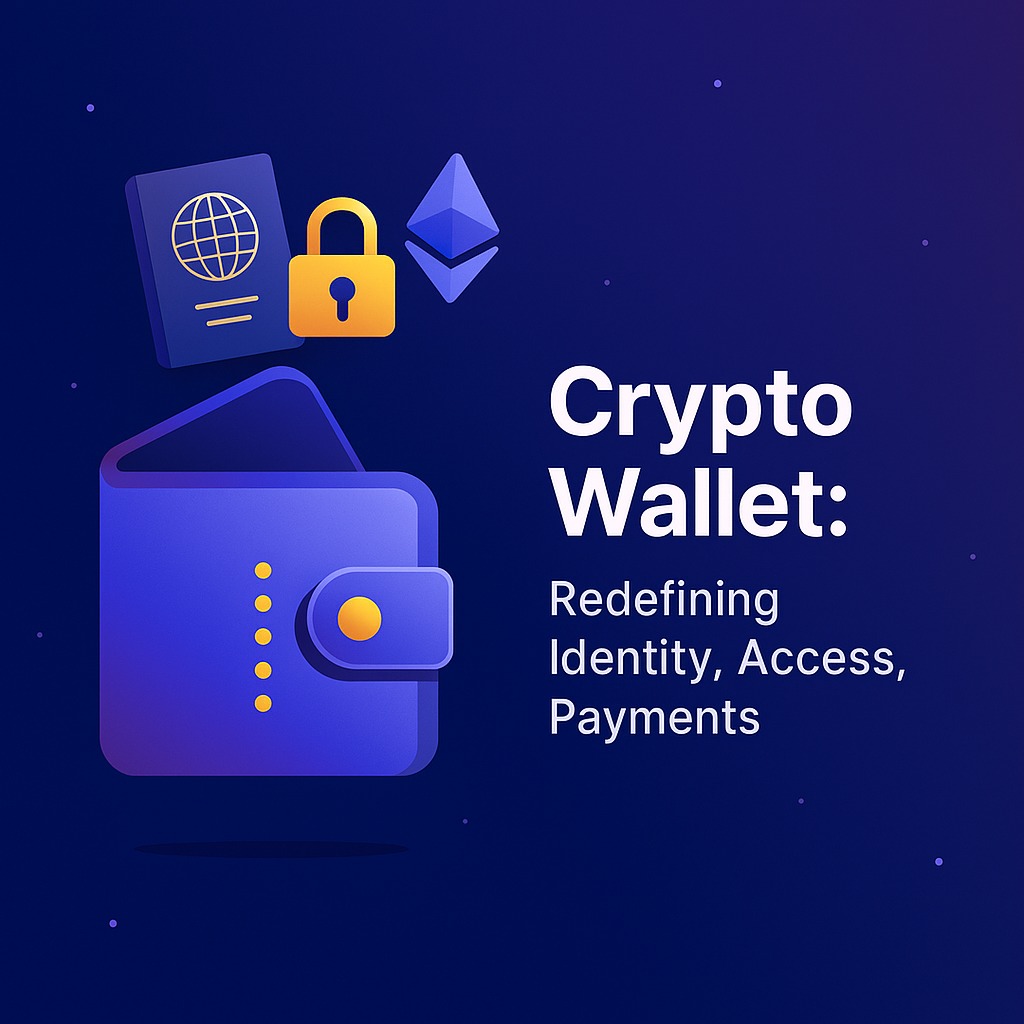
Crypto Wallet: Redefining Identity, Access, Payments
Crypto Wallet is reshaping how people connect, transact, and prove who they are in the modern digital ecosystem. Just as a physical passport enables international movement, a digital wallet opens doors across the online economy, merging identity, payments, and access into one seamless experience.
The global shift toward a fully digital society has begun. Governments, institutions, and individuals are converging on the idea that one portable digital wallet can serve as both identification and a tool for economic participation. Across the European Union, for instance, new digital identity regulations are redefining how citizens prove who they are and interact with digital services. Under the EU Digital Identity Wallet Regulation (Regulation 2024/1183), citizens will soon be able to store national IDs, driver’s licenses, and health credentials on mobile devices.
Through initiatives like the Digital Identity Wallet Regulation, people will soon be able to store national IDs, driver’s licenses, and health credentials securely on their mobile devices. This move sets the foundation for a future where a crypto wallet becomes the ultimate digital passport.
Wallets as the New Payment Gateways
Today, there are more than 560 million cryptocurrency owners worldwide. Crypto wallets have evolved from simple storage tools into full-fledged gateways for global financial activity. With self-custodial wallets, users can hold, send, and receive funds without intermediaries while maintaining control over their private data.
Web3 technology has also made it possible for users to register personalized Ethereum Name Service (ENS) domains, such as “alice.eth.” These domains act like Web2 usernames, allowing decentralized apps to recognize users without long wallet addresses. This is a key signal that the future of identity and payments is merging under one system.
Crypto wallets now enable secure, cross-border transactions that preserve user privacy. They simplify international payments, avoid excessive banking fees, and provide access to financial tools unavailable in many traditional systems. As the world moves toward decentralization, these wallets are setting new standards for privacy and inclusivity.
Crypto Wallet as an Identity Hub
A crypto wallet isn’t just a payment tool, it’s becoming a container for verifiable digital identity. Decentralized identity frameworks now allow users to store and manage credentials directly in their wallets, including government-issued IDs, diplomas, and health records.
The European Union is leading the charge with its Digital Identity Wallet pilot programs in countries such as Germany, France, the Netherlands, and Poland. These initiatives allow citizens to verify their identities using credentials stored on their devices, minimizing reliance on centralized databases.
Technologies like zero-knowledge proofs (ZKPs) ensure privacy by verifying attributes like age or residency without exposing personal data. This model prevents the formation of data honeypots often exploited by malicious actors. With these innovations, a crypto wallet becomes a secure, user-controlled identity hub.
Unlike traditional username-password systems, decentralized verification allows users to maintain sovereignty over their information. It’s a leap forward in digital security and a cornerstone for building trust online.
Wallets Powering the Future of Payments
The popularity of mobile crypto wallets is soaring. By the end of 2024, there were over 36 million active mobile wallet users worldwide, a clear sign that people are seeking alternatives to traditional banking.
One important innovation is gas abstraction, which lets users pay transaction fees with any supported token rather than a specific network coin. This simplifies payments and makes blockchain transactions feel as smooth as traditional online systems.
Peer-to-peer transfers, NFT trading, and onchain commerce are expanding rapidly. These activities empower users to engage directly without the high fees or delays associated with banks. In essence, crypto wallets are democratizing finance by making it borderless, fast, and accessible.
Traditional payment systems often struggle with limitations of geography, cost, and speed. Digital wallets overcome these barriers, offering self-sovereign solutions for global participation.
Crypto Wallet as a Digital Access Passport
Beyond identity and finance, a crypto wallet acts as a universal access key. It authenticates ownership of digital assets, unlocks exclusive NFT drops, and grants entry into token-gated communities, gaming worlds, and loyalty programs.
For instance, Web3 platforms use wallet-based authentication to verify users’ rights and grant privileges without needing centralized accounts. From event ticketing to virtual experiences, one wallet can now serve as an all-in-one access pass.
Interoperability is what makes this possible. A single self-custodial wallet can connect across hundreds of decentralized applications (DApps) with one portable digital identity. Biometric verification on mobile devices adds an extra layer of security and convenience, ensuring that users’ private keys never leave their control.
As more services move onchain, wallet-based authentication is set to replace traditional logins. This shift isn’t just for crypto enthusiasts; it’s for anyone seeking transparency, control, and ownership in the digital age.
The Foundation of Digital Freedom
Just as a physical passport proves citizenship and allows movement across borders, a crypto wallet validates digital citizenship and enables free participation across online ecosystems. It embodies the principles of trust, usability, and security that underpin the future of decentralized systems.
With wallets now serving as the gateway to identity, payments, and access, the internet is evolving into a truly user-centric environment. People are gaining the power to own their data, verify their identity securely, and transact freely without reliance on intermediaries.
The direction is clear: decentralized systems are reshaping how the world connects. Crypto wallets are no longer optional, they’re essential infrastructure for digital freedom.
The future won’t ask for usernames; it will ask for a signature.
Keep yourself updated with the latest crypto news with FYI Gazette
 Bitcoin
  Ethereum
  Tether
  BNB
BNB  XRP
XRP  Solana
  TRON
TRON  Dogecoin
  Litecoin
  Pepe
Pepe