
Crypto Sentiment Low as Bitcoin Drops to 60000
Crypto sentiment low has become the dominant theme across digital asset markets as Bitcoin experienced a sharp selloff that pushed prices toward the 60000 level. The sudden decline triggered widespread fear among investors, sending sentiment indicators to their weakest point in more than three years. Market confidence has deteriorated rapidly, reflecting panic, forced selling, and growing uncertainty about near-term price direction.
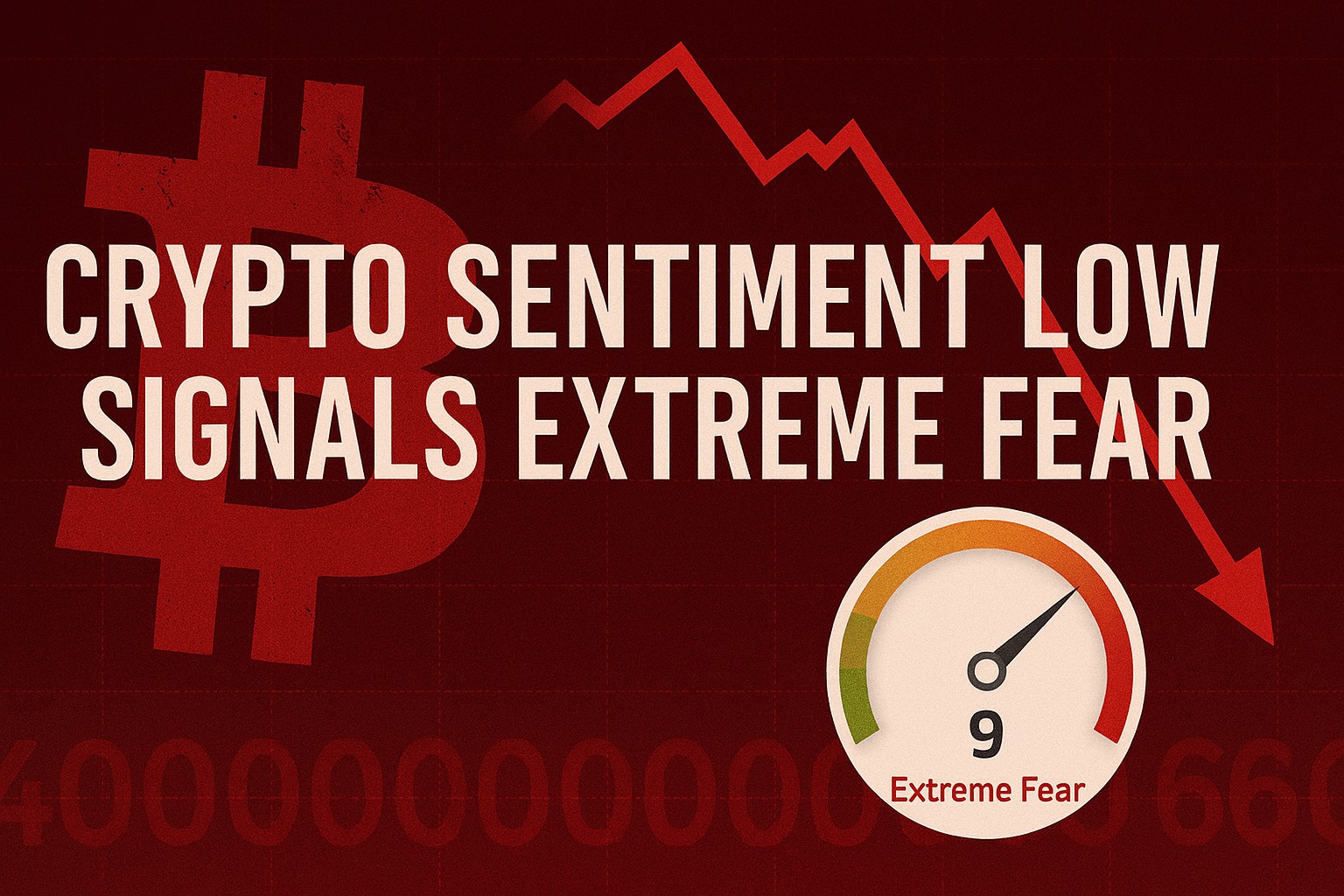
The Crypto Fear and Greed Index, a popular tool used to measure market emotion, dropped to a reading of 9 out of 100. This level is classified as extreme fear and has not been seen since June 2022, during the aftermath of the Terra ecosystem collapse. Such low readings typically suggest that traders are overwhelmingly bearish and risk-averse.
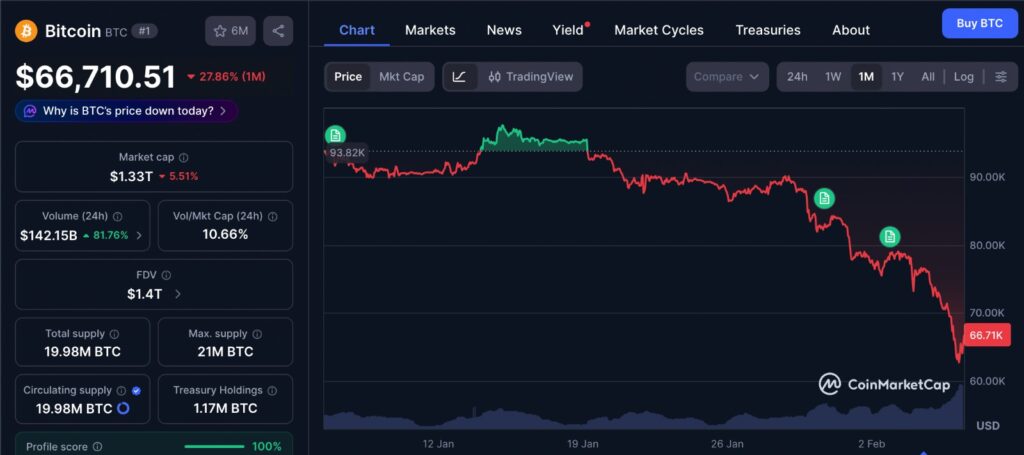
Viewed over the past month, the Bitcoin price chart shows how quickly momentum shifted rather than a slow, orderly decline. Much of the move lower occurred in short bursts, suggesting reactive selling instead of steady distribution. This kind of price behavior often reflects uncertainty more than conviction, with traders responding to sudden losses and forced liquidations rather than reassessing long-term positioning. The compression of losses into a narrow time window helps explain why sentiment deteriorated so sharply even before broader economic signals fully changed.
Crypto Sentiment Low Signals Extreme Fear
Crypto sentiment low readings usually occur when investors are highly uncertain and unwilling to take risks. The Fear and Greed Index combines several factors including volatility, trading volume, market momentum, and social behavior. A single-digit score reflects panic conditions and a lack of confidence in price stability.
This sharp shift in sentiment happened quickly. Only weeks earlier, market mood had been far more optimistic as Bitcoin traded well above recent lows. The rapid reversal highlights how sensitive crypto markets remain to sudden price movements and broader economic signals.
Bitcoin Price Drop Fuels Crypto Sentiment Low
The main driver behind the crypto sentiment low is Bitcoin’s steep decline. Bitcoin fell sharply to around 60000, marking its lowest level since October 2024. At one point, the price briefly dipped even lower before rebounding slightly above 64000.
This move represented one of Bitcoin’s largest daily losses since mid-2022. The drop erased a significant portion of gains built up over the past year and a half. The speed of the decline caught many traders off guard, especially those positioned for continued upside.
Technically, Bitcoin also fell below the 200-week exponential moving average, a long-term indicator watched closely by traders. Breaking below this level is often viewed as a bearish signal and can further weaken confidence among market participants.
Liquidations Intensify Market Panic
As prices fell, liquidations surged across crypto exchanges. Over 588000 traders were liquidated within a 24-hour period, resulting in losses exceeding 2.7 billion dollars. The majority of these liquidations came from long positions, meaning traders who were betting on higher prices were forced out of their positions.
Heavy liquidation events often worsen price declines because forced selling adds pressure to an already falling market. This creates a chain reaction where prices drop further, triggering even more liquidations. For many retail traders, these events can be emotionally exhausting and financially damaging.
Broader Market Conditions Add Pressure
The crypto sentiment low was not driven by Bitcoin alone. Broader financial market weakness also played a role. Technology stocks experienced a selloff around the same time, and crypto markets tend to move in the same direction as high-risk assets.
Concerns over high valuations in tech stocks and fears of an artificial intelligence bubble contributed to the risk-off environment. When traditional markets show signs of instability, investors often reduce exposure to volatile assets like cryptocurrencies.
Economic uncertainty also weighed on sentiment. Rising unemployment claims and mixed economic data increased fears of slowing growth. These conditions reduce investor appetite for speculative investments, further pressuring crypto prices.
Institutional Activity Declines
Another factor behind the crypto sentiment low is reduced institutional participation. Institutional investors often provide stability by buying during downturns. However, recent data suggests that large players were less active during this selloff.
Measures commonly used to track institutional demand showed weakness. At the same time, Bitcoin miners appeared to increase selling rather than holding their assets. Increased supply entering the market during falling prices can intensify downward pressure.
When institutions step back, retail traders often lose confidence, contributing to panic selling and deeper sentiment declines.
Lessons From Past Sentiment Lows
Historically, extreme fear has often appeared near major market bottoms. In 2022, similar sentiment levels occurred during a period of intense stress before markets eventually recovered. While history does not guarantee future outcomes, sentiment lows often signal that selling pressure may be nearing exhaustion.
That said, extreme fear does not mean prices will immediately recover. Markets can remain fearful for extended periods, especially if macroeconomic conditions remain uncertain. Investors must remain cautious and avoid making decisions based purely on emotion.
Editor’s View: Why fear accelerates faster than confidence
When prices fall quickly, sentiment often breaks down faster than charts would suggest. Many participants are not reacting to fundamentals but to the behavior of others, especially during liquidation-heavy moves where losses feel sudden and personal. In these moments, confidence does not fade gradually; it snaps, driven by uncertainty rather than clear information. What makes extreme fear notable is not just the price level, but how quickly traders shift from patience to self-preservation.
Conclusion
The current crypto sentiment low reflects a combination of sharp price declines, mass liquidations, macroeconomic uncertainty, and reduced institutional involvement. Bitcoin’s fall toward 60000 triggered fear levels not seen since the 2022 market collapse, highlighting how quickly sentiment can change.
While the market environment remains challenging, sentiment indicators provide valuable insight into investor psychology. Extreme fear often marks periods of stress but can also lay the groundwork for future stabilization once selling pressure fades.
For now, crypto markets remain volatile, and confidence is fragile. Understanding sentiment trends alongside price action can help investors better navigate uncertain conditions and avoid emotional decision-making during periods of intense market stress.
Disclaimer: This content is for informational purposes only and does not constitute financial advice.
Keep yourself updated with the latest crypto news with FYI Gazette
Read more about Memecoins with FYI Gazette
Keep yourself updated with the latest Altcoin News with FYI Gazette
 Bitcoin
  Ethereum
  Tether
  BNB
BNB  XRP
XRP  Solana
  TRON
TRON  Dogecoin
  Litecoin
  Pepe
Pepe