

Bitcoin ETF Outflows Hit $268M as BTC Stalls Near $80K, but Macro Signals Keep Bulls Watching
Bitcoin ETF outflows have returned to the center of market attention after Bitcoin failed to hold momentum above the $80,000 area, raising questions about whether the latest rally is losing strength or simply pausing before its next major test.
BTC traded near $80,000 after facing rejection around $82,500, while US-listed spot Bitcoin ETFs recorded about $268 million in net outflows on Thursday. The move ended a short streak of positive ETF flows and added pressure to a market that was already struggling to extend higher.
At the same time, around $270 million in leveraged bullish Bitcoin futures positions were liquidated within 24 hours. That combination matters because ETF selling points to weaker spot demand, while futures liquidations show that aggressive traders were forced out when price failed to follow through.
This does not automatically confirm a deeper bearish shift.
However, it does show that Bitcoin is no longer moving through a clean risk-on environment. Buyers are still present, but they are being tested by weaker fund flows, uneven retail activity, and uncertainty around the next macro catalyst.
Bitcoin ETF Outflows Show Short-Term Demand Is Not Fully Stable
The latest Bitcoin ETF outflows matter because ETFs have become one of the clearest windows into institutional demand. When flows are positive, they can support spot demand and help absorb available supply. When flows turn negative, Bitcoin loses one of its strongest sources of steady buying pressure.
That does not mean every outflow day is bearish on its own.
ETF flows often move in waves, especially after strong price advances. Some investors take profits, some rebalance exposure, and others step back when price approaches major resistance. The issue for Bitcoin is that the outflow arrived just as BTC failed to hold above the $82,500 area.
That timing gives the market a weaker look.
Instead of ETF demand helping Bitcoin push through resistance, the market saw outflows while leveraged longs were being cleared. This creates a more cautious setup because spot demand and derivatives demand weakened at the same time.
Markets do not weaken when one group sells. They weaken when fresh buyers stop absorbing supply at the level where confidence is supposed to appear.
That is why the ETF flow data matters beyond the headline number. It shows whether Bitcoin still has enough steady demand to support higher prices after short-term traders have already been forced out.
BTC Faces a Key Test Around the $80K Area
Bitcoin’s struggle near $80,000 is not only about a round number. It is about whether buyers can defend a major liquidity area after a failed breakout attempt.
Recent sessions have shown BTC recovering toward higher levels, but losing strength once price returns to the same resistance zone. That pattern suggests buyers are still active, but not yet strong enough to absorb supply consistently above $80,000. This keeps the focus on Bitcoin’s weekly close near $80K resistance, where traders continue to watch whether buyers can defend the level with stronger follow-through.
The $80,000 area now acts as a line of market confidence. If BTC holds above it and ETF flows stabilize, traders may view the recent weakness as a reset rather than a breakdown. If price loses this area with rising volume and continued ETF outflows, the market may begin to question the strength of the broader rally.
This is where positioning becomes important.
Leveraged traders were leaning bullish before the rejection, which made the market more vulnerable to forced selling. Once price stopped moving higher, long liquidations added pressure and likely accelerated the pullback. This is similar to recent large crypto liquidation events where crowded positioning quickly turned into forced selling once Bitcoin lost momentum.
That kind of move can make price action look more dramatic than the underlying spot market. When leveraged buyers are forced to exit, selling becomes mechanical. It is not always a sign that long-term holders are leaving, but it does show that short-term positioning became crowded.
The reason this happens is simple: when too many traders are positioned in the same direction, the market needs less selling to trigger a faster move lower. Liquidity is not continuous. Once nearby bids are absorbed, price must move lower to find the next layer of willing buyers.
That is why the current move should not be judged only by the ETF number. The bigger issue is whether Bitcoin can rebuild demand after crowded futures positioning has been flushed out.
Retail Demand Still Looks Uneven
Another concern is the weakness in retail-facing crypto activity. Coinbase recently reported weaker first-quarter revenue, while Robinhood also showed a sharp decline in crypto-related revenue. These numbers suggest that retail participation has not returned with the same intensity seen during stronger speculative phases.
That matters because Bitcoin rallies are strongest when several buyer groups move together.
Institutional ETF demand can support the market, but retail activity often adds momentum, volume, and follow-through. If ETF demand slows while retail participation remains uneven, Bitcoin becomes more dependent on macro conditions and large buyers. That same demand gap has already been visible in earlier signs that Bitcoin bull run demand has been lagging despite price attempting to recover.
This helps explain why the rally has stalled instead of expanding cleanly.
The market is not showing broad weakness, but it is showing selective demand. That is different from a stronger rally where ETF inflows, retail activity, derivatives positioning, and macro appetite all support the move together.
A healthy rally does not need every buyer to be aggressive. It needs enough different buyers to keep showing up when price reaches difficult levels.
Fed Chair Expectations Add a Macro Layer to Bitcoin
The macro backdrop is still one reason traders are not dismissing Bitcoin’s setup completely. A weaker US dollar, rising debt concerns, and expectations around future Federal Reserve leadership have kept Bitcoin bulls focused on the bigger picture.
Reports around Kevin Warsh potentially replacing Jerome Powell as Fed Chair have drawn attention because traders are trying to understand whether future policy could become more favorable for risk assets and scarce assets. Warsh has also been linked to crypto-related holdings, which has made the discussion more relevant to Bitcoin markets.
Still, this should be treated carefully.
A new Fed Chair does not automatically create a Bitcoin rally. Policy direction, inflation data, interest rate expectations, liquidity conditions, and market confidence will matter far more than the name alone.
For Bitcoin, the key question is simple: can macro liquidity improve enough to offset weaker ETF flows and uneven retail demand?
Until that answer becomes clearer, BTC may continue to trade between hope and hesitation.
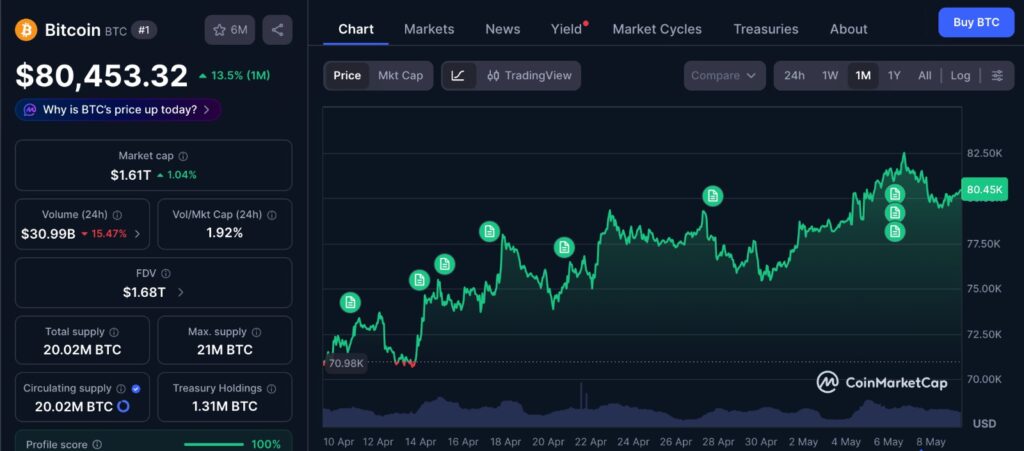
Over the past month, Bitcoin’s price action has shown a market trying to recover but still facing resistance near higher levels. The move toward the $80,000 area shows that buyers have not disappeared, but the repeated failure to expand above resistance suggests demand is still selective. A healthier rally would need stronger spot support, not only short bursts of leveraged buying.
Editor’s View: This Is Not a Bear Market Signal Yet
The latest Bitcoin ETF outflows are a warning sign, but they are not enough to confirm that the broader trend has failed.
What matters more is the mix of signals. ETF demand weakened. Leveraged longs were liquidated. Retail activity remains softer than ideal. Bitcoin also failed near a key resistance area. That cautious mood also matches the recent Crypto Fear and Greed Index near neutral, which shows traders are not fully bearish but are no longer chasing risk aggressively.
That is why the market feels cautious.
But caution is not the same as collapse. A reset in leverage can make the market healthier if spot demand returns afterward. The real test is whether buyers step in again without relying too heavily on futures positioning.
Bitcoin does not need a perfect backdrop to continue higher. It needs enough real demand to absorb supply when price reaches important levels.
Right now, that demand is being tested.
This is the difference between a weak market and a market being checked. A weak market keeps losing buyers at lower levels. A tested market pauses, clears leverage, and then shows whether real demand is still there.
Why This Setup Matters for the Wider Crypto Market
Bitcoin remains the main liquidity signal for the broader crypto market. When BTC stalls near a major level, altcoins usually become more sensitive to sharp pullbacks, especially if traders are already using leverage.
If Bitcoin ETF outflows continue, the market may become more defensive. Traders may reduce exposure, rotate into stronger assets, or wait for clearer confirmation before adding risk. This can slow momentum across Ethereum, Solana, XRP, and smaller altcoins.
However, if Bitcoin stabilizes near $80,000 and ETF flows recover, confidence may return quickly because the market would view the recent weakness as a shakeout rather than a failed rally.
That is why this moment matters.
Bitcoin is not only testing a price level. It is testing whether the rally has enough real demand behind it to continue without constant support from ETF inflows and leveraged futures buyers.
Final Takeaway
Bitcoin ETF outflows have added pressure at a sensitive point for BTC, especially after price failed to hold above $82,500 and leveraged long positions were cleared from the market.
The setup is not fully bearish, but it is no longer simple. ETF flows need to stabilize, Bitcoin needs to defend the $80,000 area, and broader macro conditions need to remain supportive for confidence to improve.
Until then, the market may stay cautious.
Bitcoin’s next move will likely depend less on headlines and more on whether real buyers return when the market reaches pressure points. Price does not move because a level looks important. It moves when demand is strong enough to absorb supply where that level matters most.
Disclaimer: This content is for informational purposes only and does not constitute financial advice.
Keep yourself updated with the latest crypto news with FYI Gazette
 Bitcoin
  Ethereum
  Tether
  BNB
BNB  XRP
XRP  Solana
  TRON
TRON  Dogecoin
  Litecoin
  Pepe
Pepe