
Bitcoin Oil Surge: BTC Drops as Oil Jumps 20%
Bitcoin Oil Surge shook global markets after the leading cryptocurrency briefly dropped while oil prices spiked sharply amid escalating tensions in the Middle East. The sudden move highlighted how geopolitical developments can rapidly influence both traditional commodities and digital assets. Within minutes of US futures markets opening, traders reacted to fears that energy supplies could be disrupted, sending oil prices higher and triggering volatility across financial markets.
Bitcoin fell from around 66,960 dollars to 65,725 dollars in roughly fifteen minutes late Sunday as US futures markets opened. The drop represented nearly a two percent decline in a short period of time. However, the move did not last long. Bitcoin quickly regained part of the loss and climbed back to approximately 66,272 dollars shortly afterward, showing that traders were still adjusting to the unfolding developments.
At the same time, energy markets experienced one of the sharpest moves of the week as oil prices surged on concerns over global supply.
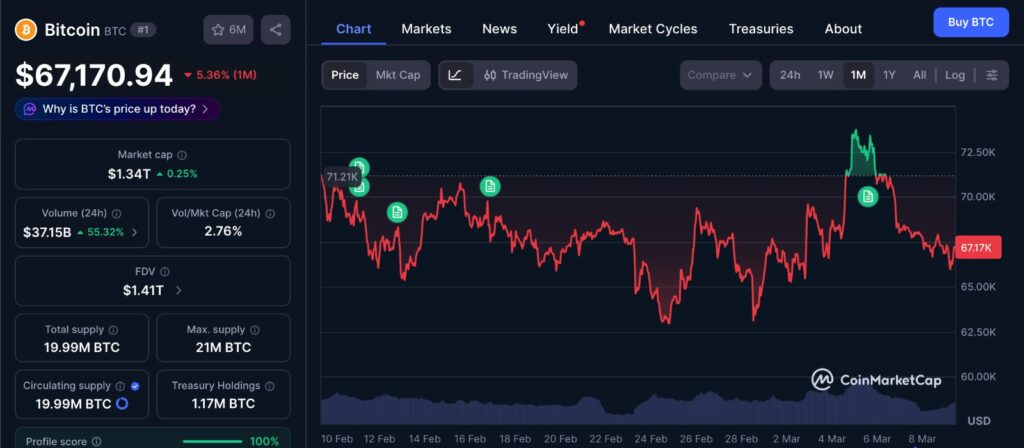
Over the past month, Bitcoin’s price action has reflected a market navigating both momentum and uncertainty. The chart shows how the asset climbed earlier in the period before encountering periods of volatility as macro events and geopolitical developments began influencing broader financial sentiment. While short term dips and recoveries have appeared throughout the month, the overall movement highlights how quickly market conditions can shift when external factors enter the picture. For many traders, these fluctuations illustrate how Bitcoin continues to react not only to crypto-specific developments but also to changes in global risk sentiment.
Bitcoin Oil Surge Triggered by Energy Market Shock
The Bitcoin Oil Surge began as oil prices jumped rapidly following warnings related to the escalating Middle East conflict. Data from decentralized derivatives platform Hyperliquid showed that oil rose from roughly 95 dollars per barrel to around 113.7 dollars shortly after US futures markets opened.
This increase represented nearly a twenty percent surge in a very short period. The spike occurred after Iraq warned that around three million barrels per day of oil production could be disrupted. The warning came after reports that Iran had threatened tankers traveling through the Strait of Hormuz.
The Strait of Hormuz is one of the most important oil transport routes in the world. A significant portion of the global oil supply passes through this narrow waterway every day. Because of its importance, any threat to shipping routes in the region often causes immediate reactions in global energy markets.
Traders responded quickly to the warnings, pushing oil prices to levels not seen in more than two years.
Oil Prices Reach Highest Levels Since 2022
The surge in oil prices pushed the commodity to its highest level since April 2022. During that earlier period, energy markets also experienced extreme volatility following Russia’s invasion of Ukraine and the resulting disruption to global energy supply chains.
The recent rally in oil prices had already been building before the sudden spike on Sunday. Energy markets had climbed steadily during the previous week as geopolitical tensions in the Middle East intensified.
Oil prices rose more than thirty percent during the week after the United States and Israel launched strikes against Iran. In response, Iran carried out retaliatory attacks against several neighboring countries in the region. These developments significantly increased fears that the conflict could expand and affect oil production and transportation.
As tensions grew, traders across global markets began closely monitoring developments in the region, leading to heightened volatility across commodities and digital assets.
Bitcoin Oil Surge Reflects Market Sensitivity
The Bitcoin Oil Surge illustrates how sensitive cryptocurrency markets can be to major global developments. While Bitcoin is often described as an independent financial system, it still reacts to changes in global risk sentiment.
When geopolitical tensions increase and energy prices surge, traders frequently reassess risk across multiple markets. In many cases, sudden spikes in oil prices raise concerns about inflation and economic uncertainty, which can affect investor behavior.
During the latest market reaction, Bitcoin briefly declined as traders responded to the sudden rise in oil prices and the broader uncertainty surrounding the conflict. However, the relatively quick recovery in Bitcoin’s price suggested that the decline was largely driven by short term market sentiment rather than a major shift in long term positioning.
Bitcoin Performance During the Conflict
Interestingly, Bitcoin had actually performed strongly earlier in the week despite rising geopolitical tensions. During the early stages of the Middle East conflict, the cryptocurrency climbed from below 64,000 dollars to as high as 73,770 dollars by Wednesday.
The rally suggested that Bitcoin initially showed resilience even as global markets reacted to escalating tensions in the region.
However, momentum shifted later in the week. After reaching its peak, Bitcoin began to decline and has now recorded four consecutive days of price drops.
The brief fall during the Bitcoin Oil Surge added to this recent downward trend, although the partial recovery afterward shows that traders are still evaluating the broader implications of the conflict.
Oil Prices Cool After Initial Spike
Although oil prices surged dramatically when futures markets opened, the spike did not last long at the highest levels. After reaching the peak near 113 dollars per barrel, oil prices began to ease.
Data later showed that oil had cooled to around 105 dollars per barrel after the initial surge. This pullback suggested that some of the early market reaction may have been driven by rapid trading activity as investors responded to new developments.
Energy markets remain highly sensitive to any updates regarding shipping routes or tanker activity in the Strait of Hormuz. If the situation escalates further or supply disruptions become more likely, oil prices could experience renewed volatility.
For now, the market appears to be stabilizing following the initial surge.
Trump Downplays Long Term Oil Concerns
Despite the sharp rise in oil prices, former US President Donald Trump suggested that the increase may not last long. Speaking to reporters on Saturday, Trump said he expected oil prices to rise temporarily but predicted that they would fall again quickly.
According to Trump, the rise in prices had been anticipated given the geopolitical situation. He stated that oil prices would likely decline rapidly once markets stabilized.
Trump also dismissed concerns that the United States might need to tap into its Strategic Petroleum Reserve. He argued that the country has significant oil resources and that global supply remains strong.
Trump emphasized that there is a large amount of oil available globally and suggested that market conditions could correct themselves relatively quickly.
Editor’s View: Market Reactions Often Reflect Uncertainty, Not Fundamentals
Events like the Bitcoin Oil Surge often reveal how quickly market behavior shifts when geopolitical risk suddenly enters the picture. Traders may spend weeks focusing on technical indicators or on-chain data, but developments such as threats to global oil supply can override those signals almost instantly. In these moments, the reaction is less about Bitcoin itself and more about how participants interpret broader uncertainty across markets. The brief drop in Bitcoin alongside the spike in oil suggests that traders were responding to changing risk conditions rather than to any fundamental shift within the crypto market.
Bitcoin Oil Surge Highlights Global Market Connections
The Bitcoin Oil Surge demonstrates how closely connected modern financial markets have become. Developments affecting energy supply can quickly ripple across commodities, equities, and digital assets.
In this case, warnings about potential disruptions to oil production triggered a rapid surge in energy prices. That surge briefly impacted Bitcoin as traders reacted to the sudden shift in global risk sentiment.
Although Bitcoin recovered part of the decline, the event serves as a reminder that cryptocurrency markets remain influenced by broader geopolitical and economic developments.
As the situation in the Middle East continues to evolve, traders across both traditional and digital markets are likely to remain alert to any developments that could influence energy supply and global financial stability.
Disclaimer: This content is for informational purposes only and does not constitute financial advice.
Keep yourself updated with the latest crypto news with FYI Gazette
Read more about Memecoins with FYI Gazette
Keep yourself updated with the latest Altcoin News with FYI Gazette
 Bitcoin
  Ethereum
  Tether
  BNB
BNB  XRP
XRP  Solana
  TRON
TRON  Dogecoin
  Litecoin
  Pepe
Pepe