
Bitcoin Coinbase Premium Weakens as US Spot Demand Cools
Bitcoin Coinbase premium has weakened sharply, showing that US buyer urgency is no longer pushing BTC with the same strength seen during earlier phases of the rebound.
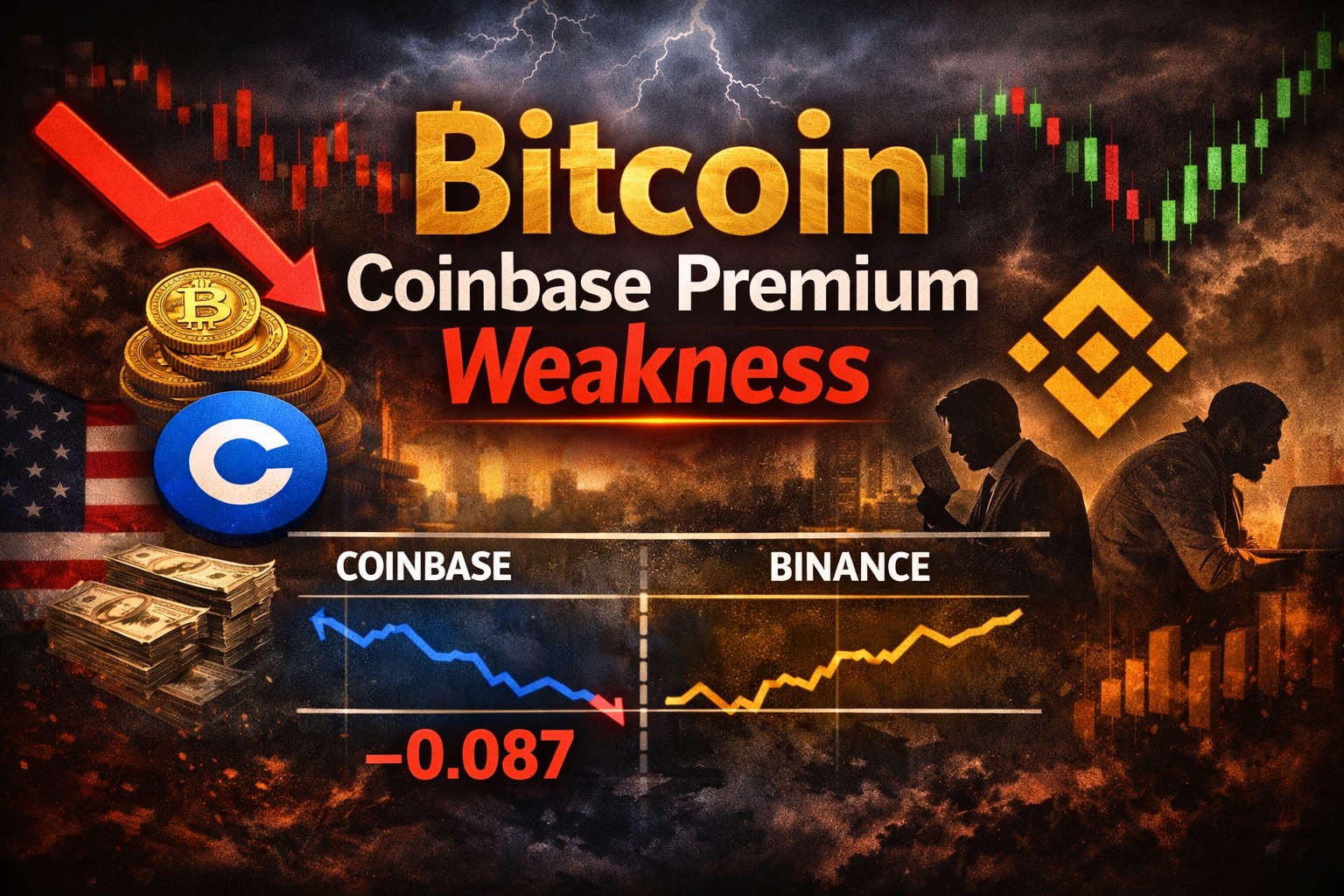
The Coinbase Premium Index, which compares Bitcoin’s price on Coinbase with Binance, dropped into negative territory this week. The reading reportedly fell to around -0.087 on May 19, its weakest level since late March, according to market data. A negative premium means Bitcoin was trading at a lower price on Coinbase than on Binance, which usually points to softer buying from US-based investors.
That matters because Coinbase often gives a cleaner read on regulated US participation. When Bitcoin trades at a premium on Coinbase, it can suggest stronger buying from US institutions, ETF-linked flows, and larger spot participants. When that premium fades or turns negative, it does not automatically mean the market is breaking down, but it does show that US buyers are becoming less willing to pay above the broader market.
That context matters because Bitcoin ETF outflows previously showed how US-linked demand can slow near key levels, especially when buyers become less willing to chase higher prices.
Bitcoin is not only dealing with price resistance. It is dealing with weaker buy-side support from one of the most important US-facing venues in the market.
Markets do not weaken only because sellers appear. They weaken when buyers stop paying up.
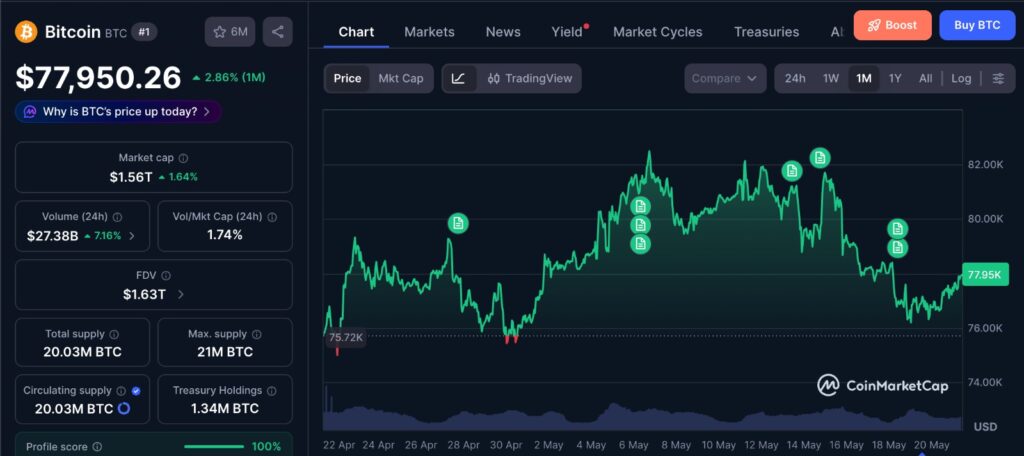
The 1-month Bitcoin chart adds context to the Coinbase premium weakness. BTC has not collapsed after the softer US demand signal, but the chart shows a market that is cooling after a strong move. That matters because a weaker premium becomes more important when price starts losing support from real buyers. For now, the chart supports the same message as the premium data: Bitcoin is not showing a full demand breakdown, but it is testing whether buyers are still willing to absorb supply after profit-taking.
Profit-Taking Is Pressuring the Bitcoin Coinbase Premium
The weakness in the Bitcoin Coinbase premium appears to be connected to profit-taking after BTC’s latest rally.
Bitcoin holders realized about 14,600 BTC in daily profits on May 4, worth roughly $1.14 billion at the time. Market data also showed unrealized profit margins rising to 17.7% on May 5, the highest level since June 2025.
That kind of profit-taking can cool Coinbase-linked activity even when the broader trend has not fully reversed. When holders lock in gains after a strong move, they add supply to the market. US buyers then need to absorb that supply without letting bids weaken too much.
This matters because profit-taking only becomes a structural problem when buy-side support cannot absorb the extra coins smoothly. If sellers remain active while buyers lower their bids, the premium can turn negative even without panic selling.
There is also a simple execution layer behind this. Liquidity is not continuous. Once nearby buy orders are absorbed, price must move lower to find the next pocket of real interest.
This does not mean buyers have disappeared. It means the balance between sellers taking profits and buyers absorbing supply has become less supportive.
That distinction matters. A falling premium caused by panic selling would carry a different message from a falling premium caused by profit-taking after a rally. In this case, the data points more toward a market digesting gains than a market showing a full collapse in US spot participation.
Why the Longer-Term Coinbase Premium Trend Matters
The daily Coinbase premium reading looks weak, but the longer-term signal is less bearish.
The 14-day simple moving average of the Coinbase Premium Index has remained above its February lows. Similar recoveries in the moving average appeared before renewed Coinbase spot activity during March 2025, before Bitcoin later pushed toward higher levels in April and May 2025.
That is the silver lining in this setup.
A single negative premium reading can show short-term softness. But when the moving average avoids making a deeper low, it can suggest that selling pressure is easing rather than spreading. In simple terms, US bid strength has cooled, but it has not yet broken in the same way it did during weaker phases of the market.
This makes the current Bitcoin Coinbase premium signal more balanced than it first appears. The market is not showing aggressive US spot buying right now, but it is also not showing a full demand breakdown. That middle ground is where Bitcoin often becomes harder to read, because price can look weak while underlying support slowly stabilizes.
This also fits with a broader pattern where Bitcoin demand has been lagging behind price strength, making buyer absorption more important than price action alone.
The daily signal shows stress. The trend tells us whether that stress is becoming structural.
Bitcoin Is Still Above a Broader Accumulation Region
Bitcoin has also remained above the broader $70,000 to $75,000 accumulation region, which previously attracted spot buying. That gives the current premium weakness important context.
If BTC were losing this region while the Coinbase premium was falling deeper, the signal would look more dangerous. It would suggest that weaker US participation was combining with a broader breakdown in price structure. But as long as Bitcoin remains above major accumulation areas, the premium weakness looks more like a cooling phase than a confirmed trend reversal.
Recent sessions have shown this clearly: Bitcoin has absorbed softer demand signals without turning every weak reading into a deeper breakdown.
That does not remove risk.
If the Coinbase premium remains negative for an extended period and the 14-day average starts rolling over, it would show that US buyers are stepping back more seriously. In that case, Bitcoin would become more vulnerable, especially if profit-taking continues and spot buyers fail to absorb supply.
For now, the more accurate reading is that Bitcoin is in a demand test, not a confirmed demand failure.
This Is Different From the Binance Retail Demand Signal
This setup should not be confused with the earlier Binance retail-demand weakness.
The Binance retail-demand story was more about fading smaller spot participation while futures selling controlled much of the market move. That was a retail-versus-derivatives issue. That earlier setup showed how Bitcoin retail demand weakened while futures selling took control, which is different from the Coinbase premium signal now showing softer US-facing spot activity.
The Bitcoin Coinbase premium story is different. This is about US-facing spot activity cooling after profit-taking, while the longer-term Coinbase trend still suggests some stabilization underneath the surface.
That makes the signal more institutional in nature.
Coinbase-linked activity often reflects US market behavior more directly than global retail flows. When the premium weakens, it shows that US buyers are not paying up for Bitcoin with the same urgency. But when the longer moving average remains supported, it also suggests buyer interest may be rebuilding slowly rather than disappearing completely.
This is why the current article should not be framed as “Bitcoin demand is collapsing.”
A better framing is that US spot demand has softened, but the broader premium trend has not yet confirmed a deeper breakdown.
The Market Is Watching Absorption, Not Just Price
The next important signal is not simply whether Bitcoin moves higher or lower in the short term. The more important question is whether buyers can absorb continued profit-taking without allowing the Coinbase premium to deteriorate further.
If BTC holds its range while the Coinbase premium improves, it would suggest that US buyers are stepping back in quietly. That would support the idea that the current weakness is mainly a post-rally cooling phase.
If BTC holds price but the Coinbase premium remains negative, the signal becomes more fragile. It would mean price stability is not yet being confirmed by stronger US spot participation.
And if both price and the premium weaken together, the risk profile changes quickly.
That is why the Coinbase premium matters. It gives a clearer view of whether US buyers are supporting the move or whether Bitcoin is relying more on offshore liquidity and short-term positioning. At the same time, Bitcoin funding rates have also shown cautious leverage, which makes spot confirmation even more important for judging whether price strength has real support underneath it.
Price can hold for a while on positioning. Lasting strength usually needs real buyers underneath it.
Editor’s View: The Weakness Is Real, But Not Yet Fatal
The key issue is the difference between cooling demand and broken demand.
Bitcoin’s Coinbase premium has clearly weakened. That should not be ignored. US spot buyers are not showing the same urgency they showed during stronger phases of the rebound, while profit-taking has forced the market to absorb more supply.
But the longer-term premium trend stops this from becoming a simple bearish story.
If the 14-day Coinbase premium trend remains above prior lows, it suggests the market may be stabilizing beneath the headline weakness. That does not guarantee a fresh rally, but it does show that the pullback is not yet behaving like a full demand breakdown.
Bitcoin does not need every buyer to return at once. It needs enough real buyer support to absorb supply without letting weakness spread across the broader structure.
Price shows where the market is trading. The Coinbase premium shows who may be supporting it. Right now, that support looks weaker than before, but not absent.
Bitcoin Coinbase Premium Shows a Market Still Deciding Direction
The Bitcoin Coinbase premium has sent a clear short-term warning: US spot demand has cooled after profit-taking.
But the deeper signal is more nuanced. The daily premium has weakened, yet the longer-term trend has not fully broken. That suggests Bitcoin may be moving through a stabilization phase rather than entering a clean demand collapse.
For traders and investors, the next confirmation will come from whether the Coinbase premium starts improving while BTC holds key areas. If that happens, the current weakness may look more like a reset. If the premium keeps falling, the market may need to price in a weaker US demand backdrop.
The real signal is not whether Bitcoin pauses after profit-taking. It is whether committed buyers return before soft demand becomes the market’s main structure.
Disclaimer: This content is for informational purposes only and does not constitute financial advice.
Keep yourself updated with the latest crypto news with FYI Gazette
 Bitcoin
  Ethereum
  Tether
  BNB
BNB  XRP
XRP  Solana
  TRON
TRON  Dogecoin
  Litecoin
  Pepe
Pepe