Solana Reclaims $72 as Tokenized Stock Demand Meets Weak TVL Data
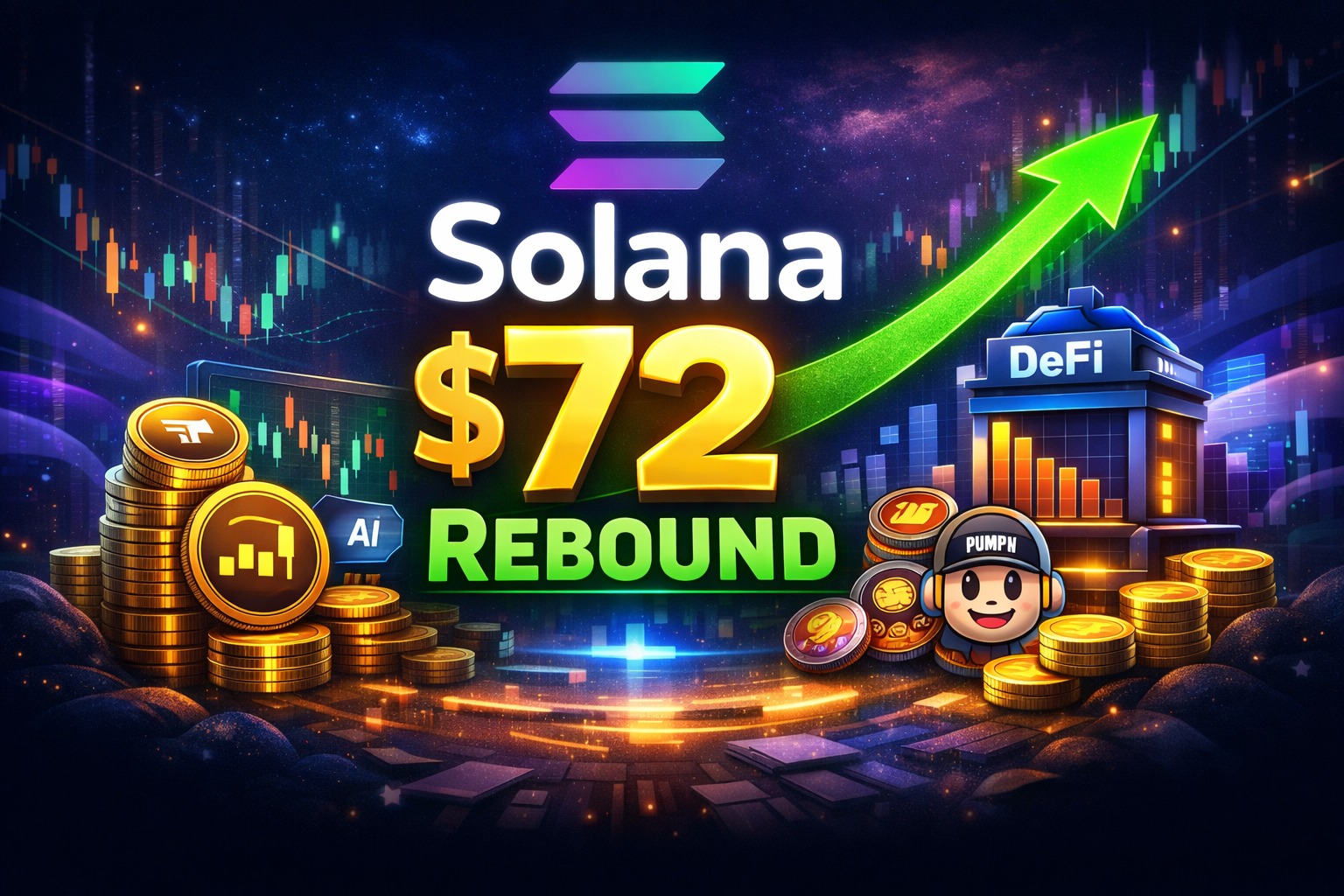
Solana reclaimed the $72 level after a sharp rebound from recent lows, but the move still needs stronger confirmation from broader on-chain demand.
The latest rally has been helped by optimism around tokenized stock trading on Solana. Traders have been watching tokenized equities and equity-linked products as a possible new demand driver for the network. That matters because Solana is often valued not only on price momentum, but also on whether new applications can create repeatable transaction activity.
For now, the rebound is real. The confirmation is still incomplete.
Recent market data showed that tokenized stocks on Solana generated more than $113 million in 24-hour trading volume, giving bulls a fresh reason to argue that Solana is becoming a more serious venue for real-world asset activity. However, that headline volume is arriving while broader network data remains weaker. Solana’s total value locked has declined over the past month, decentralized exchange volumes have cooled from earlier highs, and a meaningful share of DApp revenue remains tied to Pump.fun.
That mix makes the $72 recovery harder to ignore, but also harder to trust without follow-through.
Solana Rebound Gets Help From Tokenized Stock Optimism
The strongest part of the Solana story right now is the growth of tokenized stock activity.
Tokenized equities give traders blockchain-based exposure to traditional market themes, including major technology and AI-linked stocks. For Solana, this expands the conversation beyond memecoins, speculative launches, and short-term trading rotations. The same debate has appeared around tokenized asset demand across major chains, where real-world asset growth can improve the narrative but still needs deeper network usage to support token value.
A network that can attract tokenized asset demand may gain a wider user base than one relying mostly on crypto-native speculation.
The issue is that early volume does not automatically equal durable demand. Thin liquidity, limited holder depth, and competition between similar products can make tokenized stock activity look stronger in the short term than it really is. New products often attract attention quickly, especially when traders are searching for the next growth theme. The harder test comes later, when volume has to remain active after launch excitement fades.
This is where Solana’s rally becomes more complicated.
Markets do not reward a new story for long. They reward the liquidity that stays after the first wave of attention moves on.
For Solana, tokenized stocks can support the bull case only if they create repeat users, deeper markets, and more consistent transaction demand. Without that, the activity risks becoming another burst of attention rather than a lasting source of network value.
That is the mechanism behind the current test: tokenized stock activity can lift the narrative, but Solana needs broader liquidity to prove the move is more than a short-term repricing.
Solana TVL Weakness Keeps the Rally Under Pressure
Solana’s total value locked has fallen over the past month, and that weakness matters because TVL helps show whether capital is staying inside the ecosystem.
A price rebound can happen quickly when traders cover shorts, chase momentum, or react to a new theme. TVL usually moves more slowly because it reflects a different type of confidence. Users have to keep liquidity deployed, interact with lending markets, trade through decentralized exchanges, or commit assets to applications.
That is why falling TVL creates a warning sign beneath the $72 move.
Several major Solana applications have seen declines, while select areas linked to tokenization have shown stronger growth. This creates an uneven picture. Solana is attracting attention, but attention is not yet spreading evenly across the network.
The stronger version of this rally would show capital returning across DeFi, higher DEX activity, and healthier revenue distribution across different applications.
Right now, the data is mixed.
The $72 level now works as a short-term behavior test because a strong reclaim should attract follow-through, while a weak hold would suggest traders are still selling into narrative-driven strength. This makes earlier Solana open interest risk near the $68 area important because it showed how quickly positioning can shift when SOL fails to hold key recovery levels.
Price can recover before confidence does. The question is whether liquidity follows the move, or whether traders are simply repricing a short-term story. Liquidity is not continuous. Once nearby orders are absorbed, price has to move toward the next area where buyers or sellers are willing to act.
That is why thin rallies can feel powerful at first, but fragile when participation does not broaden.
CMC Chart Analysis
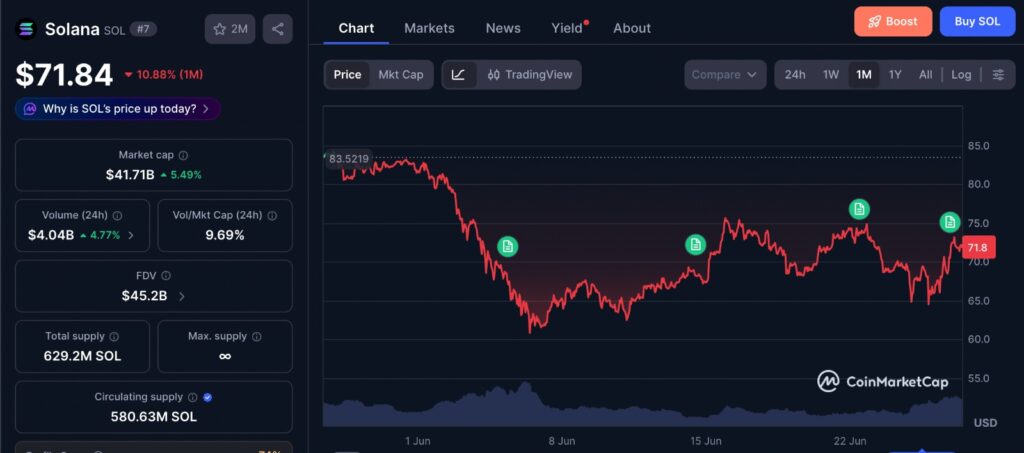
The 1-month SOL chart from CoinMarketCap helps show why the $72 area matters in the current setup. Solana’s recent rebound has brought price back into focus, but the chart should be read alongside the weaker on-chain data. The key question is not only whether SOL has reclaimed the level, but whether buyers can hold it while TVL, DEX activity, and revenue concentration remain mixed. A steady hold would suggest traders are treating tokenized stock demand as a real catalyst, while a weak reaction would show that the rally still needs broader network confirmation.
DEX Volumes Show Solana Demand Has Cooled
Solana’s decentralized exchange activity has also weakened from earlier levels. Recent data indicated that weekly DEX volume has fallen sharply compared with the highs seen earlier this year, reducing the strength of the bull case.
This matters because DEX activity is one of the clearest signs of active user demand on a high-speed chain. When DEX volumes rise, traders are using the network, liquidity is moving, and fees are being generated across the ecosystem. When volumes cool, the network can still have strong headlines, but the underlying activity becomes less convincing.
Recent sessions have shown this split clearly across Solana. SOL has recovered with the help of a stronger narrative, but broader activity has not followed with the same force. That is similar to earlier Solana bullish signals without stronger follow-through, where positive market signals still needed stronger participation before the move looked durable.
That does not mean Solana’s rebound is weak by default. It means the rebound is still narrow.
For SOL to build a more durable move above $72, demand likely needs to spread beyond one fast-growing theme. A rally built on tokenized stock optimism can attract attention. A rally supported by rising DeFi activity, deeper liquidity, and stronger DEX volume is harder to dismiss.
The reason this matters is simple: when activity is spread across more users and applications, selling pressure has more places to be absorbed. When activity is concentrated in one theme, the market becomes more sensitive to any slowdown in that theme.
Pump.fun Dependence Remains a Key Solana Risk
Another issue for Solana is revenue concentration.
A meaningful share of Solana DApp revenue has recently come from Pump.fun, the token launch platform closely tied to memecoin activity. That does not make the revenue meaningless. Pump.fun has been one of the most important applications in the Solana ecosystem, and it has helped drive user activity during speculative market phases.
Still, dependence on one major source of revenue can become a weakness.
If Solana’s revenue base leans too heavily on memecoin launches, the network becomes more exposed to shifts in speculative appetite. When traders are aggressive, that activity can make Solana look dominant. When risk appetite fades, the same dependence can make the ecosystem look less balanced.
The strongest blockchains usually do not rely on one type of activity for long. They build demand across trading, lending, payments, tokenization, infrastructure, and consumer applications. Solana has pieces of that broader story, but the latest data shows that the balance is not fully there yet.
Momentum can hide concentration. Slower markets expose it.
That is why Pump.fun’s role matters. It has helped Solana generate activity, but it also shows how much of the ecosystem’s recent revenue has depended on speculative flow. A healthier setup would see tokenized assets, DeFi, DEX trading, and consumer applications contributing more evenly.
Solana Still Needs Broader On-Chain Confirmation
The $72 reclaim gives Solana bulls something to defend, but the next phase depends on whether the network can prove that demand is expanding again.
Tokenized stocks are a real positive because they give Solana a fresh use case at a time when the market is looking for new growth narratives. If that activity continues to build, it could help Solana move further away from the idea that its ecosystem is too dependent on memecoin trading.
But the weak TVL trend, lower DEX volumes, and revenue concentration around Pump.fun keep the rally from looking fully confirmed.
Over the past week, Solana has shown that traders are still willing to respond quickly when a stronger narrative appears. The harder question is whether users and liquidity providers are willing to return with the same conviction.
That is the real test now.
Solana’s rebound to $72 is not just a price story. It is a demand test. Tokenized stock growth gives the network a cleaner narrative, but the move only becomes stronger if that activity spreads into broader liquidity and application usage.
For now, Solana has regained attention. The next layer is harder: turning attention into capital that stays active across the network.
Disclaimer: This content is for informational purposes only and does not constitute financial advice.
Keep yourself updated with the latest crypto news with FYI Gazette
Keep yourself updated with the latest Altcoin News with FYI Gazette
 Bitcoin
  Ethereum
  Tether
  BNB
BNB  XRP
XRP  Solana
  TRON
TRON  Dogecoin
  Litecoin
  Pepe
Pepe