

Bitcoin ETFs End July Positive, but Late Selling Exposes Weak Demand
US spot Bitcoin exchange-traded funds returned to positive monthly flows in July, but the recovery was too narrow to confirm a durable shift in demand.
The funds attracted approximately $172.4 million in net inflows during the month, ending two consecutive months of withdrawals. That suggests institutional demand stabilised after heavier selling in May and June.
However, the monthly total does not tell the full story.
A sharp withdrawal near the end of July erased much of the earlier progress. ETF flow data showed roughly $265.4 million in net outflows on July 31, while the final week ended approximately $61.5 million negative.
July therefore finished in the green, but without the persistent accumulation normally associated with strong investor conviction.
The distinction matters because ETF flows affect how easily the market absorbs available supply. Steady inflows create recurring demand as fund issuers and market makers source Bitcoin exposure. When those flows weaken, sellers face fewer willing buyers and larger orders can have a greater effect on price.
July showed that this support still existed. It also showed that it was not yet dependable.
Bitcoin ETF Flows Turn Positive After Two Weak Months
The July inflow ended consecutive monthly outflows for US-listed spot Bitcoin ETFs.
May and June produced nearly $7 billion in combined withdrawals, with June accounting for about $4.5 billion. That earlier pressure followed a period of record Bitcoin ETF outflows, which raised questions about whether institutional demand could recover quickly enough to absorb renewed supply. Against that backdrop, even a modest positive month represented an improvement in institutional positioning.
The recovery indicates that some investors were willing to rebuild exposure after reducing holdings earlier in the year. Lower Bitcoin prices may also have attracted selective demand from investors using regulated products rather than buying the asset directly.
Still, the inflow was small compared with the withdrawals that preceded it.
A $172.4 million monthly gain recovered only a limited portion of the capital that left during May and June. July should therefore be viewed as a stabilisation month rather than evidence that institutional demand has returned to full strength.
The direction improved. The scale remained weak.
Markets do not strengthen when buyers appear once. They strengthen when demand remains present as selling pressure returns.
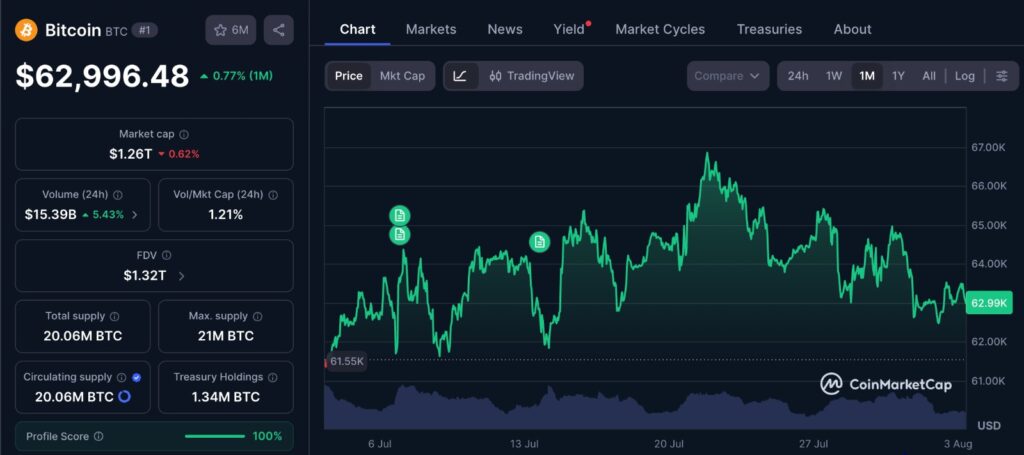
Bitcoin’s 1-month price chart provides context for how the market responded as spot ETF flows improved during July before weakening near the end of the month. The important signal is not the current price alone, but whether BTC remained stable as selling pressure returned. A resilient price response would suggest ETF demand helped absorb available supply, while sharper weakness would indicate that the positive monthly inflow was not consistent enough to provide dependable support.
Late-July Selling Changes the Interpretation
The timing of the flows may be more important than the final monthly total.
Bitcoin ETFs recorded three consecutive positive weeks before turning negative during the final week of July. The reversal suggests that demand became less reliable as market conditions weakened and volatility increased.
Recent sessions showed that investors were willing to add exposure during calmer conditions, but quicker to reduce risk once selling pressure returned.
This does not mean long-term institutional interest in Bitcoin has disappeared. ETF investors include asset managers, hedge funds, advisers and shorter-term traders, each operating under different objectives and risk limits.
Some withdrawals may reflect portfolio rebalancing, profit-taking or risk reduction rather than a permanent rejection of Bitcoin.
Even so, the final-week outflow reveals an important change in participant behaviour. Buyers were present while conditions were stable, but some of that demand faded once volatility increased.
The reason is structural. Large investors may pause allocations when sharp moves make execution less predictable or push portfolios closer to internal risk limits. At the same time, nearby buy orders can be absorbed quickly, forcing price lower to find the next meaningful layer of demand.
That is the mechanism behind the weak-demand signal: ETF inflows can absorb supply when they are steady, but late outflows show buyers were not consistent enough to support the market through renewed selling.
July did not meet the stronger test of demand remaining present when conditions became harder.
Bitcoin ETFs Remain Negative for 2026
Despite ending July with a net inflow, US spot Bitcoin ETFs remained approximately $5.3 billion negative for 2026.
March, April and July were the only positive months during the first seven months of the year. January, February, May and June produced combined withdrawals of roughly $8.75 billion, according to market data.
This broader trend prevents one positive month from becoming a clear bullish signal. The wider withdrawal trend also revived the debate over whether Bitcoin ETF outflows were signalling market exhaustion or simply reflecting temporary risk reduction.
Monthly inflows can reflect improving sentiment, but year-to-date flows show whether that improvement is large enough to change the wider allocation trend. So far, the evidence remains mixed.
The products have still attracted more than $51 billion in cumulative net inflows since their January 2024 launch, confirming that regulated Bitcoin exposure has become an established part of the market.
The current issue is not whether the ETFs remain relevant. It is whether new demand is arriving quickly enough to offset withdrawals from investors reducing risk.
A market can retain a large asset base while still experiencing weak new demand. Prices respond more to the next buyer and seller than to capital that entered months earlier.
Positive Flows Do Not Automatically Mean Higher Prices
ETF inflows are often treated as direct evidence that Bitcoin must rise. The relationship is more complicated.
Fund demand can support the market by absorbing available supply, but price performance also depends on selling from miners, long-term holders, leveraged traders, corporate holders and other participants.
An inflow can therefore be positive without being large enough to push Bitcoin higher.
The same principle applies in reverse. ETF outflows can create pressure, but they do not determine the entire market when other buyers are prepared to absorb the supply. Previous periods of Bitcoin ETF outflows weakening spot demand showed how quickly price support can fade when one source of recurring buying disappears.
July’s modest inflow suggests that regulated investment products provided some support. The late reversal indicates that this demand was not dominant.
ETF flows matter most when they persist long enough to shift the balance between available supply and willing buyers.
The key question is not simply whether money entered the funds. It is whether that demand was large and consistent enough to help the broader market absorb selling without requiring a lower price.
Ether ETF Demand Adds Another Layer
Bitcoin was not the only crypto asset attracting ETF capital during July.
US spot Ether ETFs recorded approximately $365.2 million in monthly inflows and completed four consecutive positive weeks, according to ETF flow data.
The comparison does not prove that investors are abandoning Bitcoin for Ether. The two markets differ in size, maturity and investor composition.
However, stronger Ether ETF inflows show that crypto ETF demand was not absent in July. Bitcoin simply did not capture it with the same consistency.
The difference may reflect short-term allocation choices rather than a permanent shift in preference. Investors can move capital toward assets where positioning is lighter or where the balance between risk and potential return appears more attractive.
The comparison therefore adds context to Bitcoin’s positive monthly total without changing the article’s main signal.
What Would Confirm a Stronger ETF Recovery?
A stronger recovery would require more than one positive month.
Bitcoin ETF inflows would need to continue across several weeks, remain positive during periods of falling prices and become large enough to reduce the year-to-date deficit.
Participation across several funds would also carry more weight than inflows concentrated in one product or a small number of sessions.
Most importantly, ETF demand would need to absorb available supply without relying on short covering or a temporary decline in selling. That test also connects to Bitcoin’s wider demand gap, where price stability can persist even when fresh capital remains limited.
That would suggest investors were building exposure rather than reacting to brief changes in price.
Steady demand would also give sellers a more reliable source of liquidity. When buyers remain close to the market, larger sales can be completed with less disruption. Without that support, even moderate selling can push price toward the next available group of buyers.
Repeated outflows during volatile sessions would instead suggest that July was a pause in the wider withdrawal trend rather than a full change in allocation behaviour.
July Was Stabilisation, Not Confirmation
Bitcoin ETFs ending July in positive territory marked an improvement after two months of withdrawals.
The result shows that demand has not disappeared and that regulated investment products can still attract capital after difficult market periods.
However, the small monthly inflow, negative final week and continued year-to-date deficit limit the strength of the signal.
July did not confirm that institutional accumulation had returned. It showed that demand had stabilised without becoming strong enough to absorb renewed supply with confidence.
For Bitcoin, the more important test is whether ETF buyers remain present when selling pressure returns.
The stronger signal is not a green monthly total. It is consistent ETF demand absorbing supply without forcing price to search lower for buyers.
Disclaimer: This content is for informational purposes only and does not constitute financial advice.
 Bitcoin
  Ethereum
  Tether
  BNB
BNB  XRP
XRP  Solana
  TRON
TRON  Dogecoin
  Litecoin
  Pepe
Pepe