

Bitcoin ETF Outflows Hit Record $6.4B as Institutional Demand Faces Volatility Test
Bitcoin ETF outflows are no longer a routine weekly flow story. They have become a test of whether institutional Bitcoin demand is durable during volatility or mainly tactical when price momentum fades.
According to recent ETF flow data, US-listed spot Bitcoin ETFs have recorded roughly $6.4 billion in net outflows over the past 30 trading days. That marks the largest 30-day withdrawal since the products launched in January 2024. The figure matters because spot Bitcoin ETFs were one of the strongest demand channels behind Bitcoin’s institutional adoption story.
Bitcoin ETFs proved that institutions wanted access. The current outflow record is testing whether that access has become durable demand or only tactical exposure during stronger markets.
Are ETF investors still using pullbacks to build long-term exposure, or are they stepping away as Bitcoin loses momentum?
The answer may matter more than a single daily price candle.
Market data showed Bitcoin trading near the $64,000 area after falling more than 17% over the past month. Reports also noted six straight weeks of ETF outflows, with cumulative net ETF flows falling to about $53.4 billion from a previous peak near $63 billion in October 2025.
That does not mean the ETF story has failed. Spot Bitcoin ETFs still hold a large positive net flow since launch. However, the recent reversal shows that easier access does not always equal permanent demand.
Bitcoin ETF Outflows Turn Into a Demand Test
The key issue is not one day of selling. ETF flows can move for many reasons. Investors may rebalance portfolios, reduce risk before macro events, rotate into cash, or shift exposure between different fund structures.
The bigger signal is the scale and persistence of the current outflow trend.
A record 30-day outflow suggests that Bitcoin is no longer being supported by the same steady ETF bid that helped define earlier phases of the cycle. When ETF inflows are strong, they create a visible source of spot demand. That demand can absorb selling pressure, support confidence, and reinforce the idea that institutions are accumulating Bitcoin through regulated products. This follows an earlier phase where Bitcoin ETF outflows signaled market exhaustion before the current record 30-day withdrawal made the demand test harder to ignore.
When outflows deepen, the structure changes.
ETF demand stops acting like a cushion and starts acting like a pressure point. Bitcoin then has to rely more on organic spot buying, long-term holder conviction, corporate treasury demand, and broader risk appetite.
This matters because liquidity is not just the amount of Bitcoin available. It is the amount of real buying ready to absorb supply when sellers need execution. Once that nearby demand is used up, price has to move lower to find the next layer of interest.
That is the mechanism behind the current test: when ETF redemptions persist, Bitcoin must find buyers outside the same channel that previously absorbed supply.
Markets do not move when access is available. They move when access becomes committed flow.
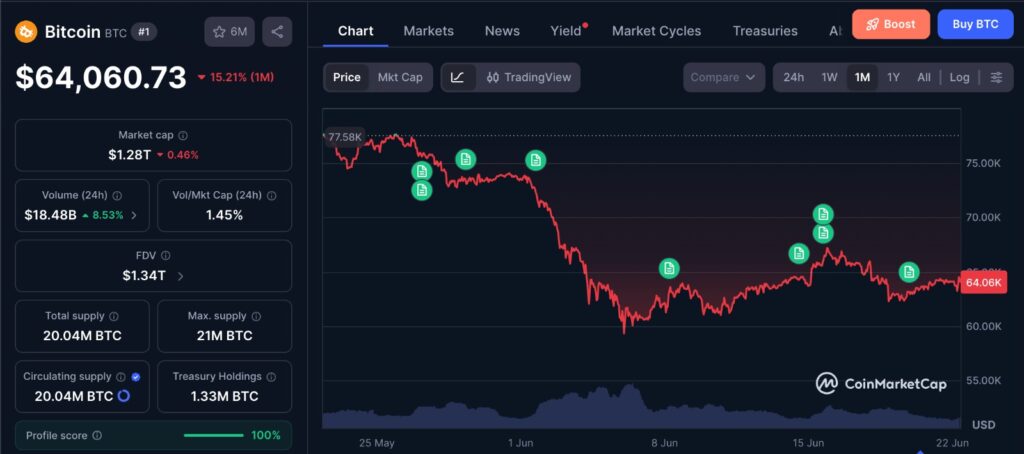
The 1-month Bitcoin chart shows how BTC traded while spot ETF outflows reached a record 30-day total. The key point is not only that Bitcoin weakened, but whether price can stabilize as ETF-linked demand cools. If BTC holds its range despite persistent outflows, it would suggest that other buyers are absorbing the pressure. If the chart continues to show weak follow-through, it would underline how much the market still depends on ETF flows for support.
The ETF Bid Looks Less Automatic
For much of the post-launch period, spot Bitcoin ETFs were treated as a structural bullish force. That view was not wrong. The products gave traditional investors a cleaner way to gain Bitcoin exposure without using crypto exchanges or handling self-custody.
But the latest outflows show that the ETF bid is not automatic.
ETF buyers can behave like any other market participant. They can chase strength, reduce exposure during drawdowns, and wait for clearer macro conditions before adding risk again. This matters because institutional demand is often described as patient, long-term, and price-insensitive. The flow data now looks more mixed.
Some investors may still view Bitcoin as a long-term allocation. Others may be using ETFs tactically, adding exposure during momentum and cutting back when volatility rises. That difference matters because tactical demand can disappear quickly when price action weakens.
This is where execution becomes important. ETF outflows do not simply represent a change in opinion. They can affect how much buying exists underneath the market when sellers arrive. If the ETF bid is strong, weakness is easier to absorb. If that bid fades, fewer natural buyers may be waiting below price.
Recent sessions have shown that Bitcoin’s weakness has not been only about the headline price move. It has also reflected thinner confidence underneath the market, where buyers have been slower to step in after ETF demand cooled. That softer backdrop also matches signs that US Bitcoin demand has cooled, making ETF flow weakness more important for market structure.
That is why this outflow stretch is harder to ignore than a normal weekly withdrawal. It suggests that the strongest institutional access channel in the market is being tested while Bitcoin struggles to hold momentum.
Bitcoin Price Weakness Adds Pressure To ETF Flows
Bitcoin’s decline has likely made ETF flows more sensitive. When price trends lower, investors who entered through ETFs may become less willing to hold through volatility, especially if Bitcoin is competing with other macro trades.
A weaker price trend can trigger more caution from ETF holders, while ETF outflows can add pressure back onto the spot market. That feedback loop does not need to become extreme to matter. It only needs to reduce the market’s ability to absorb supply.
This is the real risk for Bitcoin now.
If ETF outflows continue while Bitcoin remains below key recovery zones, traders may begin treating the ETF complex as a source of supply rather than demand. That would be a meaningful change from the earlier narrative, where spot ETFs were seen mostly as a one-way institutional accumulation vehicle.
At the same time, the outflows should not be read too simply. ETF withdrawals do not automatically prove that institutions have abandoned Bitcoin. Some flows may reflect rebalancing, product rotation, tax positioning, macro risk reduction, or investors moving between different Bitcoin-linked funds.
Still, the market does not need a perfect explanation for every dollar leaving. It needs to know whether the trend is stabilizing or worsening.
Right now, the size of the 30-day outflow makes stabilization the key signal to watch.
Institutional Demand Is Being Repriced
The larger story is that Bitcoin’s institutional demand is being repriced.
During strong markets, ETF inflows made it easier to argue that Bitcoin had entered a new phase of adoption. Traditional investors had access. Asset managers had products. Liquidity was deeper. The path from Wall Street portfolios into Bitcoin looked more established than in previous cycles.
That long-term shift may still be real.
However, the current outflows show that adoption does not remove cyclicality. Bitcoin can still face periods where institutions reduce exposure, especially when volatility rises and momentum weakens. The ETF wrapper makes access easier, but it does not make investors immune to fear, drawdowns, or macro pressure.
This is the important distinction. ETFs improved access to Bitcoin, but they did not turn every buyer into a long-term holder. Some capital is strategic. Some capital is tactical. When price rises, both can look the same. When price falls, the difference becomes visible.
That is also why positioning matters. If tactical buyers step back while leveraged traders reduce risk, the market can struggle even without a major new negative catalyst. There are simply fewer participants willing to add exposure quickly.
The record outflow is not just about money leaving ETFs. It is about whether Bitcoin’s institutional demand base is strong enough to absorb volatility when the easy momentum trade fades. That pressure also fits with the broader concern that Bitcoin demand has lagged behind the bull run narrative, leaving price more exposed when ETF flows weaken.
If the outflows narrow, Bitcoin may regain a cleaner demand backdrop. That would suggest investors are still willing to hold or rebuild exposure after a sharp pullback.
If the outflows continue to deepen, the market may have to price in a weaker ETF bid for longer. That would make any Bitcoin rebound more dependent on spot demand, macro relief, and renewed confidence from long-term buyers.
Why This Matters More Than A Normal Pullback
Bitcoin has survived many drawdowns. A 17% monthly decline is not unusual by Bitcoin standards. What makes this move different is the presence of the ETF channel.
In earlier cycles, traders mostly watched exchange reserves, derivatives leverage, stablecoin liquidity, and whale activity. Those signals still matter. But spot Bitcoin ETFs have added a new layer to market structure. They connect Bitcoin more directly to traditional portfolio flows.
That means Bitcoin is now exposed to a different type of selling pressure.
ETF holders may not behave like crypto-native investors. They may be more sensitive to portfolio allocation models, macro risk, quarterly performance, and competing opportunities in equities, bonds, or gold. When those investors reduce Bitcoin exposure, the impact can show up through ETF redemptions rather than exchange selling alone.
This changes execution risk. If ETF redemptions arrive when spot liquidity is thin or buyers are waiting lower, market makers and authorized participants have to manage flows in a less supportive environment. That can make price reactions sharper even when the outflow is not panic-driven.
That makes ETF flow data one of the cleanest ways to judge whether institutional demand is expanding or retreating.
The current signal is not catastrophic, but it is clearly weaker.
Bitcoin does not need ETF inflows every day to recover. But it likely needs the pace of outflows to slow before the market can confidently argue that institutional demand is stabilizing again.
Bitcoin Needs Proof Of Absorption
The next phase is about absorption.
If Bitcoin can hold near current levels while ETF outflows remain elevated, that would show that other buyers are stepping in. It would suggest that spot demand, long-term holders, and opportunistic capital are strong enough to absorb the pressure.
If Bitcoin keeps falling while ETF outflows deepen, the market may read that as confirmation that institutional demand has turned more tactical than durable in the short term.
The bullish case is not simply that ETFs still have positive cumulative flows since launch. The bullish case needs evidence that the outflow trend is slowing, that Bitcoin can absorb redemptions, and that investors are not abandoning exposure just because momentum has faded.
The bearish case is that ETF outflows remain persistent while price fails to recover. In that setup, the market may begin treating the ETF complex as a source of ongoing supply rather than a reliable demand engine.
For now, Bitcoin’s ETF story has entered a more serious phase.
The launch of spot ETFs proved that traditional investors wanted access to Bitcoin. The current outflow record is testing whether that demand remains strong when the trade becomes uncomfortable.
Bitcoin does not need perfect conditions to recover. It needs proof that selling can be absorbed without the ETF bid doing most of the work.
The real shift begins when ETF outflows stop setting the tone and buyers are strong enough to absorb supply without relying on momentum.
Disclaimer: This content is for informational purposes only and does not constitute financial advice.
Keep yourself updated with the latest crypto news with FYI Gazette
 Bitcoin
  Ethereum
  Tether
  BNB
BNB  XRP
XRP  Solana
  TRON
TRON  Dogecoin
  Litecoin
  Pepe
Pepe